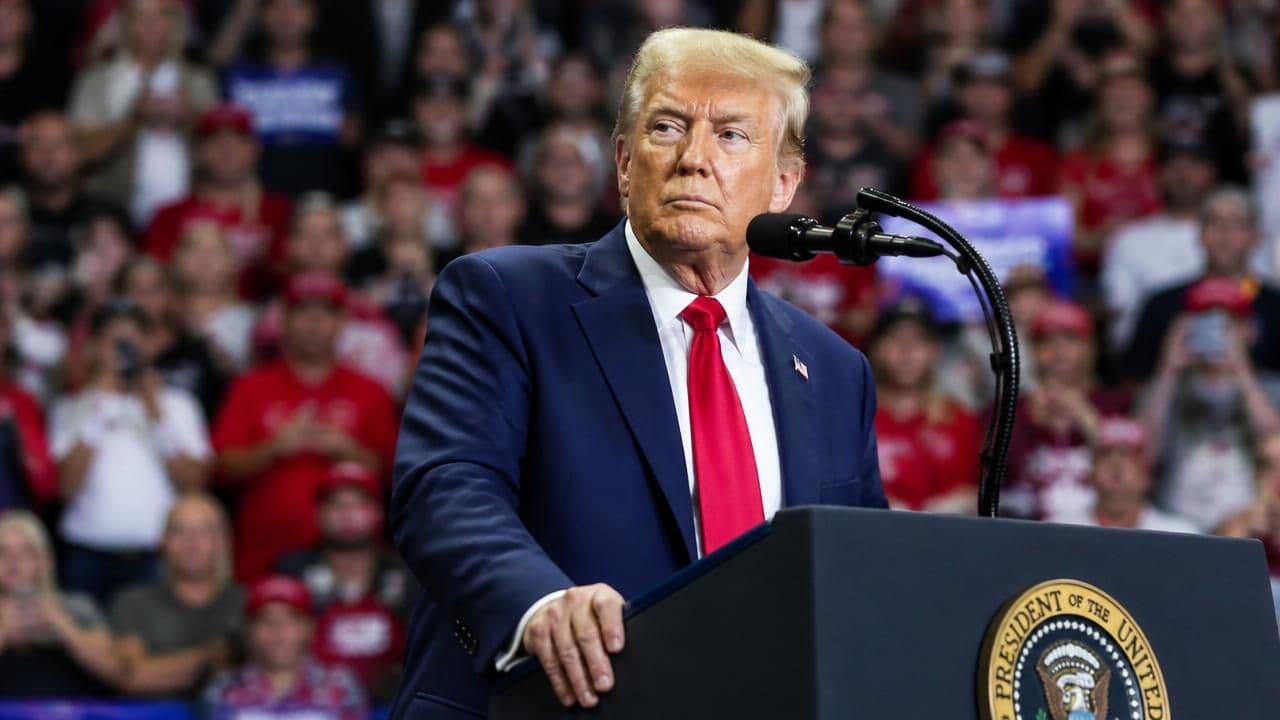
Global financial markets faced renewed turmoil on [date] after President Donald Trump declared an end to the ceasefire with Iran, triggering a sharp spike in crude oil prices and a sell-off in stock markets. The move, which came amid escalating military actions in the Middle East, injected fresh uncertainty into an already fragile global economic outlook.
Oil Prices Surge, Stocks Slide
Following the announcement, benchmark crude oil futures jumped by more than 5%, reaching levels not seen in months. The surge rippled through energy-dependent sectors, while major indices like the FTSE 100 and S&P 500 posted losses as investors fled to safe-haven assets. According to NPR, the development added "fresh uncertainty to an already shaky outlook for the global economy."
Analysts at Kalkine Media noted that the FTSE 100 was "set for a weak open" as Iran tensions shook markets. The London index, heavily weighted with oil and mining stocks, faced particular pressure amid fears of supply disruptions. Meanwhile, U.S. stock futures pointed to a lower open on Wall Street, with technology and consumer discretionary shares leading the decline.
Military Escalation and Regional Fallout
The crisis escalated further as reports emerged that Tehran had targeted Bahrain and Kuwait in retaliation for U.S. strikes. According to Kansas Public Radio, the attacks marked a significant broadening of the conflict, raising fears of a wider regional war. The White House condemned the strikes, vowing to protect allies and maintain freedom of navigation in the Persian Gulf.
Simultaneously, Israel continued its operations against Hezbollah in Lebanon, even as it agreed to enter talks. The New York Times reported that Israel "keeps striking Hezbollah" while pursuing diplomatic channels, a dual-track approach that reflects the complex dynamics of the region. The Israeli-Lebanese front adds another layer of instability to an already volatile Middle East.
Economic Implications for Investors
For investors, the sudden shift in geopolitical risk has prompted a reassessment of portfolio strategies. Arizona-based financial advisors, as covered by KTAR, are urging caution. "We're telling clients to stay diversified and avoid knee-jerk reactions," said one advisor. "Historically, such shocks create buying opportunities, but the current environment is particularly unpredictable."
The energy sector has been the most directly impacted. With Iran's oil exports already constrained by sanctions, any further disruption could push prices higher, feeding into inflation concerns. Central banks, already grappling with tightening monetary policy, may face additional pressure to adjust interest rates.
Historical Context and Expert Views
This is not the first time tensions with Iran have roiled markets. Similar spikes occurred in 2019 after the U.S. killed Qasem Soleimani and in 2020 following Iranian missile attacks on Iraqi bases. However, the current situation is compounded by ongoing conflicts in Ukraine and Gaza, as well as lingering supply chain issues from the pandemic.
Economist Dr. Sarah Jenkins, speaking to NPR, warned that "the global economy is in a precarious state. A sustained conflict could trigger a recession, especially in Europe, which is heavily reliant on Middle Eastern oil." Others argue that the impact may be short-lived if diplomatic efforts succeed, but the lack of clear communication from both sides leaves markets guessing.
Divergent Media Framings
Coverage of the crisis varies across outlets. NPR emphasizes the economic uncertainty and market volatility, while Kansas Public Radio focuses on the military dimensions and regional targets. The New York Times highlights the diplomatic paradox of Israel talking while striking, and Kalkine Media zeroes in on the immediate market reactions. This divergence reflects the multifaceted nature of the story—a blend of geopolitics, military strategy, and economic fallout.
Looking Ahead
As the situation unfolds, all eyes are on the next moves from Washington, Tehran, and their allies. The resumption of talks with Lebanon offers a glimmer of hope, but the ongoing strikes suggest that de-escalation remains elusive. For global markets, the key question is whether this is a temporary shock or the beginning of a prolonged period of instability.
Investors would do well to monitor diplomatic channels and energy supply data closely. In the meantime, the advice from financial experts remains consistent: stay informed, stay diversified, and prepare for volatility.