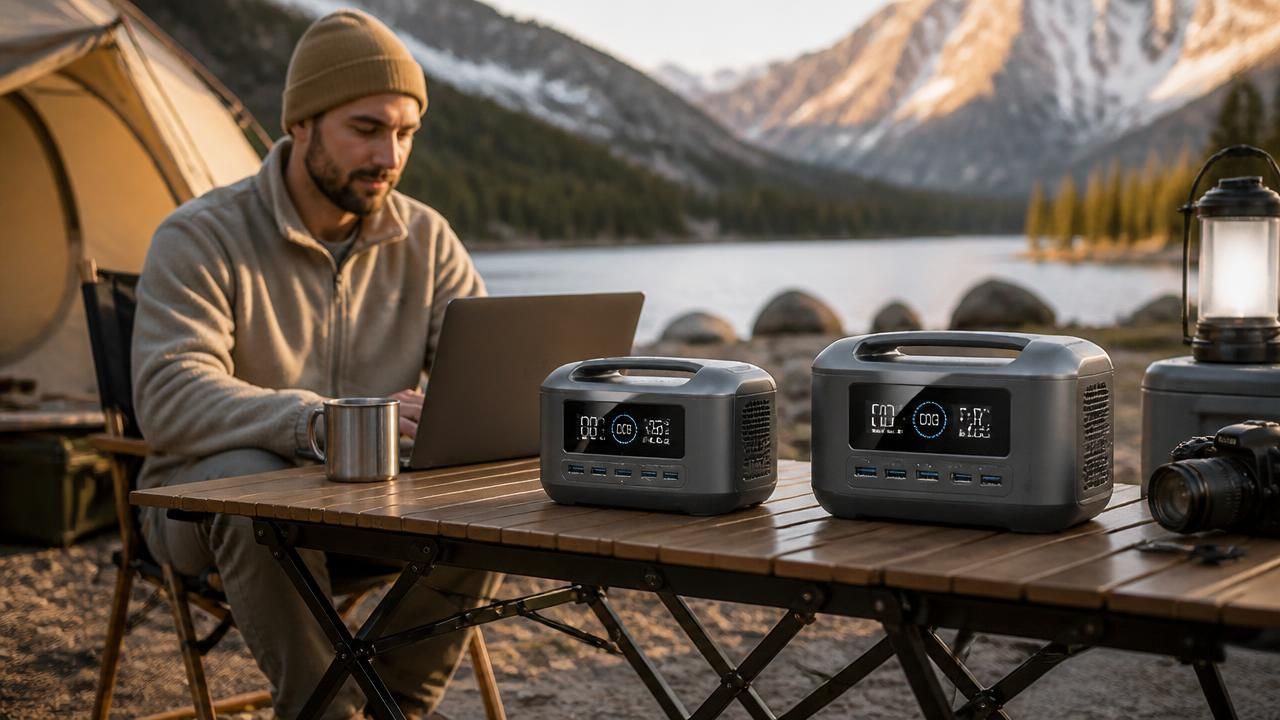
EcoFlow is redefining what you can expect from a portable power station. The company this week unveiled its fourth-generation River series, headlined by the new River 260 Gen4 and River 520 Gen4—two ultra-compact units that pack serious energy storage into footprints small enough to toss in a duffel bag. The timing couldn't be better: a wave of seasonal discounts, including up to 63% off on select EcoFlow models, is making portable power more accessible than ever for campers, RVers, remote workers, and homeowners preparing for outages.
The New River 260 and 520 Gen4: Tiny Powerhouses
The River 260 Gen4 offers a 256Wh capacity, while the 520 Gen4 doubles that with 512Wh. To put that in perspective, the River 260 stores roughly 2.5 times the energy of the largest airline-approved power banks, and the 520 stores about five times as much, according to EcoFlow. Both units use lithium iron phosphate (LFP) chemistry, a significant upgrade over older lithium-ion packs due to its longer cycle life and enhanced thermal stability.
"If you're in the market for a tiny power station that punches well above its size and weight, then have a look at EcoFlow's new fourth-generation River series." — The Verge
Despite their compact size, the new River stations feature a surprisingly rich port selection. The River 260 Gen4 comes with four USB ports and a single AC jack that delivers 300W of continuous output—enough to run a portable fridge, charge a laptop, or even power a Starlink Mini internet terminal, as The Verge demonstrated. The larger River 520 Gen4 offers a pair of AC jacks and more headroom for simultaneous devices, making it a viable option for weekend camping trips or as a discreet home backup unit.
The design emphasizes practicality: both models are built to be carried with one hand, and the industrial design eschews unnecessary complexity in favor of straightforward controls and clear status displays. EcoFlow's app connectivity adds a layer of convenience, allowing users to monitor charge levels, adjust output, and update firmware from a smartphone.
LFP Chemistry: A Safer, Longer-Lasting Battery
The shift to LFP is a key differentiator in a crowded market. Unlike traditional lithium-ion cells that use cobalt-based cathodes, LFP batteries are inherently more stable and less prone to thermal runaway. They also endure significantly more charge cycles—often rated for 3,000-plus cycles before dropping to 80% capacity, compared to around 500–1,000 cycles for older chemistries. For consumers, that means the River Gen4 units could last a decade or more under regular use, making them a better long-term investment.
This aligns with a broader industry trend. Competitors like Anker and Jackery have also begun adopting LFP cells in their newer products, but EcoFlow's move to standardize LFP across its entire River line—including the compact 260 model—signals that safe, long-lasting batteries are no longer a premium-only feature.
Specs vs. Reality: What Reviewers Want You to Know
As one seasoned tester who has evaluated power stations from Anker, Bluetti, EcoFlow, and Jackery noted, specs alone don't tell the full story. Real-world performance often differs from marketing claims in ways that matter. Here are a few insights drawn from extensive hands-on testing:
- Usable capacity is lower than rated. Inverters and conversion losses mean a 512Wh unit won't power a 100W device for 5.12 hours. Expect roughly 85–90% efficiency in practice.
- Peak output matters. Some devices—like refrigerators or power tools—draw high surge currents on startup. Check whether a power station can handle momentary spikes, not just continuous watts.
- Charging speed is a hidden variable. EcoFlow's proprietary X-Stream fast charging lets you recharge the River 520 from 0 to 80% in about an hour, but competing units from Goal Zero or Jackery may take significantly longer.
- Noise and heat. Fans can be loud during high-load operations or fast charging. The River Gen4 series includes a quiet cooling system, but it's still worth noting.
- Pass-through charging. Being able to charge the station while simultaneously powering devices is crucial for extended trips; the new EcoFlow models support this efficiently.
These nuances are critical to avoiding buyer's remorse, especially for first-time owners who expect a power station to behave exactly like a wall outlet.
From Camping to Blackouts: Where EcoFlow Fits
The new River models land at a time when portable power is becoming as essential as a tent or a first-aid kit. Mashable's 2026 roundup of the best camping power stations highlights how units like the Jackery Explorer 300 and Anker Solix C300 compare to EcoFlow's offerings. For campers who want to keep phones, cameras, and mini-fridges charged, the River 260 Gen4 is an ideal companion—light enough to carry on day hikes yet robust enough for weekend off-grid stays.
On the other end of the spectrum, USA Today recently spotlighted EcoFlow's holiday sales as a smart way to prepare for power outages. Home backup needs are different from camping needs: they require more capacity, more AC outlets, and sometimes the ability to integrate with solar panels. EcoFlow's Delta series addresses that segment, and during the current 4th of July sale, savings of up to 63% make those larger units more attainable for homeowners who want to keep lights, medical devices, and sump pumps running when the grid fails.
Deals and Discounts: The Best Time to Buy
Right now, a wave of promotions is driving prices down across EcoFlow's lineup. Autoblog noted that Walmart is offering a $699 EcoFlow portable power station—likely a higher-capacity Delta model—for 43% off, calling it a "brilliant backup power solution." Phandroid also teased limited-time offers on EcoFlow stations, and EcoFlow's own site is running a sale that slashes prices on both home backup and portable models.
These discounts make the new River Gen4 units particularly appealing. Shoppers can often find the River 260 Gen4 for under $200 and the River 520 Gen4 for under $400 during promotional windows. Given the LFP longevity, that's a compelling price-per-cycle proposition compared to disposable batteries or even smaller cheaper power stations with shorter lifespans.
How EcoFlow Stacks Up Against the Competition
The portable power station market has exploded over the past few years, with brands like Jackery, Anker, Goal Zero, Bluetti, and EcoFlow all vying for attention. Each has strengths: Jackery is known for reliability and integrated solar panels, Anker pushes fast charging and compact designs, and Goal Zero has a loyal following among outdoor purists. EcoFlow differentiates itself through aggressive innovation—it was among the first to popularize fast charging and app connectivity—and its new River Gen4 series reinforces that reputation by making LFP technology accessible at the smallest end of the spectrum.
In head-to-head comparisons, EcoFlow tends to lead in charging speed and battery longevity, while sometimes lagging behind in raw inverter efficiency—though the gap is narrowing. The Gen4 series appears to close much of that gap, according to early reports. For consumers, the choice often comes down to price, port availability, and whether solar expansion is a priority.
The Future of Portable Power
EcoFlow's fourth-generation River series is more than a spec bump—it represents a maturation of the portable power category. By pairing ultra-portable designs with safe, long-lasting LFP cells and realistic pricing, EcoFlow is making it easier for everyone to stay powered wherever life takes them. And with holiday deals currently slicing up to 63% off across the lineup, there hasn't been a better moment to invest in a power station that could charge your devices, run your campsite, or keep your home running during the next blackout.
Whether you're a seasoned overlander, a remote freelancer working from a hilltop, or a homeowner who simply wants peace of mind, the message is clear: reliable off-grid power is no longer a luxury—it's a smart, accessible backup plan.