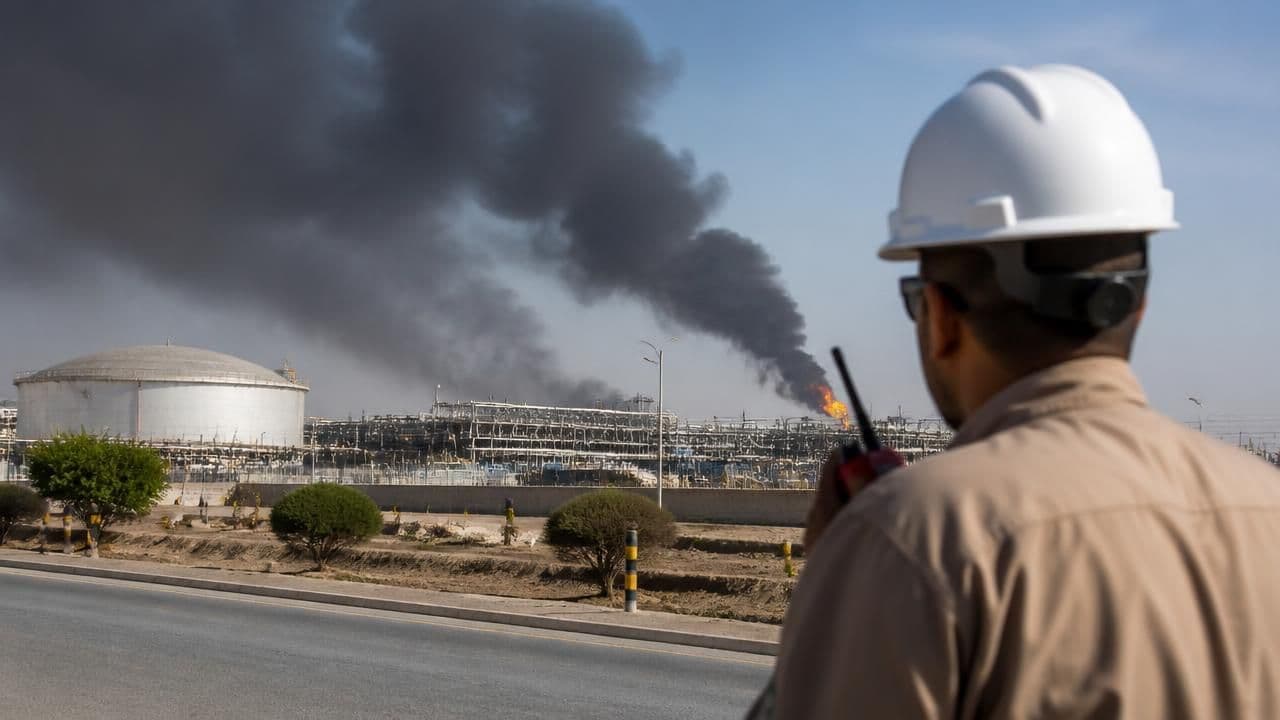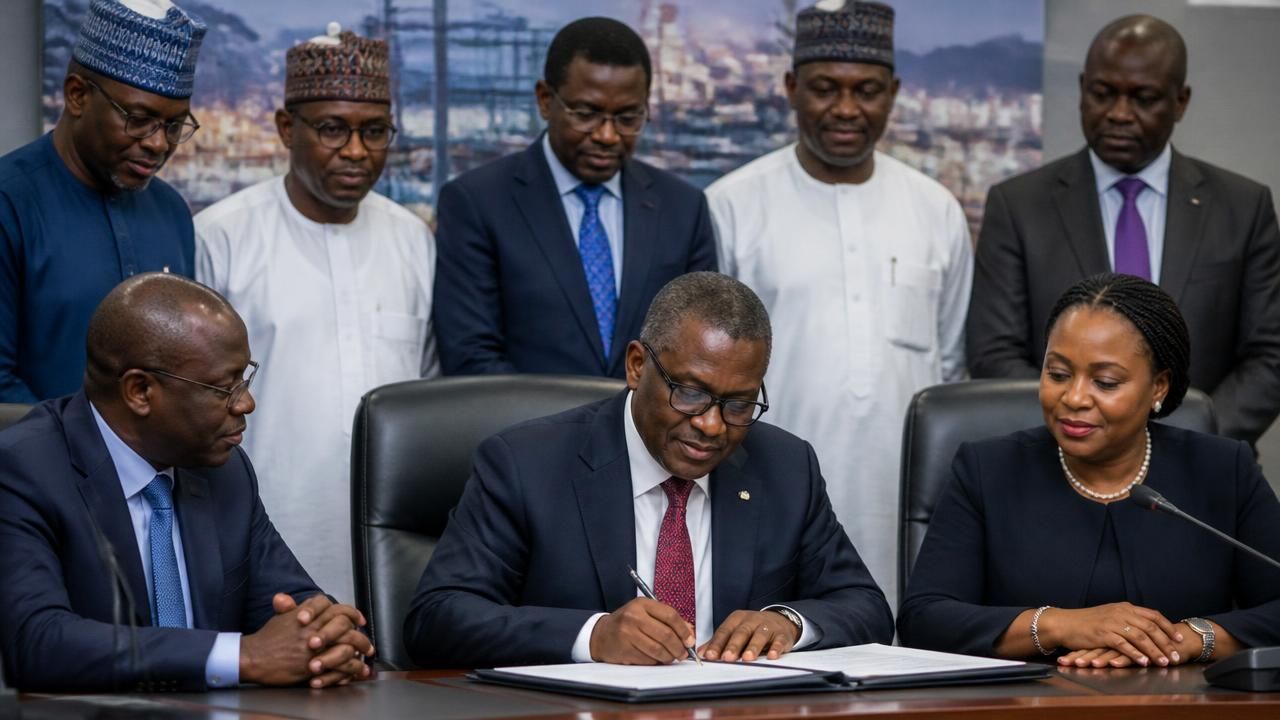
Africa's richest man, Aliko Dangote, has taken a decisive step toward launching the continent's largest-ever initial public offering by signing registration documents for the IPO of his refinery business. The ceremony, held on Monday in Lagos, marks a pivotal moment for the Dangote Refinery, a 650,000-barrel-per-day facility that has already reshaped Nigeria's fuel-import landscape. Reports indicate the listing could raise as much as $1.6 billion, making it Nigeria's biggest IPO, while the entire float is expected to value the refinery at around $5 billion.
The move culminates months of preparation by Dangote and his financial advisers, who formally submitted the registration paperwork, according to Bloomberg. The signing event was attended by bankers, regulators, and government officials, underlining the strategic importance of the listing for Nigeria's economy as the country seeks to attract foreign investment and reduce its reliance on imported petroleum products.
The Deal at a Glance
Dangote Refinery, the centerpiece of Dangote's $20 billion industrial complex in the Lekki Free Zone, processes crude oil into petrol, diesel, and plastics. An IPO would allow public investors to share in the refinery's fortunes and help Dangote recoup some of the massive capital outlay. According to Bloomberg, the company is seeking to raise around $1.6 billion, which would surpass the previous record for a Nigerian listing. Other sources, including Yahoo Finance and MSN, report that Dangote has already secured a record $2.5 billion in investment commitments ahead of the IPO, while Reuters adds that underwriting agreements worth $1 billion have been finalized, ensuring the share sale is fully backed by financial institutions.
“This is a landmark moment for Nigeria's capital markets and for African finance more broadly. An IPO of this magnitude signals confidence in the continent's industrial future,” said a senior banking source familiar with the deal.
A Complex Financing Structure
The differing figures reflect the multi-layered financing structure typical of large IPOs. The $1.6 billion figure represents the equity raise target from new investors. The $2.5 billion investment, reported by Yahoo Finance, likely includes a combination of anchor investments, pre-IPO placements, and committed facilities from sovereign wealth funds and institutional investors. Meanwhile, the $1 billion underwriting reported by Reuters is a risk-management mechanism where banks guarantee the sale of shares, ensuring the IPO's success even if market demand falls short.
The listing documents were signed at a ceremony later on Monday, as captured by MSN, with Dangote himself present. The refinery, which began production in early 2024, has already attracted global attention. Its output is expected to eliminate Nigeria's long-standing fuel queues and turn the country into a net exporter of petroleum products.
Context: Africa's Biggest IPOs
The Dangote Refinery float is set to dwarf previous landmark listings across Africa. The Africa Report highlighted five of the continent's biggest IPOs ahead of Dangote's $5 billion refinery offering. These include Safaricom's 2008 Nairobi listing valued at $3.6 billion, Morocco's Maroc Telecom at $2.9 billion, and Nigeria's own MTN subsidiary listing in 2021, which raised $753 million. None, however, have approached the scale of Dangote's planned share sale, which could set a new benchmark for African capital markets.
The size of the refinery float has been a subject of speculation for years. Analysts initially expected the listing to value the refinery at $10 billion or more, but market conditions and the refinery's heavy debt load have reportedly tempered valuations. Still, a $5 billion enterprise value would make it one of the largest listed companies on the Nigerian Exchange, with significant weight in indices.
Why This Matters
For Nigeria, the IPO is a test of its ability to finance large-scale industrial projects domestically. The country's stock exchange has seen a resurgence in recent years, with tech startups and banks listing, but a $1.6 billion raise would be unprecedented. It could also pave the way for other infrastructure-heavy companies to go public, creating a deeper capital market.
For Dangote, the IPO is a way to monetize his investment while retaining control. The refinery is part of his conglomerate's expansion from cement and flour into energy. By selling a minority stake, Dangote can raise funds to pay down debt and invest in other ventures, including a planned petrochemicals complex.
Perspectives and Framing
The coverage of the IPO signing reveals different editorial angles:
- Bloomberg framed it as a key step toward Africa's biggest share sale, focusing on the registration process and Dangote's financial advisors.
- Reuters emphasized the $1 billion underwriting, highlighting institutional confidence in the deal.
- Yahoo Finance and MSN highlighted the $2.5 billion investment secured ahead of the IPO, calling it a record for the continent.
- The Africa Report placed the deal in historical context by listing five preceding landmark IPOs, showing how far African markets have come.
These differing numbers are not contradictory but reflect the complexity of a listing that involves pre-IPO fundraising, underwriting, and public offering. Investors will be watching the final prospectus for details on valuation, dividend policy, and the exact share sale structure.
What's Next?
The registration documents now enter a review process by Nigeria's Securities and Exchange Commission. If approved, the IPO could launch as early as mid-2025, with trading expected on the Nigerian Exchange. Dangote's team is also reportedly considering a secondary listing in London to attract international investors.
In the meantime, the refinery continues to ramp up production. It recently began supplying Jet A1 fuel to airlines and is expected to start exporting petrol to West African neighbors. The success of its IPO could not only cement Dangote's legacy but also signal to the world that African industrial companies are ready for prime-time investment.
As the continent's most populous nation and largest oil producer, Nigeria has long struggled to translate its natural wealth into economic development. A successful Dangote Refinery listing would be more than a financial event—it would be a symbol of African industrial ambition.