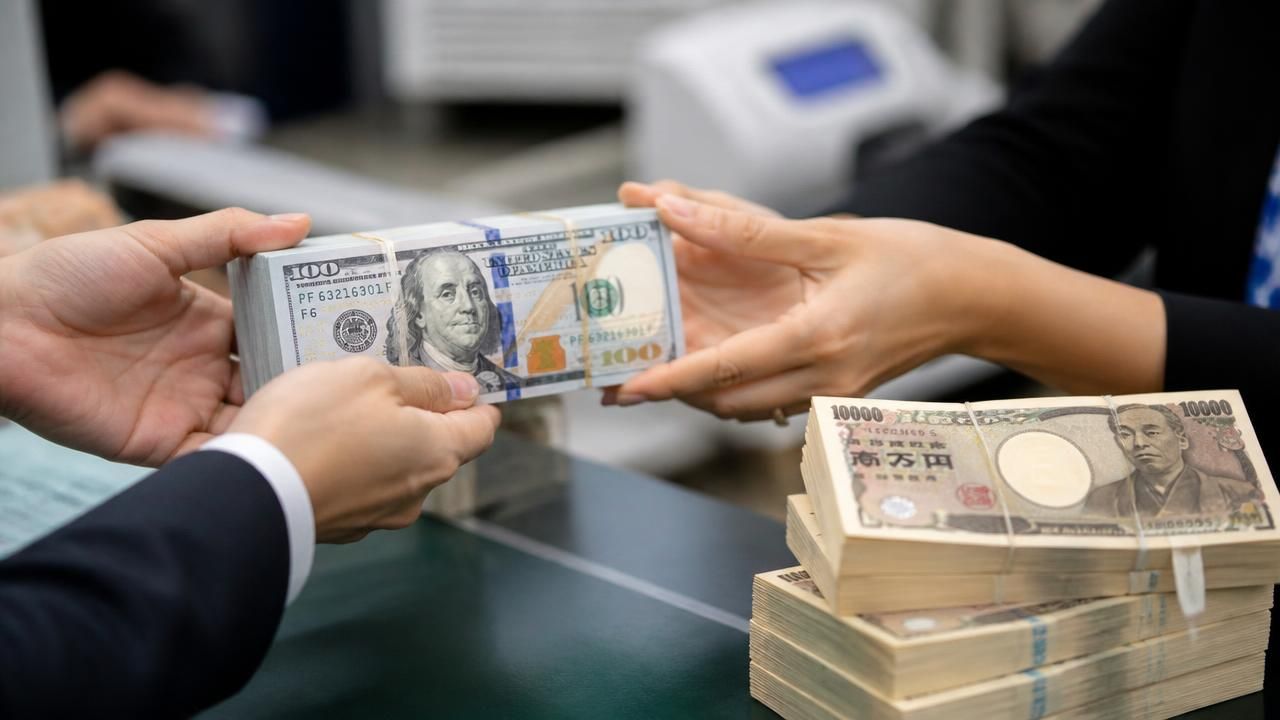
In an unprecedented move that has sent ripples through global bond and currency markets, Japan has likely funded its record-breaking yen intervention by selling a portion of its holdings of foreign securities, including U.S. Treasuries. The intervention—undertaken with explicit support from Washington—marks a dramatic escalation in Tokyo's fight against a sharply depreciating yen, but analysts warn that the battle is far from over as currency speculators and global investors adjust to a new, more volatile landscape.
How Japan Funded the Intervention
According to data analyzed by Bloomberg, Japan's aggressive currency market operations over the past month were probably financed through sales of foreign securities, with U.S. Treasuries being the most liquid and obvious choice. This revelation has sparked concern in Washington, where officials have long worried that large-scale Treasury sales by foreign governments could push long-term yields higher, complicating the Federal Reserve's efforts to manage inflation and economic growth.
The Japan Times, reporting on the same data, confirmed that the scale of the intervention—estimated to be Japan's largest ever—required Tokyo to tap its $1 trillion foreign reserve stockpile. While Japanese authorities have historically preferred to use cash deposits and other instruments for intervention, the sheer size of the operation made liquidating some Treasury holdings almost unavoidable.
U.S. Involvement and 'Hesitation' Vow
What makes this intervention particularly notable is the rare coordination with U.S. authorities. For the first time in decades, the U.S. stepped in to help prop up the yen, signaling a shared concern over the yen's slide to multi-decade lows. U.S. Treasury Secretary Scott Bessent vowed that Washington 'will not hesitate' to act again if necessary, a statement that carries weight given the U.S.'s historical reluctance to support foreign currencies through direct market intervention.
'We will not hesitate again,' Bessent said, underscoring a new willingness to intervene in currency markets to correct what officials view as disorderly conditions.
This joint approach reflects fears that an uncontrolled yen depreciation could destabilize global financial markets, given Japan's role as the world's largest creditor nation and a major holder of U.S. debt.
Goldman Sachs: Plenty of Ammunition Remains
Despite the heavy spending, investment bank Goldman Sachs argues that Japan retains substantial firepower. In a note to clients, Goldman highlighted that Japan still holds roughly $1 trillion in foreign reserves, leaving 'plenty of capacity' for further interventions. The bank's analysts suggest that Tokyo could sustain repeated operations if the yen continues to weaken, although they caution that each intervention carries diminishing returns unless accompanied by fundamental policy changes.
Goldman's assessment offers a stark contrast to market speculation that Japan's reserve buffer might be running thin. With reserves at around $1.2 trillion—including foreign currencies, bonds, and deposits—Japan has the financial muscle to defend the yen for an extended period, though the political and diplomatic costs of selling Treasuries could escalate.
The 'Dollar Smile' and a 125 Yen Target
Some currency analysts, including the creator of the famous 'Dollar Smile' theory, believe the intervention may mark the peak of the dollar's strength against the yen. According to this theory, the dollar tends to weaken when the U.S. economy is either in a deep downturn or a strong upswing, with weakness in between. The recent coordinated intervention could be an early sign that the dollar-yen pair has reached a tipping point, with some forecasting a move back toward 125 yen per dollar in the coming months. Such a level would represent a dramatic appreciation of the yen from its recent lows above 160.
Carry Traders Rebuilding Short Positions
Yet not everyone is convinced that Tokyo has turned the tide. In fact, the intervention has created a new opportunity for carry traders, who borrow in low-yielding currencies like the yen to invest in higher-yielding assets. According to Livemint, these traders are now exploiting the brief yen spike caused by the intervention to rebuild short positions at more favorable rates, betting that the yen will resume its decline once official support fades.
This behavior explains why the yen's rebound has been short-lived. After an initial surge immediately following the intervention, the currency has given back some gains, as market participants test the resolve of Japanese authorities.
Investors Rush to Hedge Japanese Rates
The shockwaves have also hit the Japanese interest rate market. IFR reports that investors are rushing to hedge their exposure to Japanese interest rates, driven by increased volatility and the possibility of further official action. The intervention has raised the specter of a policy shift by the Bank of Japan, which has maintained ultra-loose monetary policy for years. If Tokyo follows through with rate hikes or changes its yield curve control policy, Japanese government bonds could see significant repricing.
Hedging activity has increased across swaps and options markets, as fund managers seek to protect their portfolios against sudden moves in yen rates—a market that has historically been one of the calmest in the developed world.
What's at Stake for Global Markets
The episode marks a critical juncture for international monetary policy. Japan's intervention, funded by Treasury sales, has created a direct link between currency defense and U.S. bond markets, forcing both Japanese and American policymakers to walk a fine line. Japan needs to support its currency to curb import-driven inflation, but doing so by selling Treasuries risks angering its most important ally and raising global borrowing costs.
For the U.S., involvement in yen intervention is a double-edged sword: it may stabilize global markets, but it also sets a precedent that could lead to further coordinated actions, potentially weakening the dollar and undermining the Fed's independence.
As the currency war intensifies, investors are bracing for more volatility. The 'Dollar Smile' may be cracking, but carry traders are smiling at the opportunity to short the yen once again. What remains clear is that the era of passive Japanese currency policy is over, and the world's third-largest economy is now actively fighting to defend its monetary sovereignty—with consequences that will be felt far beyond Tokyo.