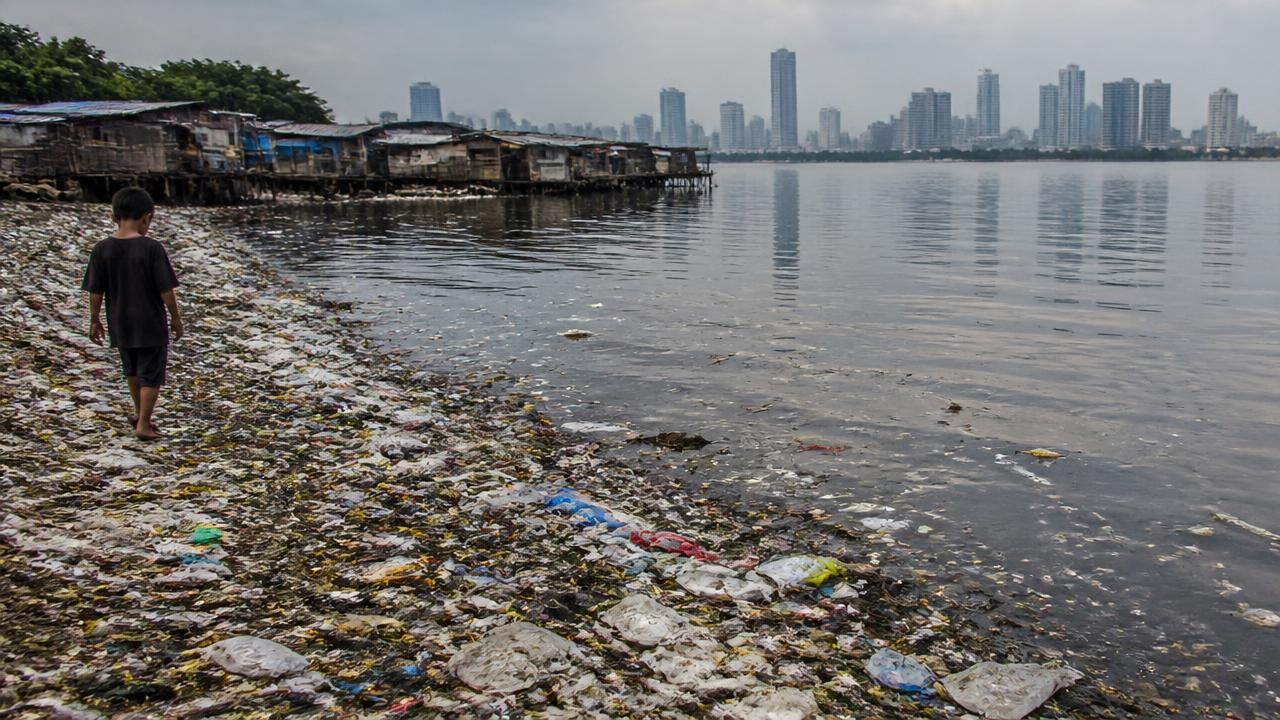
JAKARTA, Indonesia — They are in the air we breathe, the rain falling on tropical forests, the salt on our dinner tables, and the clothes we wear. Microplastics — tiny fragments of degraded plastic less than five millimeters long — have emerged as one of the most pervasive environmental contaminants of the modern age. Nowhere is the crisis more visible than in Indonesia, where an Asian business correspondent for The New York Times recently traveled to Jakarta, the capital, to investigate why these particles are increasingly showing up in the country’s air and precipitation.
The Indonesian archipelago is one of the world’s largest producers of plastic waste, much of it unmanaged. Waste dumps and open burning send plastic debris into the atmosphere, where ultraviolet rays and mechanical wear break it down into microparticles. These particles then ride monsoon winds and rain clouds, falling onto cities, forests, and farms. A separate study, reported by Mongabay, found that sea salt harvested on Lombok Island — a popular tourist destination near Bali — is contaminated with microplastics, raising concerns about food-chain exposure.
Jakarta: A Case Study in Plastic Pollution
The New York Times report highlights Jakarta as a particularly alarming example. In the megacity of more than 10 million people, microplastics have been detected in rainwater and air samples, according to researchers. The sources are not just the city’s overflowing landfills; they include synthetic fibers from clothing, tire dust, and fragments of packaging that litter rivers and canals. When the dry season turns to wet, these particles are washed skyward by evaporation and atmospheric circulation, only to return in torrents of rain.
“‘Microplastics are falling from the sky and polluting forests,’ as a ScienceDaily report on the phenomenon put it” — a line that captures the breadth of the problem. That report, drawing on recent research, documented microplastic deposition in pristine forest canopies far from urban centers, carried by wind currents and later rain. This broadens the issue beyond the developing world: even remote ecosystems are not safe.
From Sky to Sea: Microplastics in the Environment
The scope of contamination extends across every environmental compartment. A study highlighted by Phys.org shows growing evidence that freshwater wildlife, from fish to insects, is impacted by microplastics. Aquatic organisms ingest the particles, transferring them through food webs and threatening biodiversity. Even in forests, the falling microplastics can accumulate in soil, affecting microorganisms and plant health.
“We are seeing contamination everywhere we look,” noted the Mongabay report on Lombok. The sea salt findings are particularly telling because salt is a global commodity: if microplastics appear in remote Indonesian salt pans, they are likely present in salt worldwide. Indeed, earlier studies have found microplastics in table salt from multiple countries. The question is no longer whether they exist, but what they are doing to us.
A Divisive Health Debate
Just how dangerous microplastics are to human health remains fiercely contested. On one hand, Fast Company recently published research suggesting the health risk may not be as bad as previously feared. The article argued that the sheer size and dose of microplastics found in human tissues may be below the threshold needed to trigger cellular damage, and that the body may expel many particles. It cautioned against alarmism without more toxicological certainty.
Conversely, a growing body of evidence links microplastics to oxidative stress, inflammation, and endocrine disruption in animal studies. The emerging field of “emerging contaminants” now places microplastics alongside PFAS, as explored in a Q&A on Yahoo Finance that examined the challenge of regulating these substances. Scientists worry that microplastics act as vectors for other pollutants, absorbing heavy metals and toxic chemicals and releasing them inside organisms.
The uncertainty has created a public health paradox: citizens are concerned, but regulators are cautious. That tension is now exploding into the political realm.
Political Shockwaves and Regulatory Pushback
In the United States, the issue has become a bipartisan flashpoint. Fox News reported that Robert F. Kennedy Jr., a prominent environmental activist and political figure, and EPA Administrator Lee Zeldin have “declared war” on microplastics amid growing evidence of health risks. The pair pledged to address contamination in drinking water, framing it as a public health emergency. Their stance signals a rare alignment between conservative regulatory priorities and progressive environmental concerns.
“We must take microplastics seriously,” wrote the Fox News report, suggesting that the EPA may push for stricter standards under the Safe Drinking Water Act. This followed a global treaty on plastic pollution that collapsed after talks broke down, leaving nations scrambling for other solutions. The failed treaty was a stark reminder that international consensus is difficult to achieve, especially when industrial interests clash with environmental protection.
Solutions at the Local Level
Without a global treaty, cities and states in the U.S. and beyond are improvising. A Yahoo article outlined four solutions being tried across the country: plastic bag bans, filters on washing machines, improved stormwater capture, and enhanced wastewater treatment. In Indonesia, local communities are turning to river cleanup programs and waste-to-energy initiatives, but these are drops in a very polluted bucket.
Experts argue that the ultimate solution lies upstream: reducing plastic production and consumption. The laundry industry is also under scrutiny, as synthetic fibers are a major source of microplastics in water. Scientists warn that simple changes, like using washing machine filters or washing clothes less frequently, can significantly reduce emissions. But systemic change is needed.
As the Q&A on emerging contaminants highlighted, there is no single remedy. Policymakers must weigh the risks of microplastics against the societal benefits of plastic products, while also considering legacy pollution from already degraded materials.
The microplastics story is not just about Indonesia or Lombok. It is a global tale of convenience colliding with consequence. With treaty talks stalled and political battles raging, the particles themselves continue to infiltrate every corner of the planet — and our bodies. Whether the world will unite to stem the tide remains an open question, but as Jakarta’s rain falls, it carries a silent warning.