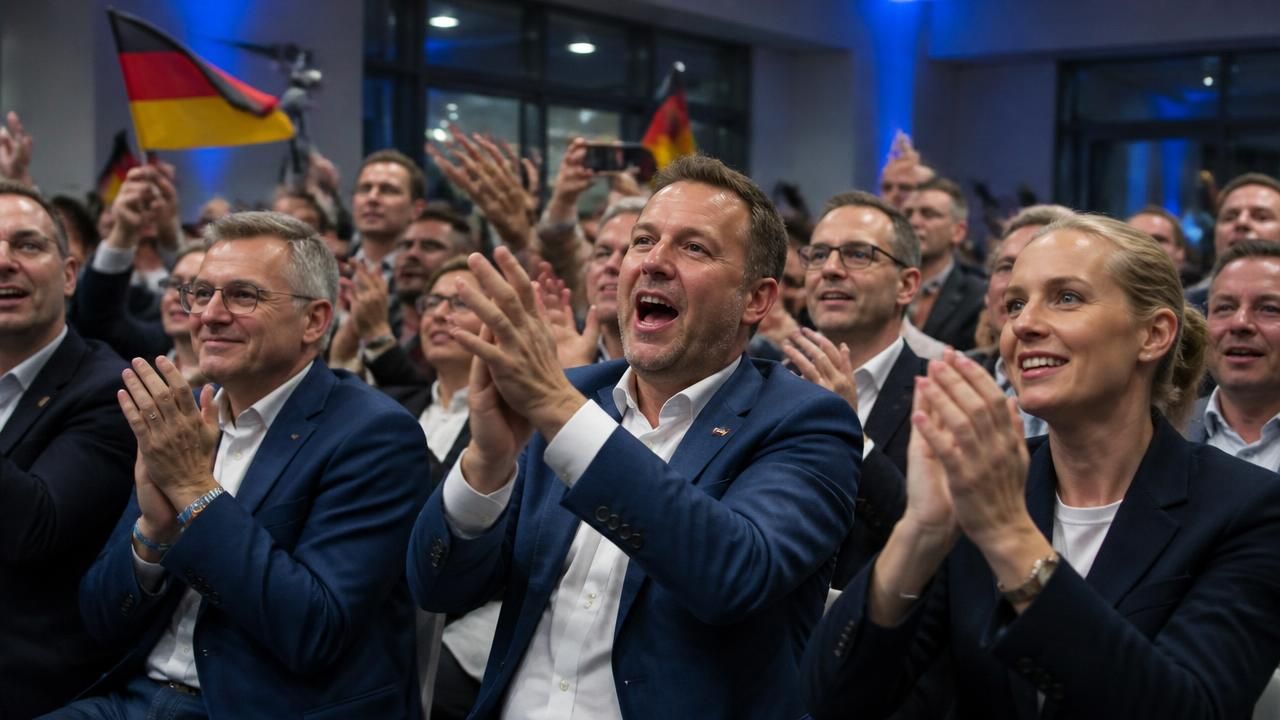
The Alternative for Germany (AfD) has scored a historic victory in the eastern state of Saxony-Anhalt, emerging as the strongest party in the state parliament according to preliminary projections. Yet, despite its first-place finish, the far-right party is likely to remain in opposition as no other party is willing to form a coalition with it. This election marks a watershed moment in German politics, underscoring both the deepening divisions in the country and the resilience of its postwar democratic firewall.
The projected result, released by public broadcasters on election night, gave the AfD a plurality of around 30 percent of the vote, ahead of the center-right Christian Democratic Union (CDU) and the left-leaning parties. The exact margin remains subject to final counts, but the trend was unmistakable: Saxony-Anhalt, a rural state with a struggling economy and a population that has harbored deep grievances since reunification, has shifted decisively toward the far right.
The Result
Saxony-Anhalt is one of the smaller states in Germany, with about 1.8 million voters, but its election carries outsize national significance. The state has been a bellwether for East German political moods and has seen the AfD rise from fringe status to a dominant force in just a few years. In the current election, the CDU, which had governed the state in a coalition with the center-left Social Democrats (SPD) and the Greens, suffered heavy losses. The SPD also hemorrhaged support, while the Left Party saw its vote share dwindle.
According to exit polls, the AfD succeeded in mobilizing rural voters, first-time voters, and many former abstainers. The party's campaign focused almost exclusively on immigration, rising crime, and resentment toward the political establishment. Its top candidate, a local party hardliner, struck a chord with those who feel left behind by globalizations and the energy transition.
A Historic First Since 1945
If the projections hold, this will be the first time since the end of the Second World War that a far-right party has finished first in a German state election. No far-right party has governed a German state in the postwar period, thanks to a consensus among mainstream parties to avoid cooperation with political outliers. The AfD's inability to find coalition partners means it cannot translate its electoral victory into executive power.
This so-called cordon sanitaire against the far right is both a testament to democratic resilience and a source of growing frustration among AfD voters. "It is a paradox that the AfD can win an election and still not govern," said political scientist Eva-Maria Schneider of the University of Leipzig, speaking to national press. "This situation will only deepen public cynicism unless the established parties address the underlying grievances."
"The election shows that democratic institutions can contain extremism, but the cost is rising political alienation in the East."
A Divided Land
Saxony-Anhalt, located in the former German Democratic Republic, has a complicated relationship with democracy. After reunification in 1990, the state suffered deindustrialization and high unemployment, leading to a persistent sense of being second-class citizens. This environment proved fertile for the AfD, which tapped into nostalgia for the GDR's security and order while campaigning on a modern anti-Islam and anti-EU platform.
The state's economy has improved in recent years, but many residents still feel that the West has not fully extended its promised prosperity. Per capita income remains below the national average, and few migrants have settled in the region, yet fear of immigration is a powerful force. In survey data, voters in Saxony-Anhalt listed migration and crime as their top concerns, far above economic issues.
What Does This Mean for Germany?
The result is a blow to acting Chancellor Olaf Scholz and his coalition government in Berlin. The national government has been embattled over its energy policy, inflation, and a major restructuring of the budget. While state elections are often influenced by national politics, this blow is a direct rebuke to the ruling coalition of the SPD, Greens, and Free Democrats, which lost two of its three party groupings in the state parliament.
The CDU, which remains the largest opposition party at the federal level, has been forced into an uncomfortable space. It now must decide whether to shift right to win back AfD voters or to adhere to its traditional centrist line. The party has this far refused any cooperation with the AfD, but internal pressures are mounting.
Internationally, a strong far-right presence in a German state parliament raises alarms among Germany's European partners. It feeds a narrative of growing right-wing extremism across the continent, with parallels in Italy, Hungary, and France. Yet, the fact that all other parties are uniting against the AfD provides some reassurance that democratic guardrails still hold.
Where Now?
Without a governing majority, the AfD will likely be forced into opposition, where it can use the state parliament as a platform for confrontation. The other parties, meanwhile, face the difficult task of forming a coalition. The CDU, despite its poor showing, is expected to lead a new government, most likely in a coalition with the SPD and even the Left Party, a coalition that would be awkward at the federal level but possible at the state level.
Yet the underlying social tensions remain unresolved. In the coming weeks, the political class will consider whether to address the causes of eastern Germany's discontent—such as lack of quality public infrastructure, a brain drain of young professionals, and a pervasive feeling of underrepresentation in national media and government. Without tangible changes, observers warn, the AfD's strength is likely to endure or even grow.
A Test for Democracy
Saxony-Anhalt's election has a significance far beyond its borders. It is a test for the ability of established parties to maintain authority in the face of populist challenges. As Germany prepares for the next national election, the left and center-right are watching with trepidation. If the AfD can replicate this success at the federal level, a government by the far right becomes conceivable, though still not mathematically certain.
For now, the far right has won a symbolic, yet pyrrhic, victory. It holds the top prize in Saxony-Anhalt but remains locked out of the executive wing. The voters of Saxony-Anhalt have spoken, but the future of the state rests with the negotiations among parties they did not choose to support in the plurality.
What happens next will be a lesson in the limitations of electoral success and the enduring strength of democratic pluralism in a nation that has historically been vulnerable to extremism.