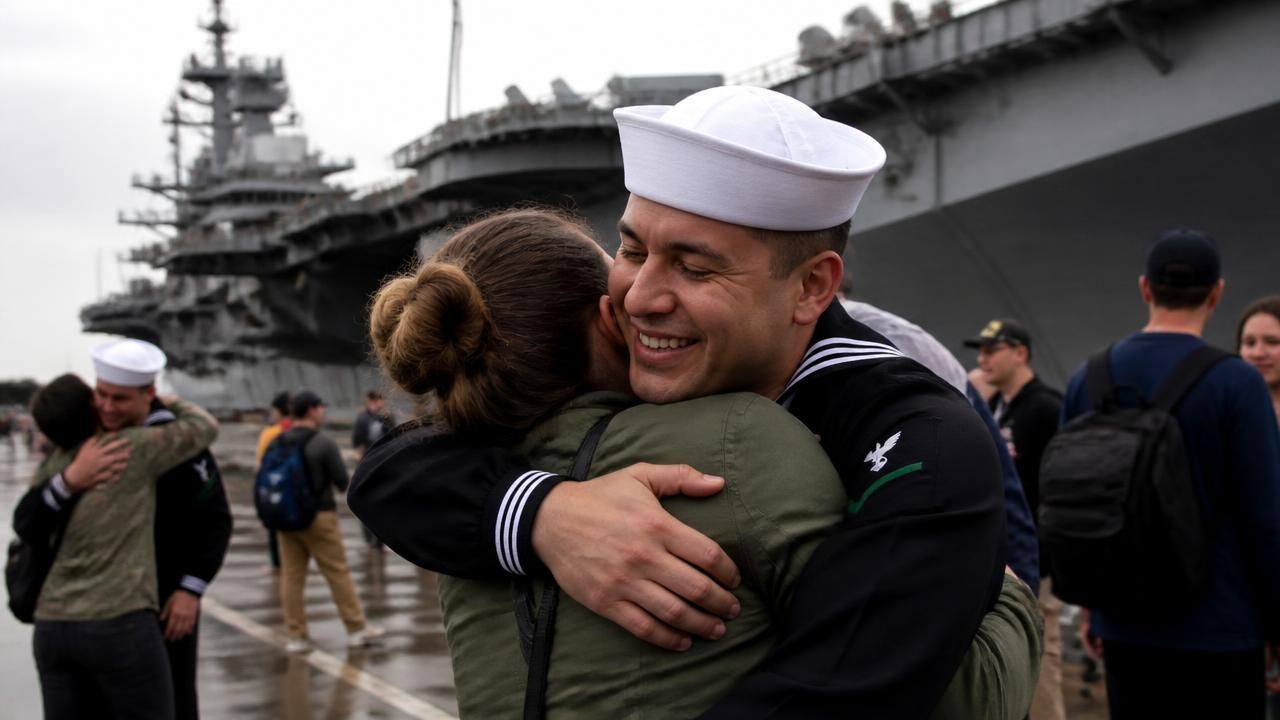
After 286 days away from home, the crew of the USS Abraham Lincoln finally stepped ashore in Thailand this week for a long-awaited port visit. The moment was bittersweet: the carrier had just completed a modern-era record of 264 consecutive days at sea, a grueling stretch punctuated by months of combat operations in the Middle East. For many sailors, the taste of freedom was accompanied by tales of food shortages, limited contact with loved ones, and persistent uncertainty over when they would finally return.
According to Bloomberg News Southeast Asia Reporter Philip Heijmans, who met with sailors in Thailand after they docked, the mood was a complex mix of exhaustion, pride, and lingering frustration. “They were incredibly relieved to be in port, but also clear that the deployment had pushed them to their limits,” Heijmans told Bloomberg. “Food shortages meant some staple items ran out weeks ago, communications with family were patchy at best, and there was constant anxiety about whether the ship would be headed home or redirected again.”
A Record at Sea
The USS Abraham Lincoln’s deployment, which began in early 2024, became one of the longest for a U.S. carrier in decades. The 264-day stretch at sea is believed to be the longest since the Vietnam War era, surpassing typical carrier deployments that range from six to nine months. The extended period without a port call was driven by an increasingly volatile security environment in the Middle East, where the carrier strike group was called upon to counter threats from Iranian-backed forces and protect commercial shipping lanes in the Red Sea.
For context, during the height of the Cold War, Navy deployments often lasted 30 days or less. But post-9/11 operations have stretched them significantly. Even so, 286 days total — with 264 of those spent underway — is exceptional. “This is not just a marathon; it’s like running a marathon with a 50-pound pack on your back,” said retired Navy Captain John Collins, a former carrier commander. “The physical endurance alone is remarkable, but the mental and emotional toll on the crew is something that cannot be underestimated.”
Life on the Lincoln
Life aboard a nuclear-powered aircraft carrier is always demanding, but the circumstances of this deployment made it particularly harsh. Sailors told Heijmans that food supplies ran low, with some staples like fresh vegetables and milk unavailable for weeks at a time. “We were eating processed meals more often than anyone wanted,” one sailor said. “You start to miss the simple things, like an apple that still has crunch.”
Communications with family and friends were also a major source of stress. Though carriers are equipped with satellite internet and email systems, bandwidth is limited, and when the ship was operating in combat zones, operational security often restricted personal communications. Many sailors went days or even weeks without a clear update from home. “It was the hardest part,” said another sailor, who asked not to be named. “Not knowing if my family was okay, and not being able to tell them I was okay. The ship could be hitting targets, but my mind was back home.”
The uncertainty of the deployment’s end weighed heavily as well. Originally scheduled to return in the spring, the carrier was repeatedly extended as global hotspots demanded a persistent U.S. naval presence. Sailors described the psychological impact of “gray-hull fever,” a term for the restlessness and depression that sets in when a ship is away from port for too long. “We heard rumors about going home several times,” said a junior officer. “Each time it fell through, it was like a gut punch.”
Pride in the Mission
Despite the hardships, many sailors expressed pride in what they had accomplished. The Lincoln and its carrier strike group conducted a range of missions, including airstrikes against Houthi positions in Yemen, escort operations for merchant vessels, and strikes on Iranian-affiliated targets in Iraq and Syria. “In the moment, you’re just doing your job,” said a fighter pilot assigned to the ship’s air wing. “But looking back, I know we made a difference. We kept shipping lanes open and showed adversaries that the U.S. would not back down.”
That sentiment was echoed by Heijmans: “There’s a real tension between fatigue and mission focus. On the one hand, they’re exhausted and want to go home. On the other, there’s a sense of collective accomplishment and pride that they stuck it out through one of the most demanding deployments in recent memory.”
Historical Echoes and Lessons
The crew’s experience is not without precedent. During the 2003 invasion of Iraq, the USS Lincoln spent 290 days deployed, but with port visits in between. The current record of 264 straight days at sea is a different beast. “That sort of continuous operations is usually reserved for times of declared war,” noted Collins. “It reminds me of World War II carrier deployments, where ships were out for months without touching land.”
The Navy is now likely to conduct a thorough review of how the deployment affected crew readiness and retention. Research shows that long deployments increase attrition rates and post-deployment stress symptoms. A 2021 study by the RAND Corporation found that sailors on extended deployments were 23% more likely to leave the service within two years. “The Navy has to think about the long-term costs,” said defense analyst Maria Sanchez. “If sailors feel that every deployment will be 300 days, you’ll lose the very people you need to lead the fleet.”
Looking Ahead
For now, the crew of the Lincoln is enjoying a few days of liberty in Thailand, a standard port visit that offers time to relax, eat fresh food, and call home. But the larger question hangs over the Navy: how to balance an era of near-constant demand with the limits of human endurance. As one sailor told Heijmans, “We’re proud, but we’re also tired. I hope someone in Washington is thinking about us.” That sentiment, perhaps more than any statistic, captures the reality of modern naval deployments.
“We were eating processed meals more often than anyone wanted. You start to miss the simple things, like an apple that still has crunch.” — USS Abraham Lincoln sailor
At a Glance
- Deployment length: 286 days total
- Consecutive days at sea: 264 (modern-era U.S. Navy record)
- Port visit: Thailand, following deployment that included combat operations in the Middle East
- Key complaints: Food shortages, limited family communication, deployment extension uncertainty
- Source of pride: Protecting shipping lanes and striking targets in Yemen, Iraq, and Syria
As the crew refuels and recovers, the broader military community is watching closely. The lessons from this deployment will shape policy for years to come, particularly regarding deployment length, crew welfare, and the sustainability of forward-deployed forces. For the sailors themselves, the memory of 264 days at sea will not fade easily. But neither will the effort they put into every one of those days.