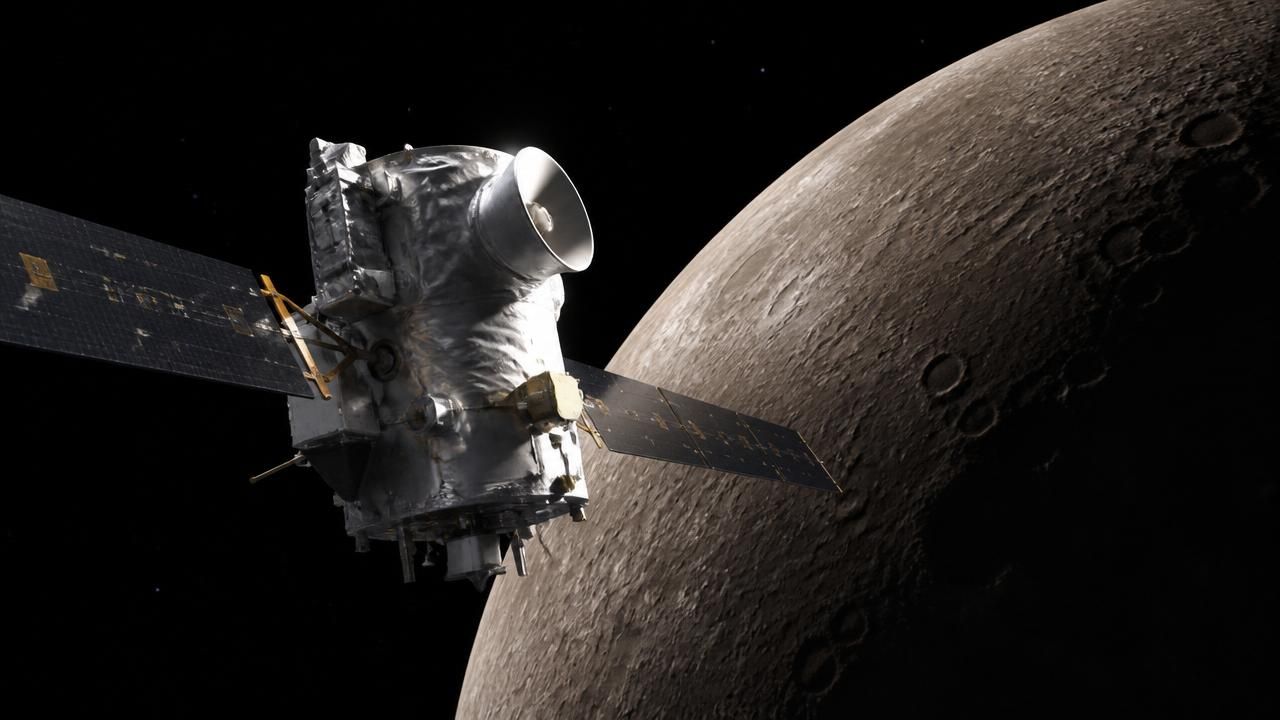
Nearly eight years after leaving Earth, the European Space Agency's BepiColombo mission is on the final approach to Mercury, setting the stage for a nerve-wracking orbital insertion that scientists describe as 'tricky.' Launched in October 2018, the robotic probe has spent nearly a decade spiraling inward through the Solar System, performing a carefully choreographed sequence of planetary flybys to shed orbital energy and align itself with the scorching, cratered world at the Sun's doorstep.
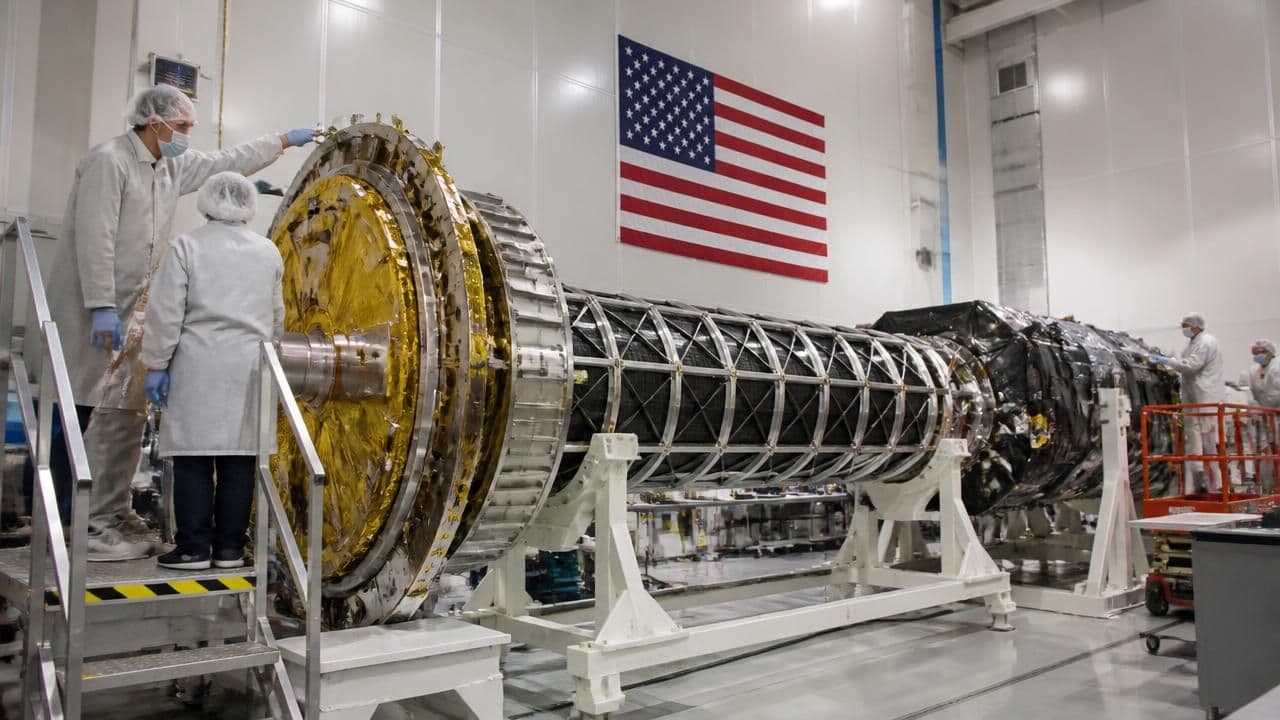
BepiColombo is a $2 billion joint endeavor led by ESA, with significant contributions from Japan's JAXA and NASA. It is not a single spacecraft but a stack of components: ESA's Mercury Planetary Orbiter, JAXA's Mercury Magnetospheric Orbiter (nicknamed Mio), and the Mercury Transfer Module that has powered the cruise. The mission's science phase will officially begin once the two orbiters separate and begin coordinated observations from complementary orbits.
A Journey Through the Inner Solar System
The path to Mercury is surprisingly arduous. Because the planet is so close to the Sun, any spacecraft from Earth must bleed off a tremendous amount of orbital energy. As Ars Technica notes, 'traveling to fleet-footed Mercury and then entering orbit requires more energy, or delta-v, than sending a probe to fly by Pluto.' To achieve this, BepiColombo has combined constant, low-thrust solar-electric propulsion with nine planetary flybys—first Earth, then Venus twice, and a series of Mercury encounters that gradually bent its trajectory. These gravity assists have been running like clockwork, but the final challenge remains.
It turns out traveling to fleet-footed Mercury and then entering orbit requires more energy, or delta-v, than sending a probe to fly by Pluto.
The next time BepiColombo meets Mercury, it will be traveling at just the right velocity for the planet's weak gravity to capture it. Mission controllers at ESA's operations center in Darmstadt, Germany, are closely monitoring the spacecraft's health and trajectory. MSN's coverage of the event uses words like 'battle-tested' and 'tricky arrival,' underscoring the risks of a maneuver that has no room for error. If all goes well, BepiColombo will become only the second spacecraft ever to orbit Mercury, following NASA's MESSENGER probe, which orbited from 2011 to 2015.
Why Mercury Still Holds Secrets
Mercury is the least explored of the four rocky planets, partly because its proximity to the Sun makes it difficult and dangerous to reach. Despite being a neighbor of Earth, it remains an oddball: it has a massive iron core, a weird surface soil, and a tenuous exosphere that interacts with the solar wind. The first spacecraft to visit, NASA's Mariner 10, captured detailed images of only about 45% of the surface in the 1970s. MESSENGER added much more, but many puzzles remain—including the origin of Mercury's magnetic field and the nature of volatile deposits in permanently shadowed craters.
BepiColombo was designed to crack these riddles with an unprecedented arsenal of instruments. It will deploy two orbiters at different altitudes, allowing scientists to study the planet's interior structure, magnetic field, exosphere, and surface composition simultaneously. The mission's prime science phase is expected to last at least a year, with a possible extension. According to the European Space Agency, the data returned will help researchers understand not just Mercury but also the formation and evolution of all terrestrial planets, including Earth.
A Mission Less Ordinary
Part of BepiColombo's challenge has been its relative anonymity. While Mars rovers and deep-space telescopes capture global attention, Mercury missions are often overlooked. One outlet, IFLScience, calls it 'the best mission you may not have heard of,' and for good reason—its findings could reshape Solar System science. As the spacecraft now closes in on its target, coverage from Scientific American, Ars Technica, and MSN is drawing renewed interest to an 8-year voyage that is about to reach its climax.
Approach, Capture, and the Road to Science
The crucial orbit insertion is expected to occur later this year, after which BepiColombo will fire its thrusters to settle into a controlled orbit. But the work is not done once captured. 'The tricky part is not entering orbit—it's surviving there well enough to do science,' mission analysts note. Mercury's proximity to the Sun means extreme temperatures: the planet's day side can exceed 430 degrees Celsius, while its night side plunges to -180 degrees. The spacecraft is fitted with ceramic heat shields and specially designed radiators to cope with the punishing environment.
For now, scientists and engineers are holding their breath. The maneuvers leading to this point have been flawless, but gravitational capture is a one-time opportunity. The spacecraft's path has been tweaked through a long series of deep-space navigation burns, and its arrival window is precisely defined. If anything goes wrong at the critical moment, another eight years might be needed—or the mission could be lost entirely.
Key Facts About BepiColombo
- Launch: October 20, 2018, from Kourou, French Guiana, aboard an Ariane 5 rocket.
- Partners: European Space Agency (ESA) and Japan Aerospace Exploration Agency (JAXA), with NASA involvement.
- Flybys used: Earth (1), Venus (2), and Mercury (6 planned) in a sequence of gravitational assists.
- Propulsion: Solar-electric ion drive in conjunction with planetary flybys to gradually change orbit.
- Science payload: 16 instruments across two orbiters, covering magnetometry, spectrometry, radio science, and imaging.
- Cost: Approximately $2 billion (including contributions from member states).
A Milestone for Solar System Exploration
The approaching capture is a defining moment not only for ESA and JAXA but for planetary science as a whole. Mercury remains the last frontier of the inner planets, and BepiColombo's ability to orbit such a hostile world will provide a unique way to test theories of planetary formation. Mission managers point out that the spacecraft's journey itself has been a demonstration of international cooperation and precision engineering.
As BepiColombo makes its final approach, scientists around the world are watching with anticipation mixed with anxiety. The long wait may end with a quiet, successful insertion—or a dramatic failure. But whatever happens, the story of this mission has already redefined what is possible in Solar System exploration.