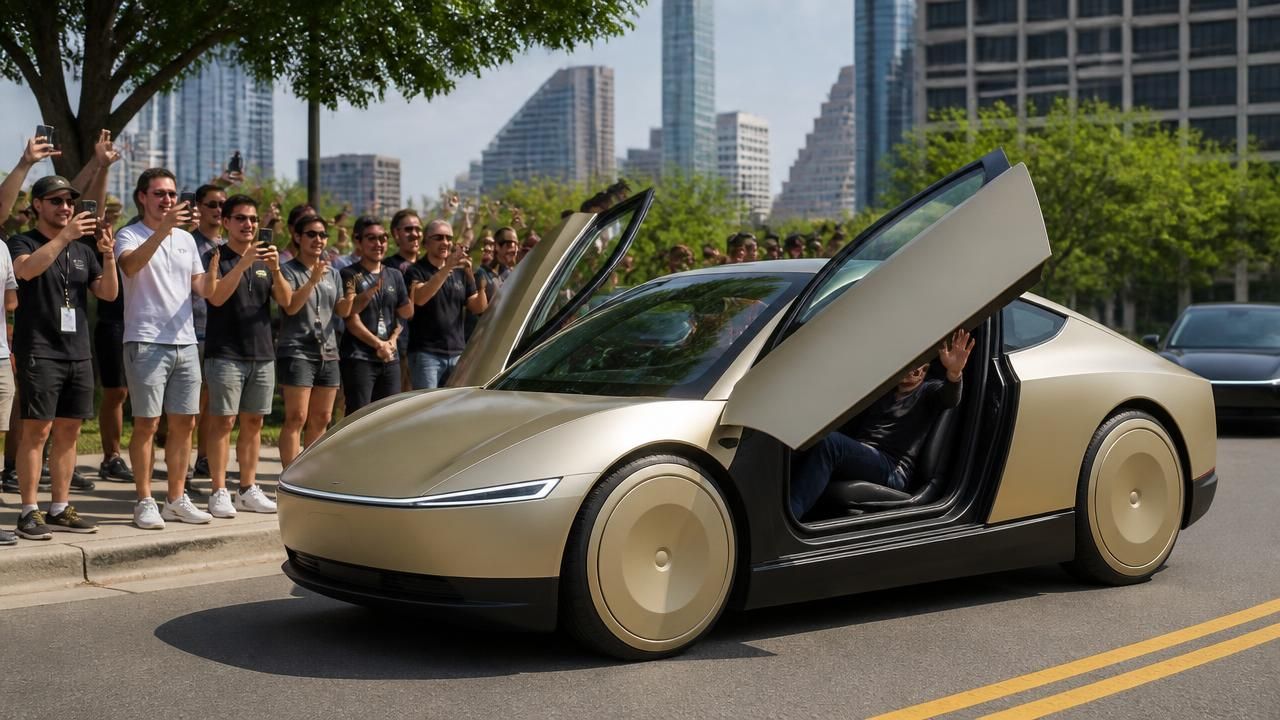
The scene in downtown Austin was celebratory: a crowd of Tesla enthusiasts lined up for a chance to ride in the company’s long-anticipated Cybercab, the two-seat, all-electric autonomous vehicle that has no steering wheel, no brake pedal, and no manual backup. But the thrill of that debut was quickly tempered when, just hours after Tesla welcomed passengers, the National Highway Traffic Safety Administration (NHTSA) confirmed it had opened an investigation into whether the vehicle meets existing federal motor vehicle safety standards.
The Cybercab, designed for fully autonomous ride-hailing, is now carrying public passengers on Tesla’s Robotaxi network in a handful of cities across Texas and Florida. Yet the deployment landed squarely in a regulatory gray zone: current federal rules were written for cars with conventional controls, and the Cybercab lacks several that are explicitly required.
A Federal Safety Review
NHTSA’s probe focuses on whether the Cybercab complies with the Federal Motor Vehicle Safety Standards (FMVSS), which currently mandate equipment such as steering columns, brake pedals, windshield wipers, and rearview mirrors. The agency is in the middle of an ambitious rulemaking process to update eight of those standards for driverless vehicles, but that process has yet to be finalized. Until it is, automakers are expected to satisfy the old rules or obtain exemptions.
According to the agency’s action, NHTSA will examine Tesla’s design and deployment strategy to determine whether the Cybercab can lawfully be sold and operated as a motor vehicle on American roads. While NHTSA has the authority to grant temporary exemptions for vehicles that meet alternative safety standards, Tesla did not appear to receive such approval for the Cybercab before launch.
“NHTSA is committed to ensuring that new technologies are deployed safely and in compliance with the law,” the agency said in a statement. “We will thoroughly review the Cybercab and its compliance with applicable safety standards.”
A Long-Awaited Robotaxi
Tesla’s robotaxi ambitions are not new. CEO Elon Musk has been promising a purpose-built autonomous vehicle since at least 2019, and the company unveiled the Cybercab at its “We, Robot” event in October 2024. That design show-stopper included a pair of doors that open like butterfly wings, and an interior that Musk described as “a little lounge” — with room for just two passengers and a large touchscreen dashboard.
The vehicle is based on Tesla’s “Full Self-Driving” software stack, which processes visual data from cameras and neural networks. Unlike competitors such as Waymo, which deploy fleets of modified conventional vehicles with lidar sensors and an array of backup systems, Tesla has staked its future on a vision-only approach that relies on artificial intelligence to navigate roads. The Cybercab is the physical embodiment of that strategy.
In the months leading up to the deployment, Tesla had been laying groundwork: it held private rides for employees and invited local officials to test the system. The company filed registration paperwork in Texas and Florida to operate a ride-hailing network, and has now started public testing in limited geofenced areas.
Regulatory Gray Zones
The regulatory environment for autonomous vehicles is fragmented. States like Texas and Florida have enacted permissive laws that allow truly driverless vehicles to operate on public roads without a human fallback operator. But vehicle design itself is regulated at the federal level. NHTSA’s FMVSS must be met before a vehicle can be manufactured and imported, and these standards still assume the presence of a driver.
NHTSA has been grappling with this tension for years. In a 2020 proposed rule, the agency asked how it could legally require a vehicle to have a steering wheel and pedals when those controls are no longer necessary. The current rulemaking effort seeks to modernize standards for airbags, child restraints, and other equipment, but progress has been slow. Meanwhile, companies like Cruise and Waymo have used a patchwork of temporary exemptions and state permits to test and begin paid service. Tesla, however, appears to have skipped that route.
The outcome of the investigation could have wide-reaching consequences. If NHTSA determines that the Cybercab is noncompliant, the agency could order Tesla to stop production and issue a recall, though it may also negotiate a remedy that allows the vehicles to continue operating under an exemption with documented safety case.
What’s at Stake
This is not the first time federal investigators have scrutinized Tesla’s assisted-driving technology. NHTSA has previously opened multiple probes into the company’s Autopilot and Full Self-Driving features, including fatal crashes where drivers misused the systems. The Cybercab, however, marks the first time Tesla has deployed a vehicle from the factory without conventional controls — and regulators are watching closely.
Safety advocates have long raised concerns about Tesla’s approach. “Automated vehicles have enormous potential to make our roads safer, but that promise can only be realized through rigorous testing and engineering,” said one consumer-safety expert familiar with the investigation. Yet Tesla fans argue that waiting for regulatory modernization would only delay progress—and that the Cybercab is designed with more safety in mind than a human-driven car.
For now, the Cybercab continues to operate while NHTSA conducts its preliminary evaluation. Tesla has not commented publicly on the probe. The company’s investors are betting that ride-hailing with autonomous vehicles will lower transportation costs and boost Tesla’s revenue. If the investigation stalls the program, Tesla could face another setback in its march toward full autonomy.
The larger question remains: how should federal safety standards evolve for a technology that is rapidly outpacing the rules? NHTSA’s answers in the coming months will not only determine the fate of the Cybercab, but also set a precedent for every future vehicle that arrives without a driving wheel.