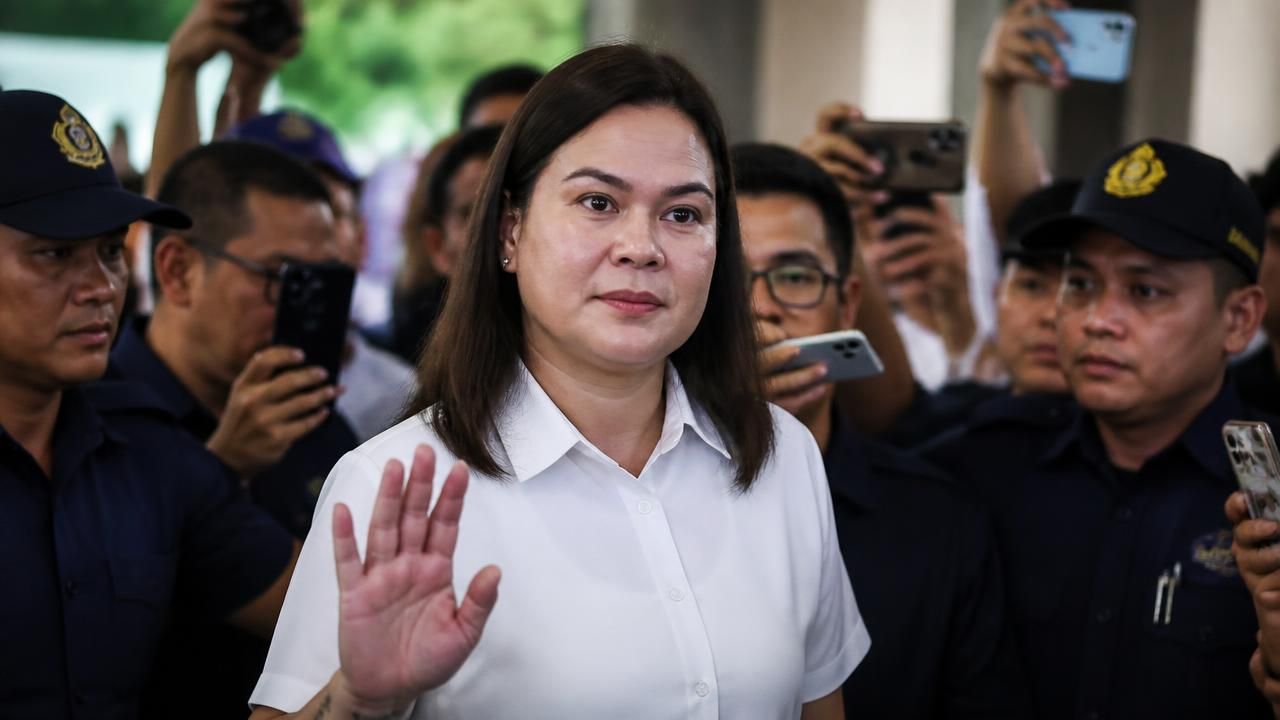
In a sharp escalation of a months-long political feud, Philippine Vice President Sara Duterte has posted bail after a court ordered her arrest over accusations that she publicly threatened to have President Ferdinand Marcos Jr., his wife, and a leading political rival killed. The move came after an arrest order was issued in a Manila trial court, with her legal team insisting on her innocence and denouncing the case as politically motivated.
Key facts at a glance
- Who: Vice President Sara Duterte-Carpio, daughter of former President Rodrigo Duterte.
- What: Arrest order over three counts of grave threats linked to an alleged assassination plot against the president and two others.
- Where: The case is pending before a regional trial court in the Philippines.
- Why: Duterte is accused of threatening to have President Marcos Jr., First Lady Liza Marcos, and House Speaker Martin Romualdez killed if she were assassinated.
- Now: Duterte posted bail while denying any criminal intent.
A threat that ricocheted across the political aisle
The charges stem from a fiery televised statement Duterte delivered in November 2024, during a late-night press conference. Reacting to what she described as relentless harassment from political rivals, she dropped a bombshell that would instantly redefine the country's political landscape:
“I have talked to a person; I said if I get killed, don't stop until you have killed Marcos Jr., his wife, and Romualdez.”
Those words, captured on video and replayed across social media, prompted the filing of criminal complaints by Marcos loyalists. According to reports from NPR, Newsday, and the South China Morning Post, the presidential office treated the remarks as a genuine threat rather than hyperbolic rhetoric, pushing the Justice Department to elevate the matter to a formal indictment for “grave threats” under the Revised Penal Code.
Arrest order and bail
The court ruling triggered immediate news coverage. As reported by Xinhua, Emirates 24|7, and MSN News, the judge found probable cause to issue an arrest order for three separate counts of grave threats — one for each alleged target: the president, the first lady, and House Speaker Romualdez.
Duterte was not physically detained. Through her lawyers, she arranged for the posting of bail, which the court accepted pending further proceedings. “The bail is posted; she is not evading anything,” a spokesperson said, adding that the vice president remains ready to defend herself in court. The exact bail amount was not immediately disclosed.
The development marks one of the rare instances in Philippine history where a sitting vice president has faced criminal process while in office. Legal observers point out that the bail posting, effectively freeing Duterte, sets the stage for a lengthy judicial showdown.
A collapse of the ‘UniTeam’
The dispute is the most dramatic symptom of a rift between two powerful political dynasties that once appeared inseparable. In 2022, Sara Duterte and Ferdinand “Bongbong” Marcos Jr. campaigned under the “UniTeam” alliance, winning the presidency and vice presidency in a landslide. Rodrigo Duterte, Sara's father and a former police chief, had brokered the partnership to consolidate political capital.
The marriage of convenience fractured over differences on the West Philippine Sea dispute, the Drug War investigations, and budget allocations for the vice president's office. Relations worsened when House allies of Marcos initiated impeachment proceedings against Duterte over alleged misuse of funds — motions that Duterte interpreted as a targeted attempt to remove her from the line of succession.
Can a sitting vice president be arrested?
As several outlets asked in their coverage, the legal question became a point of public debate. Under the Philippine Constitution, senators and representatives enjoy immunity from arrest for offense”, but the executive branch does not? A common misconception is that all elected officials are shielded; in reality, the vice president has no special immunity grid, except perhaps for actions required to perform executive duties.
Criminal lawyers like Manuelito Luna explain: “The vice president is an executive official, and while the president enjoys some immunity from suit during tenure, the VP doesn't. Grave threats is bailable, so she can be arrested and released.” Indeed, the court allowed bail precisely because the charge carries a bail amount as a matter of right.
Duterte: ‘We do not trust you’
Vice President Duterte reacted to the charges with unprecedented bluntness, pre-emptively criticizing the very officials tasked with carrying out the law. In a statement addressed to Justice Secretary Remulla and the Philippine National Police, she said:
“Let me say this clearly: we do not trust you. We will not let you turn this into a tool of vendetta.”
The remark was consistent with her earlier accusations that the Marcos administration is using state machinery to crush her political future. She has repeatedly claimed that her life is under threat and that authorities are ignoring warnings from her security detail. Her camp filed a formal security complaint, leading PNP director General Jesus Nartatez to order a thorough verification of those concerns, as SunStar Philippines reported.
The juxtaposition — Duterte as both alleged threatener and self-described victim — has highlighted the strange, mutually assured anxiety that now grips the upper rungs of Philippine politics. Her lawyers describe the assassination remark as an emotional outburst, intended to publicize her fear of being killed. “She was not plotting murder; she was expressing a mother's desperate warning,” one defense attorney said.
How different media framed the story
The coverage reflected the geopolitical and editorial priorities of each outlet. NPR leaned into the “arrest and bail” angle, avoiding judgment on the underlying words. The South China Morning Post, with an eye on regional power shifts, called the case a “Marcos death threat” in its headline. Chinese state media Xinhua contextualized the drama as the latest fluctuation in the Duterte family's ongoing skirmish with the Marcos administration, while Korean outlet Asia Business Daily highlighted the rarity of a top official facing legal perils in Asia.
Local Philippine outlets, such as SunStar and the Manila-based media, gave prominence to the vice president's security claims and her distrust of the police — a theme that resonates in a country where Duterte supporters remain a large, loyal voting bloc.
What lies ahead
The immediate legal path will likely involve arraignment hearings and a motion to quash the arrest order. Legal analysts expect Duterte's defense to argue that her words were protected political hyperbole and not a true threat, although the specific text of her remarks makes that a difficult sell.
Beyond the courtroom, the case has profound political implications. Sara Duterte is seen as a leading contender for the presidency in 2028. If convicted of a crime involving moral turpitude, she could be barred from seeking public office. If acquitted, she could emerge as a more powerful opponent, galvanized by the experience of what she calls persecution.
In a country where powerful families have repeatedly traded accusations of corruption and conspiracy, this episode sets a new precedent: a sitting vice president in the dock, still in office, still fighting — and still determined to speak.