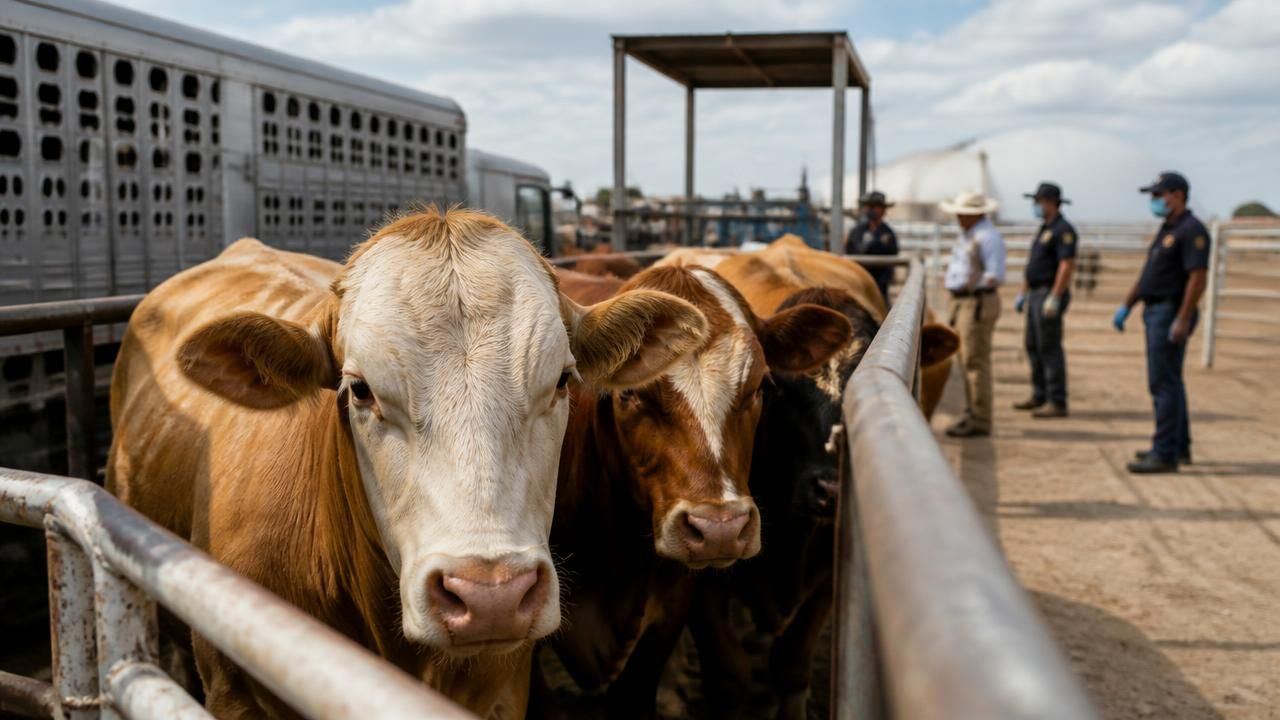
For the first time in a year, the U.S.-Mexico border has partially reopened to cattle imports, signaling a fragile truce in an escalating war against a flesh-eating pest that has devastated livestock across the region. But the battle against the screwworm—a fly whose larvae burrow into living tissue—is far from over, as officials scramble to contain an outbreak that has also infected more than 500 people in Mexico and pushed the limits of current eradication tools.
The reopening, confirmed by the U.S. Department of Agriculture (USDA) and reported by the New York Times, follows months of intense pressure from ranchers who faced severe economic losses when the border closed in late 2022. Yet the move comes with caveats: strict inspection protocols remain in place, and the underlying infestation continues to spread in parts of Mexico and Central America, threatening to re-enter the U.S. at any time.
A Decades-Old Foe Resurfaces
The New World screwworm (Cochliomyia hominivorax) is a parasitic fly that lays eggs in open wounds of warm-blooded animals, including humans. Once hatched, the larvae feed on living flesh, causing lesions that can be fatal if untreated. The pest was eradicated from the U.S. and Mexico in the 1980s using the sterile insect technique (SIT), which involves releasing millions of radiation-sterilized flies to interrupt the breeding cycle. But a resurgence, first detected in Panama and Costa Rica, has moved northward through Central America, reaching Mexico’s southern coast in early 2023.
According to the U.S. Department of Agriculture, the outbreak has caused billions of dollars in potential losses to the cattle industry. The border closure, imposed in November 2022, blocked all shipments of live cattle from Mexico, a vital trade route for American feeders and processors. The partial reopening—announced this week—allows cattle from certain approved Mexican states to cross, provided they meet stringent anti-infestation requirements.
Sterile Fly Shortage Threatens Containment
At the heart of the response is the sterile insect technique, which requires a steady supply of sterile flies. But officials admit the current production capacity is insufficient. According to MSN and other outlets, the U.S.-funded screwworm plant in Panama—the region’s only mass-rearing facility—has struggled to meet demand, producing only a fraction of the billions of flies needed to blanket the infested zones.
“The sterile fly shortage is the single biggest bottleneck in our containment strategy,” said Dr. Emily Hartman, a veterinary entomologist at Texas A&M University, who has studied the outbreak. “Without enough sterile flies, the screwworm population can outpace our control measures, and the outbreak continues to move.”
To address this vulnerability, the USDA announced this week a major investment in a new facility in Arizona dedicated to rearing sterile screwworms. Reuters reported the funding as part of an emergency response package. The plant is expected to produce an additional 50 million sterile flies per week, roughly doubling current capacity. However, construction will take time, leaving a critical gap that officials are trying to bridge with alternative approaches.
GMO Flies: A Controversial New Weapon
In a parallel effort, scientists are testing genetically modified (GMO) screwworms as a quicker, more cost-effective alternative to radiation-sterilized insects. The U.S. Department of Agriculture’s Agricultural Research Service has launched field trials using flies engineered with a “genetic kill switch” that causes offspring to die, reducing the pest population more rapidly than traditional SIT.
Agriculture.com and Omaha.com report that these trials are underway in Mexico, with initial results showing promise. Unlike irradiation, which can weaken flies, GMO males are fully competitive, making them more effective at reducing wild populations. “The technology is a game-changer,” said Dr. Luis Hernandez, an entomologist at the National Autonomous University of Mexico, not directly involved with the trials. “If successful, it could provide a faster and more targeted way to eliminate screwworm foci before they spread.”
But the approach has sparked debate. Environmental groups have raised concerns about releasing GMO insects into the wild, although federal regulators point out that the flies are self-limiting and do not persist in the ecosystem. The USDA has emphasized that all trials are conducted under strict containment and monitoring protocols.
Human Cases Exceed 500 in Mexico
The urgency of the response was underscored this week when Mexican health authorities reported that the number of human screwworm cases has surpassed 500 since the outbreak began—a staggering figure for a disease that was once nearly eradicated in North America. Ars Technica first reported the milestone, noting that most cases are concentrated in impoverished rural areas of southern Mexico, where access to healthcare is limited. Screwworm infestations in humans occur when flies lay eggs in existing wounds, including insect bites, scratches, or surgical incisions.
“These are vulnerable populations—farmworkers, indigenous communities, and families living in close proximity to livestock,” said Dr. Maria Fonseca, an infectious disease specialist at Mexico City’s General Hospital. “The social impact is enormous, and the disease can quickly become fatal if the larvae reach the brain or major blood vessels.”
The rising human toll has added a public health dimension to an agricultural crisis, prompting collaboration between the USDA, Mexico’s National Service for Animal Health, and the Pan American Health Organization.
How the Border Reopening Works
The partial reopening, effective immediately, applies to cattle originating from a defined “risk-free” corridor in northern Mexico. Under the new protocol, all animals must be inspected for wounds and treated with a preventive larvicide before crossing. They are also required to undergo a 14-day quarantine in certified facilities on the U.S. side. The USDA says it will maintain a “strike team” of veterinary inspectors at border points and use thermal imaging to detect any larvae beneath the skin.
Ranchers on both sides of the border have welcomed the move but with caution. “This is a lifeline for our industry,” said Tom Richards, president of the Texas Cattle Feeders Association. “But we can’t afford to let our guard down. A single lapse in screening could bring the pest back into the American heartland.”
Different Perspectives, Shared Stakes
The story has been framed differently across media outlets. The New York Times emphasized the geopolitical and agricultural complexity, reflecting on the struggle to control a pest that respects no borders. Reuters zeroed in on the USDA’s strategic investment in Arizona, a sign of long-term commitment to eradication. Meanwhile, outlets like Ars Technica highlighted the alarming human cases, shifting the narrative from a livestock issue to a broader public health emergency. Local agriculture publications focused on the practicality of GMO flies, portraying the trials as a necessary innovation in an otherwise desperate fight.
Together, these perspectives paint a picture of an emergency response that is both scientific and logistical, involving cutting-edge biotechnology, international cooperation, and the grit of farmers and health workers in the field.
What’s Next
The USDA has warned that the screwworm outbreak is not expected to be contained for at least another 18 months. In the immediate term, the agency is airlifting sterile flies from the Panama plant to hotspots in Guatemala and southern Mexico, while the Arizona facility ramps up. The GMO fly trials, if successful, could expand rapidly, but regulatory approvals will be required.
For now, the reopened border is a cautious sign of progress, but as one veterinarian noted, “The flies are still out there, waiting. This is a war of attrition, and we cannot afford to lose any more time.”