For as long as humans have had things that move faster than legs, we have wanted to know exactly how much faster. Ars Technica traces the impulse back to the first rider who climbed onto a horse on the Pontic-Caspian steppe and decided it would beat walking — a lineage that runs through the wheel, the chariot, and eventually the electric motor, which now delivers more power than an entire herd of beasts could muster.
Today that impulse is measured with a stopwatch. Zero to 60 mph, top speed, lap times: the standard currency of performance, and the battleground on which performance EVs are currently waging a very public arms race. But measuring a car's performance is easy. Measuring what that performance does to the person holding the wheel is a far messier proposition — and it is the question Polestar is now trying to answer in partnership with researchers at the University of Oxford.
Beyond the stopwatch
The initiative, announced via WebWire, is framed bluntly: "Beyond horsepower: Oxford researchers and Polestar put the human experience of performance to the test." The premise is that the industry's obsession with benchmark numbers has outpaced its understanding of the driver's side of the equation — the physiological and psychological response to acceleration, cornering load, and speed.
This is, in one sense, a marketing play. Polestar is a small, premium EV brand competing against giants, and it has built its identity on driving feel rather than raw output. Associating the brand with Oxford's research pedigree lends credibility to the argument that its cars are tuned for humans rather than for spreadsheet comparisons. But the underlying question is legitimate and increasingly urgent.
Why now: the EV acceleration trap
Electric powertrains have made absurd acceleration cheap. Instant torque means a dual-motor family crossover can now dispatch 60 mph in times that would have embarrassed a supercar two decades ago. The result is a narrowing field of differentiation: when everyone can hit the same number, the number stops meaning anything.
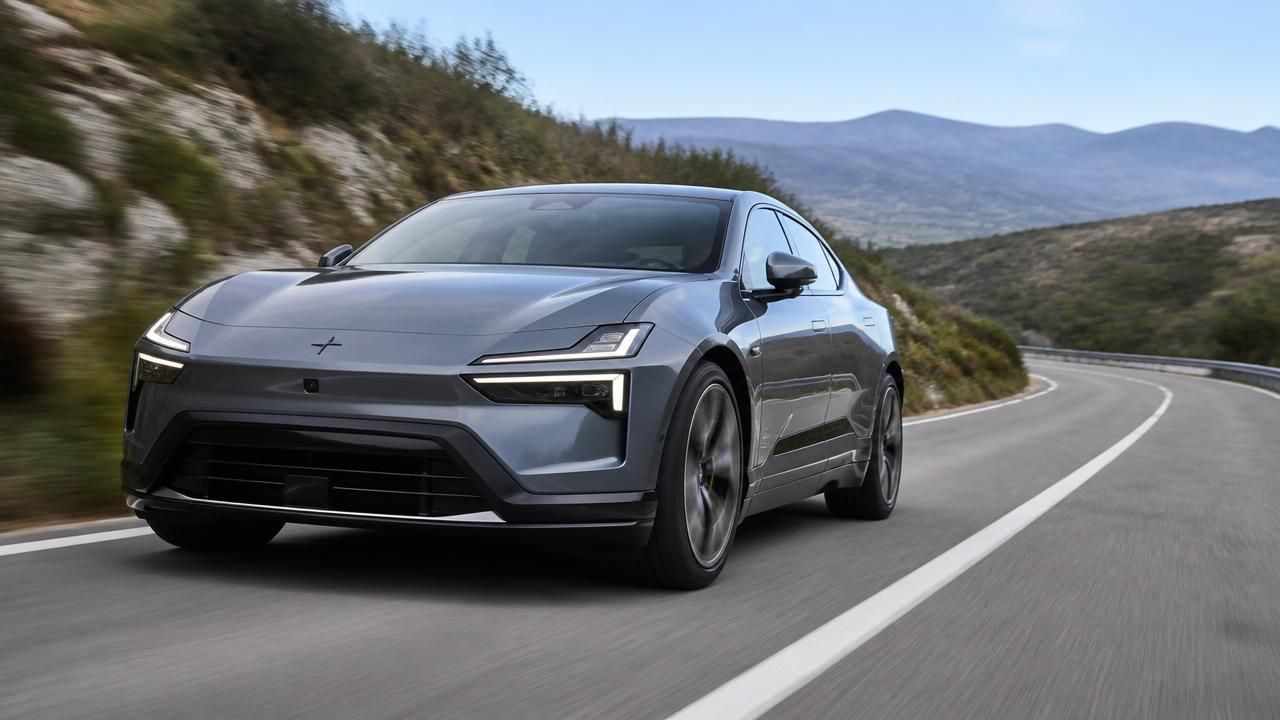
That dynamic is visible in the comparison tests. Car and Driver recently pitted the Tesla Model Y Performance against the Polestar 4 Dual Motor Performance Plus — two vehicles that occupy the same performance-EV niche and post broadly similar headline figures. The interesting differences, as in most modern comparison tests, lie elsewhere: ride quality, steering weight, cabin refinement, and how the car behaves at seven-tenths rather than ten-tenths.
Those are precisely the qualities that resist quantification — which is why a research partnership makes sense as a differentiator.
The cars the research is meant to explain
The timing is not accidental. Polestar's product offensive is cresting just as the study lands. The 2026 Polestar 5, the brand's flagship sedan, has been making the review rounds in quick-drive form, and the early verdicts are split in a revealing way.
One reviewer came away unable to fault the Polestar 5 on drive appeal — the chassis, the response, the sense of connection — but reported that the car nonetheless made them uncomfortable. The complaint was not about dynamics but about the human interface: the seating position, the packaging, the ergonomic choices that determine whether a good-driving car is also a pleasant one to live with.
Measuring a car's performance is easy — all you need is a stopwatch and a track. How about measuring the effect of car performance on the driver?
That gap between objective capability and subjective comfort is the exact territory the Oxford collaboration is meant to map. A car can generate impressive forces; whether those forces are exhilarating, fatiguing, or nauseating depends on how they are delivered — and on who is receiving them.
What the industry gets wrong
Automakers have long tuned for the test loop rather than the commute. Stiff suspension that shines on a lap can be punishing on a potholed street. Enormous power that feels thrilling in isolation can be unusable in traffic. As EVs converge on performance, the differentiators shift toward calibration — the software and hardware decisions that shape sensation rather than statistics.
- The metric problem: 0–60 times and top speeds are easy to market and increasingly meaningless as EVs converge on them.
- The human variable: Motion sickness, fatigue, and perceived effort vary enormously between drivers and passengers.
- The commercial angle: Brands that can articulate "feel" credibly gain an edge in a crowded, price-sensitive market.
- The regulatory backdrop: Road-safety and driver-attention research increasingly shapes how much performance is considered appropriate for public roads.
The takeaway
Polestar's Oxford study will not settle the debate, and results will inevitably be filtered through a marketing lens. But it signals something real: the performance-EV conversation is maturing past the drag-strip era. The next decade of competition will be fought over how a car makes you feel at 40 mph, not how quickly it reaches 60.
Whether Polestar can turn research into genuinely better cars — rather than just better copy — is the open question. The Polestar 5's mixed early reception suggests the answer depends on unglamorous details as much as on Oxford-approved philosophy. Speed, after all, was solved five thousand years ago. Comfort, confidence, and connection remain unsolved.