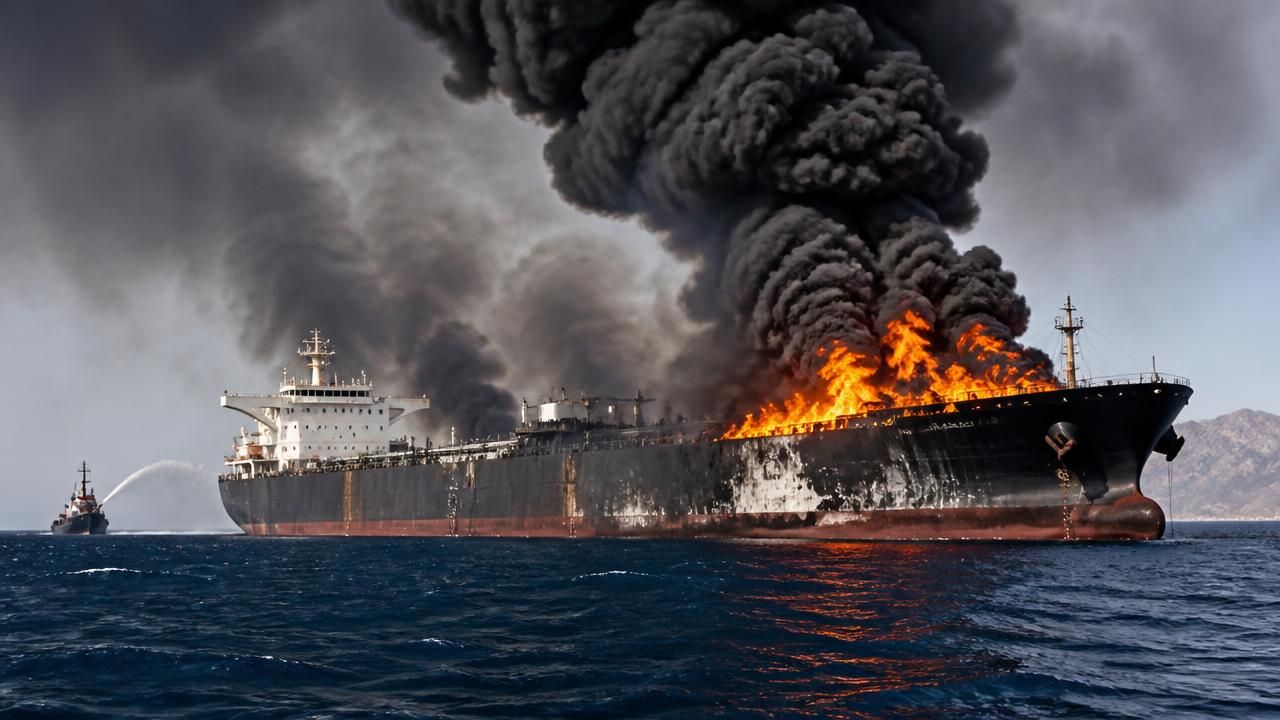
The United States military has struck three Iranian oil tankers in the latest escalation of hostilities in the Middle East, after the Islamic Revolutionary Guard Corps (IRGC) launched ballistic missiles toward two U.S. Navy warships, according to U.S. Central Command (CENTCOM). The strikes, which occurred near Kharg Island and in the Gulf of Oman, targeted vessels described as part of Iran's 'shadow network' of crude carriers, bringing renewed volatility to shipping lanes and global energy markets.
The confrontation unfolded over the weekend when IRGC forces fired missiles at American naval assets patrolling the strategically vital Strait of Hormuz, through which roughly one-fifth of global oil supply passes. CENTCOM said the Navy warships evaded the incoming missiles without suffering damage, but the attack prompted a swift retaliatory response against three Iranian tankers, which were struck and reportedly disabled or destroyed.
What Happened?
According to CENTCOM, the sequence began with an 'unprovoked' attack on U.S. vessels. The IRGC launched ballistic missiles toward two American warships, including an aircraft carrier. After the missiles were successfully evaded, U.S. forces located and struck three Iranian oil carriers in the waters off Kharg Island, a key Iranian oil terminal, and in the Gulf of Oman.
A U.S. official told Reuters that the strikes were conducted 'to deter further aggression' and to degrade Iran's ability to fund and support militant operations through illicit oil sales. The tankers were part of a network that has been used to transport crude oil in violation of U.S. sanctions, according to the New York Times, which cited Pentagon sources.
'The United States will not hesitate to defend our forces and allies,' a CENTCOM spokesperson said in a statement. 'These strikes were necessary to protect American personnel and maintain freedom of navigation in international waters.'
A Rising Chorus of Tensions
This incident marks a significant escalation in the long-running shadow conflict between the United States and Iran. While Washington and Tehran have avoided a full-scale war, the two nations have repeatedly clashed in and around the Strait of Hormuz, a narrow waterway that Iran has long threatened to close in retaliation for sanctions.
Bloomberg reported that the renewed fighting adds fresh pressure to shipping and energy markets, which had already been jittery over supply disruptions. Oil prices spiked following the news of the tanker strikes. President Donald Trump, meanwhile, has continued to downplay the clashes as something short of war.
Sources framed the events differently. The New York Post described the Iranian missile fire as 'unprovoked' and emphasized that U.S. forces 'destroyed' the tankers. BizPacReview went further, using the term 'obliterated,' though that language appears to be hyperbole. Stars and Stripes, the independent U.S. military newspaper, stressed that the warships 'evaded' the missiles, a detail that underscores the technological edge of U.S. naval defenses.
Market and Shipping Impact
The strikes sent ripples through global energy markets. Crude oil futures rose by as much as 3% in early trading, reflecting concerns about the safety of shipping lanes in the region. Insurance rates for tankers transiting the Strait of Hormuz have also climbed, with some shipping companies reportedly rerouting vessels to avoid the area.
- Major shipping indices saw increased risk premiums for Middle East routes.
- Analysts at energy consultancy firms warned that a sustained conflict in the region could disrupt supply from Saudi Arabia, Iraq, and the UAE.
- The IRGC's use of ballistic missiles against naval targets marks a new, more dangerous phase in its tactics.
What Is the 'Shadow Network'?
The tankers targeted are not typical commercial carriers. According to the New York Times, they belong to a clandestine fleet of vessels used by Iran to deliver oil to buyers in Asia, often with disguised identities and disabled tracking systems. This 'shadow fleet' has been a key source of revenue for Tehran, allowing it to circumvent U.S. and international sanctions.
By striking these vessels, U.S. forces are not just responding to the immediate missile threat but are attempting to undermine Iran's broader economic lifeline. Military analysts note that the choice of targets reflects a deliberate strategy to hit Iran where it hurts: its oil revenue.
Regional Reactions and Global Concern
Iran has not yet formally responded, but state media condemned the strikes as an act of aggression. In Tehran, hardline lawmakers called for a 'decisive response,' raising fears of a broader conflict. Meanwhile, regional allies of Washington, including Saudi Arabia and the UAE, have remained notably quiet, wary of being drawn into a confrontation that could spiral.
'This is a dangerous game of chicken in one of the most vital waterways on Earth,' said Dr. Layla Ahmed, a Middle East security expert at the International Institute for Strategic Studies. 'Both sides are trying to project strength without stumbling into a war that nobody wants.'
Historical Context
The U.S. has a long history of naval deployments in the Persian Gulf, dating back to the 1980s 'Tanker War' during the Iran-Iraq conflict. In 1988, the U.S. Navy engaged Iranian forces in Operation Praying Mantis, sinking an Iranian frigate and damaging several vessels. Today's strike echoes that earlier confrontation, but with modern technology and new geopolitical complexities.
The Trump administration's policy of 'maximum pressure' on Iran has included crippling sanctions, the assassination of IRGC General Qasem Soleimani in 2020, and support for anti-Iranian coalitions. Iran has responded by accelerating its nuclear program and backing proxy militias across the region. The current clash, however, is a direct military engagement between U.S. and Iranian forces—a red line that analysts have long feared.
What Happens Next?
The immediate question is whether Iran will seek a measured retribution like the 2019 downing of a U.S. drone or the 2020 retaliatory missile strike on Ain al-Asad airbase, which caused no U.S. deaths. A more aggressive response could include mining the Strait of Hormuz or launching anti-ship missiles at U.S. Navy vessels in the region.
The Pentagon has already ordered additional assets to the region, including a carrier strike group, to serve as a deterrent. In Washington, lawmakers from both parties have expressed support for protecting U.S. forces but remain divided over the broader strategic posture toward Iran.
For the international community, the episode underscores the fragility of global energy supply chains. As the G7 prepares to meet, diplomats are urging restraint from all parties. The United Nations called for an immediate de-escalation, while the Kremlin, a close ally of Tehran, blamed the United States for igniting the crisis.
Framing the Story
U.S. media outlets have focused on the self-defense narrative, highlighting the 'unprovoked' Iranian missile fire. International coverage, including from BBC and Reuters, has taken a more neutral tone, noting that the missile attacks and subsequent strikes are part of a cycle of violence that has intensified in recent weeks. Some Persian Gulf media, meanwhile, expressed alarm at the possibility of oil supply disruptions.
The Nikkei Asian Review noted that Japan and South Korea, major importers of Middle Eastern crude, are watching the situation nervously. In Europe, the focus is on maintaining the fragile nuclear deal, which remains in limbo after the U.S. withdrawal in 2018.
As photos of black smoke rising from oil tankers circulate online, the world is once again holding its breath. What began as a missile volley aimed at U.S. warships has become a direct American assault on Iran's economic infrastructure—a swift, harsh message that the United States will not retreat from the Persian Gulf.