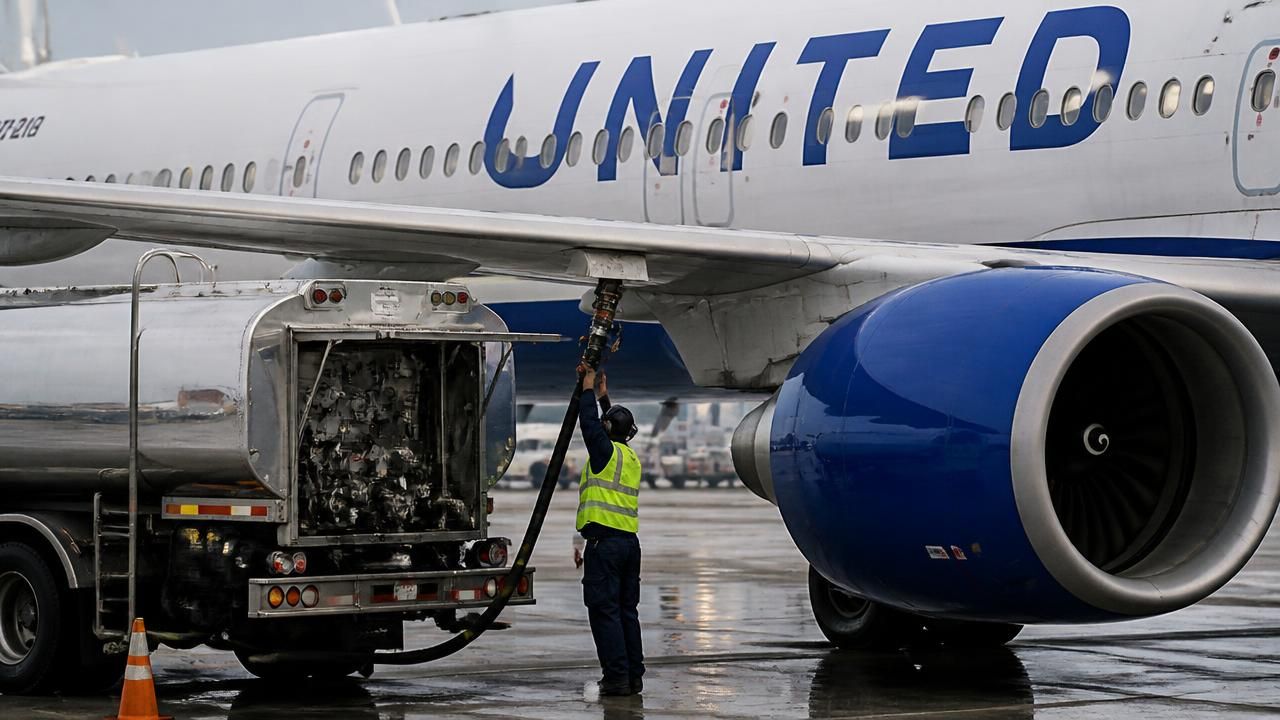
United Airlines Holdings Inc. reported quarterly results that fell short of Wall Street expectations and guided toward weaker-than-expected earnings for the final three months of the year, a combination that put the carrier's cost structure — and the industry's pricing power — under fresh scrutiny. The culprit, according to coverage across financial and general-news outlets, is jet fuel.
The story broke along two tracks. Bloomberg Markets framed the miss as a margin problem: soaring jet fuel prices are "eating into airline profits despite resilient demand for air travel." Reuters emphasized the strategic question underneath the numbers, describing a "fuel shock" that is testing whether carriers can keep raising fares fast enough to cover their fuel bills. Aggregators including MSN carried the same core result — United missing third-quarter estimates as fuel costs weighed on profitability — while also amplifying a broader industry warning that fuel is compressing margins across the sector and could eventually show up in ticket prices.
A fuel bill that outran the fare box
Jet fuel is among the most volatile line items on any airline's income statement, and it is typically one of the two largest, alongside labor. Because carriers sell tickets months in advance, a rapid run-up in fuel prices creates a structural lag: the cost arrives immediately, but the revenue needed to offset it can only be recaptured through future fare increases, fuel surcharges, or capacity cuts.
That lag is precisely what United's guidance appears to reflect. The carrier beat or approached revenue expectations on the strength of sustained travel demand, but the fuel line ate the difference. As Bloomberg put it, the dynamic "underscores how soaring jet fuel prices are eating into airline profits despite resilient demand."
"...underscoring how soaring jet fuel prices are eating into airline profits despite resilient demand for air travel." — Bloomberg Markets
The phrasing matters. This is not a demand problem. Consumers and corporate travel managers are still booking. The problem is arithmetic: at current fuel prices, the marginal seat is less profitable than it was when the year's guidance was set.
The pricing-power test
Reuters' framing — "fuel shock tests pricing power" — gets at the central economic question facing the industry. Airlines have spent the post-pandemic recovery demonstrating unusual discipline on capacity, which allowed them to push fares higher without destroying demand. If fuel stays elevated, the industry must either pass the cost through to passengers or absorb it.
There is evidence it is already choosing option one. One widely circulated headline asked whether fliers could face a 20% airfare hike in 2027, pairing that question with the industry's warning that jet fuel costs are squeezing margins. That figure should be treated as a scenario rather than a forecast — no carrier has published such a target — but the direction of travel is clear: fuel surcharges, reduced discount inventory, and higher base fares are the standard transmission mechanism from the fuel market to the passenger.
Fewer flights, fuller planes
The second lever is capacity. Reports this week noted that airlines are scaling back flights amid soaring jet fuel prices — a familiar playbook. Trimming frequencies and retiring inefficient routes reduces fuel burn, tightens supply, and supports fares all at once. The trade-off is service quality: thinner schedules in secondary markets, fewer rebooking options during disruptions, and less competition on some city pairs.
- The result: United missed third-quarter estimates, with fuel costs the primary driver.
- The guidance: Fourth-quarter earnings are expected to come in below consensus.
- The industry response: Capacity reductions and a harder look at fare structures.
- The consumer question: Whether higher fuel costs get passed through as ticket prices rise.
How the coverage differed
The divergence in framing is instructive. Bloomberg, writing for investors, led with the earnings miss and the guidance cut — the market-moving facts. Reuters led with the strategic implication, treating the quarter as a referendum on whether airlines still have room to raise prices. The MSN headlines split between the hard numbers ("misses Q3 estimates") and the consumer-facing angle ("20% airfare hike in 2027?" and "airlines scale back flights"). Read together, they describe one event from three altitudes: the quarter, the strategy, and the traveler's wallet.
What to watch
The next several weeks will be decisive. Carriers typically finalize holiday and first-quarter schedules in this window, and any further capacity trims will signal that management teams expect fuel to stay expensive. Watch also for commentary on corporate travel volumes — a segment that is more price-sensitive than leisure and would crack first if fares climb too aggressively.
The broader context is an industry that only recently finished repairing its balance sheet. Airlines emerged from the pandemic with heavier debt and thinner reserves; a sustained fuel shock consumes exactly the cash that was meant to de-lever. For now, demand is holding. But as United's guidance shows, resilient demand and healthy profits are no longer the same sentence.