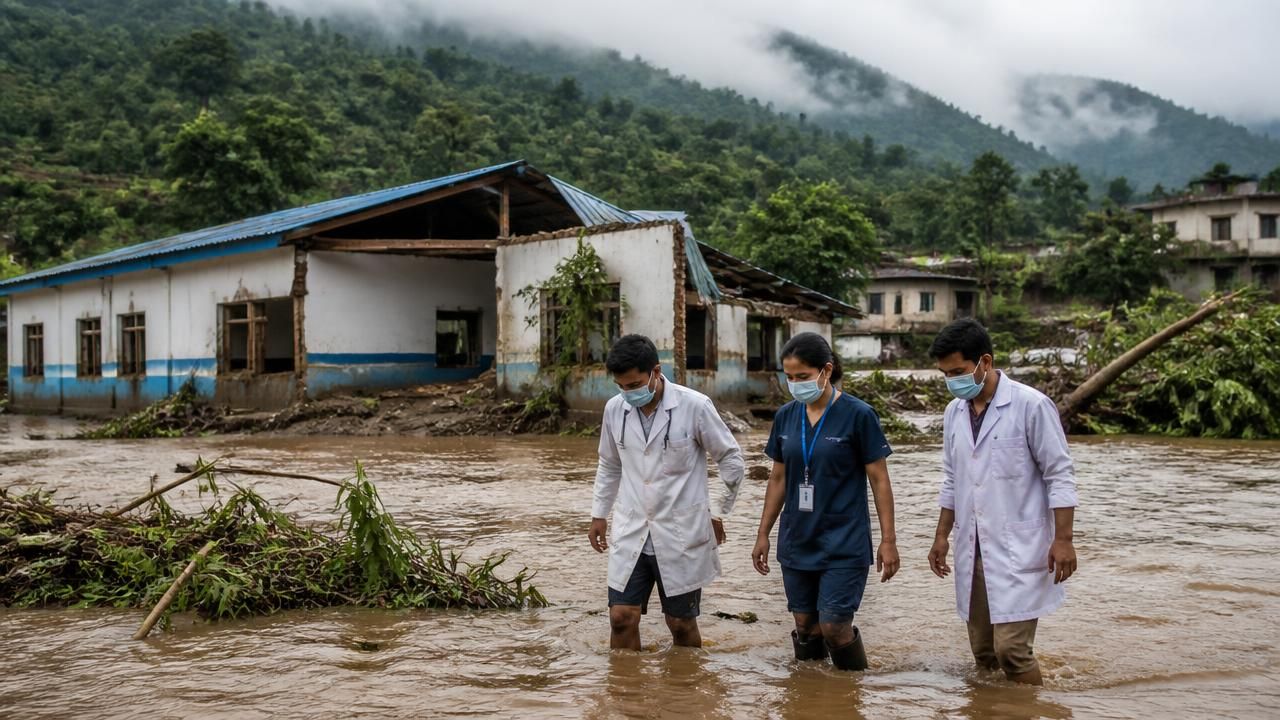
In the wake of the catastrophic floods that have ravaged Nepal, a grim warning echoes from health workers on the frontlines: “The health system in Nepal is not prepared for this.” The assessment comes as floodwaters have damaged or destroyed at least seven health facilities, interrupted routine care, and left a growing number of people grappling with mental health crises. The disaster has not only claimed lives but has also exposed the fragility of a healthcare system already struggling to meet the needs of a nation perched on the frontlines of climate change.
The flooding, triggered by unusually intense monsoon rains, has swept through low-lying districts, submerging entire villages and isolating communities. Health posts, often the only source of medical care for rural populations, have been rendered inoperable. Hospitals in affected areas are overwhelmed, running low on supplies and unable to accommodate the surge of patients needing treatment for waterborne diseases, injuries, and complications from interrupted chronic care.
Immediate Devastation: Seven Facilities Destroyed, Thousands Displaced
According to initial assessments, seven health facilities have been either damaged or completely destroyed. This is more than a loss of infrastructure—it is a direct blow to the region's ability to respond to the disaster. Routine care, including maternal health services, childhood immunizations, and treatment for chronic conditions like diabetes and hypertension, has been severely affected. As one health worker on the ground described to NPR, the system is simply “not prepared” for the compounding demands of a climate-induced emergency.
“We are seeing patients in makeshift tents, without clean water or electricity. We cannot perform surgeries, we cannot maintain cold chains for vaccines, and our staff are exhausted,” said Dr. Anisha Shrestha, a physician volunteering at a temporary relief camp in Sindhupalchowk district. “The flood didn't just destroy buildings; it destroyed our ability to provide even the most basic care.”
The Hidden Toll: Mental Health in the Aftermath
Beyond the physical injuries, the psychological impact of the disaster is emerging as a public health emergency of its own. Losing homes, livelihoods, and loved ones in a sudden catastrophe often leads to post-traumatic stress disorder, anxiety, and depression. Yet Nepal has a severe shortage of mental health professionals, particularly in rural areas. Community health workers are now being trained to offer psychological first aid, but the scale of need far exceeds their capacity.
“The health system in Nepal is not prepared for this,” a local health official said, wiping tears as he described families searching for missing relatives amidst the rubble of a clinic.
A Deeper Systemic Crisis: Commercialization and Access
This disaster has also brought into sharp focus the long-standing challenges of Nepal's healthcare system, which many experts argue is fundamentally ill-equipped to provide universal coverage. The country's health sector has increasingly leaned toward commercialization, with private hospitals and clinics concentrated in urban centers while rural areas are left with underfunded public facilities. Out-of-pocket expenditures remain one of the highest in South Asia, pushing many families into poverty when medical emergencies strike.
“Commercialization of healthcare in Nepal has created a two-tiered system: those who can afford private care get timely treatment, while the poor and marginalized rely on a public system that is chronically underfunded and now further crippled by flooding,” said Dr. Sushil Koirala, a public health researcher. The flood has widened this gap, as private facilities in unaffected areas remain accessible only to those who can travel and pay, while the affected public facilities remain shuttered.
From Rural Nepal to Global Health Systems: Lessons Learned
Yet, amid the tragedy, Nepal's experience offers important lessons for global health. The country's community-based health worker model, which mobilizes female volunteers to deliver basic care in remote villages, has been lauded as a cost-effective approach in low-resource settings. Now, these same workers are being deployed in disaster response, canvassing flooded settlements to identify urgent medical needs and refer patients to temporary facilities. Their reach is impressive, but the flood has revealed the critical gaps in their support systems—inadequate logistics, low pay, and insufficient protective equipment.
Global health experts are watching closely. As climate change increases the frequency and intensity of extreme weather events worldwide, Nepal's struggles are a harbinger for other vulnerable nations. “The question is not whether other countries will face similar crises, but whether they will learn from Nepal's failures and successes,” noted Dr. Maria Elena Cruz, an international health policy expert. Strengthening public health systems, prioritizing primary care, and investing in disaster-resilient infrastructure are not luxuries—they are prerequisites for sustainable development in a hotter, wilder world.
Mental Health: The Hidden Toll
Mental health remains the most overlooked aspect of disaster response. A recent survey in one of the worst-hit districts found that nearly 40% of displaced adults reported symptoms of acute stress. Yet psychologists are scarce; the country has fewer than 1,000 psychiatrists for a population of 30 million. The government has announced plans to deploy "mental health scouts" to affected areas, but without robust funding and coordination, such efforts may be too little, too late.
What Is Needed Now: Beyond Emergency Relief
Immediate priorities include restoring damaged health facilities, ensuring the supply of essential medicines, and establishing temporary clinics with functioning cold chains for vaccines. But long-term recovery demands a comprehensive reconstruction of Nepal's health infrastructure with climate adaptation at its core. Facilities must be built above flood levels, with backup solar power, water purification systems, and telemedicine capabilities to reach isolated communities.
The Government of Nepal has appealed for international aid, and neighboring nations and global agencies have begun to respond. But as experts argue, aid should not only patch the current crisis but also invest in making the health system shock-proof. “We cannot afford to rebuild the same facilities that will be washed away again in the next big flood,” said Dr. Koirala.
- Restore water, sanitation, and hygiene (WASH) systems in health facilities.
- Scale up mobile health teams to serve displaced populations.
- Launch a mass mental health awareness campaign.
- Ensure free access to essential health services in affected districts.
- Strengthen disease surveillance for waterborne and vector-borne diseases.
As Nepal begins the arduous path to recovery, the outrage and sorrow over the lives lost must be channeled into durable change. A health system that is “not prepared” cannot be allowed to remain that way. The floods have stripped away the veneer of normalcy, revealing a system in crisis. The world is watching, and Nepal cannot be left to rebuild on its own.