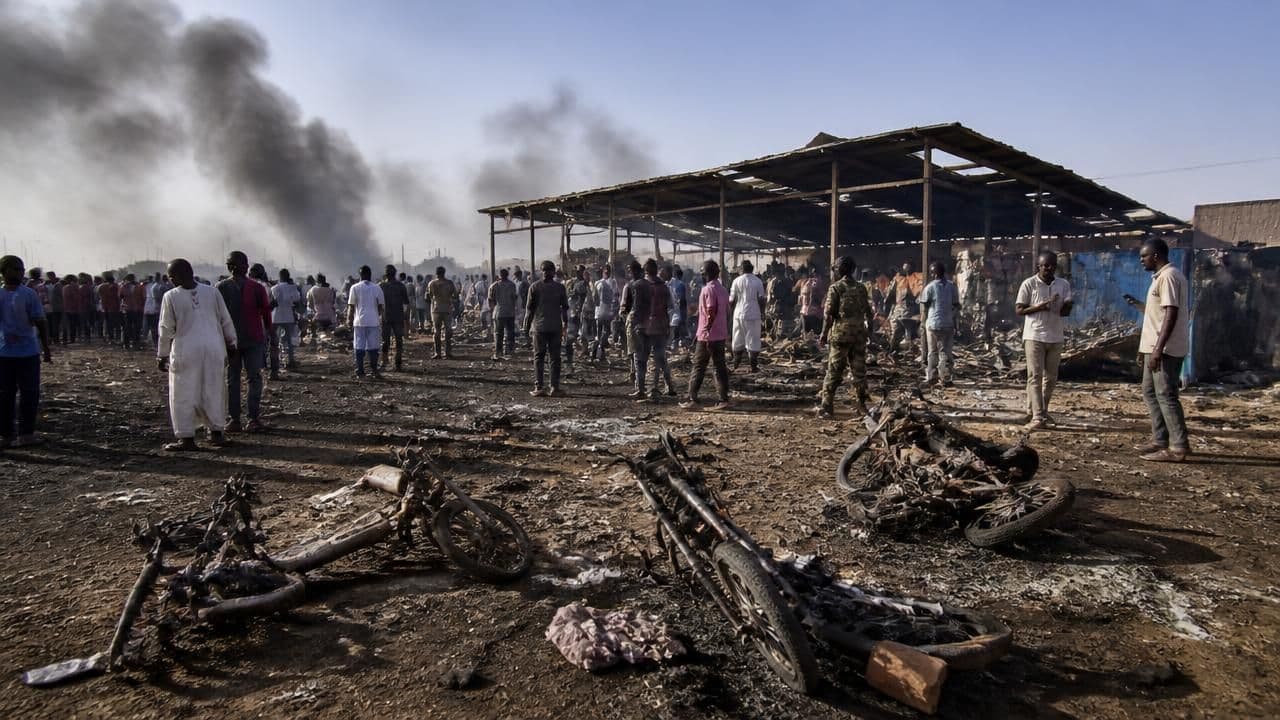
A Kenyan court has found the self-styled preacher Paul Mackenzie and roughly 30 co-defendants guilty of murder over the deaths of 190 children and one adult, closing the first major chapter in a case that has become one of the worst cult-related disasters in recent history and a reckoning for Kenya's oversight of fringe religious movements.
The verdict, delivered after a lengthy trial, centres on the Shakahola forest near Kenya's south-eastern coast, where followers of Mackenzie's Good News International Ministries were told to starve themselves and their children to death in order to "meet Jesus." The court convicted the group on 191 murder counts in total — 190 of them involving children.
What the court decided
Judges accepted the prosecution's case that Mackenzie and his co-accused did not merely preach asceticism but directed a system of enforced starvation, withholding food from followers and, critically, from their children, who could not consent to the fast. The Guardian reported that the sect "ordered followers to starve themselves and their children," a framing echoed across international coverage.
The conviction covers a specific set of 191 victims. But it sits atop a far larger body count: more than 400 bodies have been recovered from the Shakahola forest since exhumations began, according to reporting compiled by Digital Journal and others tracking the toll. That figure is why several outlets — particularly British tabloids — led on the scale of the graves rather than the specific charge sheet.
How the tragedy unfolded
- 2023: Police acting on a tip-off arrested Mackenzie. Weeks later, authorities began uncovering bodies in shallow graves in the Shakahola forest.
- Exhumations: Searches of the vast forest reserve produced hundreds of remains, many of them children, shocking the country and drawing international attention.
- The trial: Mackenzie and dozens of associates faced murder charges; the court this week convicted him and about 30 others.
- The doctrine: Prosecutors say followers were instructed that starvation was a route to salvation — a teaching that turned parents into the instruments of their own children's deaths.
The man behind the ministry
Mackenzie built a following through apocalyptic preaching, at one point operating a small church and later a video shop before relocating his adherents to a remote settlement in Kilifi county. His movement, Good News International Ministries, preached withdrawal from the modern world — rejecting education, medicine and food — as a path to paradise. The victims were overwhelmingly children, a detail that has shaped how the story has been told: the Guardian, the BBC and Al Jazeera all foregrounded the 190 child victims in their headlines, while The Sun's framing — "doomsday preacher who forced children to starve to death" — leaned on the "400 bodies" figure to convey the horror.
Prosecutors described the sect as having ordered followers to starve themselves and their children — a command the court found amounted to murder, not religious observance.
How different outlets framed the verdict
The coverage diverges in instructive ways. The BBC and Al Jazeera led with the number 191, treating the conviction as a legal milestone. The Guardian emphasised the age of the victims. MSN's syndicated versions and outlets such as Graphic Online and The Whistler carried largely straight news accounts stressing the 191 figure. The Sun and Digital Journal focused on the macabre scale of the forest graves, with the latter noting the death toll had "passed 400." Taken together, the reports describe two numbers that are easily confused: the 191 murder convictions secured this week, and the 400-plus bodies recovered in total, a figure that includes victims not covered by this particular charge set.
Why it matters
The Shakahola case has become a political problem for Kenya. Regulators had received warnings about Mackenzie before the deaths, and the country has since debated how to police religious organisations that operate with minimal oversight while enjoying constitutional protections for freedom of worship. The conviction gives prosecutors their strongest tool yet: a judicial finding that coercive fasting orders constitute murder, even when framed as doctrine.
For the families of victims, the verdict is partial closure at best. The identification of hundreds of remains has been slow, and many relatives still do not know where their children are buried. The case also raises uncomfortable questions about how communities, local administrators and law enforcement failed to intervene as people visibly wasted away in a forest settlement over months.
What happens next
Sentencing is expected to follow, with Mackenzie facing the possibility of life imprisonment. Separate proceedings — including charges related to terrorism and child cruelty, and cases involving other co-accused — may still unfold. Investigators have also signalled that exhumations and forensic work in Shakahola are not necessarily complete.
The verdict will be read across East Africa as a warning to unregulated charismatic movements, and internationally as a case study in how apocalyptic teaching, isolation and unchecked authority can turn a remote patch of forest into a mass grave.