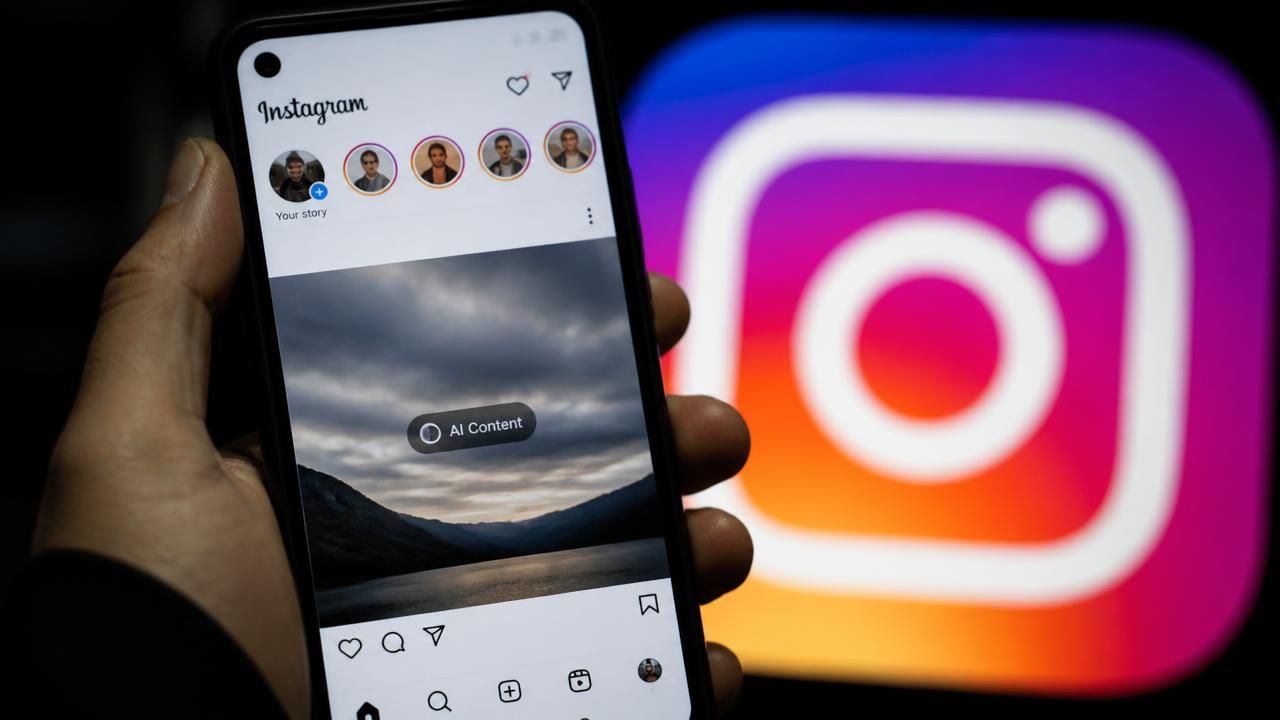
In the ever-evolving landscape of artificial intelligence regulation, social media platforms are struggling to balance transparency and accuracy. Instagram, owned by Meta, has recently found itself at the center of a controversy as its AI content labeling system—designed to flag synthetic media—has begun misidentifying ordinary photographs as AI-generated. At the same time, genuine deepfakes and AI-created images are slipping through unnoticed, leaving users and experts alike questioning the platform's ability to police its own system.
The AI Labeling Chaos Unfolds
Over the past few weeks, a growing number of Instagram users have taken to the platform to voice their frustration. Their images, many of which were created with traditional photography or simple editing tools, are suddenly wearing an “AI Content” label. The label, Meta insists, is intended to promote transparency and help users distinguish authentic imagery from synthetic creations. Yet the rollout has been marred by false positives that appear on images with no generative AI involvement, while true AI-generated images—often sophisticated—are evading detection entirely.
User Reports and False Positives
One photographer told The Verge that a portrait she shot with her DSLR was automatically labeled “AI Content” after she used Adobe Lightroom's basic healing brush to remove a stray hair. Another user identified a screenshot of a text message being flagged, likely due to the slight digital compression artifacts. Many such reports point to a systemic issue: any image that passes through certain software—especially tools that rely on AI-powered features like background removal or noise reduction—could trigger Meta's algorithm.
“I've never used an AI generator in my life, yet my photos are now branded as synthetic,” said one frustrated user in a post that garnered thousands of comments before being removed. “This is damage to my reputation as a photographer.”
Why is this happening? Meta has not publicly detailed the exact mechanisms, but experts suggest the platform uses a combination of metadata flags and machine-learning classifiers. The system may be overzealous when interpreting certain file signals, such as the use of AI-backed editing functions in mainstream software like Canva, Photoshop, and even smartphone camera apps. According to metadata standards like C2PA and IPTC, these tools embed cryptographic provenance data into files. But in practice, their presence is not equivalent to creating synthetic content—it can simply denote computational enhancement of an otherwise authentic photo. Meta's algorithm appears to conflate the two.
Why Real AI Imagery Slips Through
Far more concerning is the failure to flag actual AI content. Current detection methods rely heavily on invisible watermarks embedded by major AI image generators, such as OpenAI's DALL-E 3, Google's Gemini, or Meta's own Imagine tool. However, not all AI tools comply, and users can easily strip or crop away watermarks, defeating the system. Additionally, open-source models like Stable Diffusion produce images without standardized metadata, leaving the detector with nothing to find.
- Metadata-based detection only works if the generating model cooperates.
- Cropping, screenshots, or re-uploads can erase C2PA signatures.
- AI-generated photorealistic faces require independent visual analysis, which Meta's system seems to lack.
This asymmetry creates the worst-possible outcome: genuine public-interest content may be wrongly discredited, while manipulated propaganda and non-consensual deepfakes remain unflagged. Digital forensics expert Dr. Emily Whitmore, who studies media integrity at the University of Washington, notes that false positives can be as damaging as false negatives. “When a system cries wolf without discriminating, it teaches the public to ignore the labels entirely,” she said in an interview. “If real images are marked as fake, the label loses all credibility.”
Historical Context: The Evolution of Content Labels
Meta first introduced “AI Info” labels in February 2024, expanding a policy that previously only covered manipulated videos. At the time, the company claimed it would apply the labels to video, audio, and images generated or altered by AI tools. Meta's oversight board in a landmark report acknowledged the difficulty but recommended that labels be tied to clear standards and not used as a blanket restriction on speech. The new wave of mislabeling suggests those recommendations have not yet been implemented in a way that handles edge cases.
Photographers and digital artists are not the only affected parties. Journalists have reported that archival images and documentary photos are being labeled as AI content, casting suspicion on evidence from conflict zones and political events. In one case earlier this month, a verified news agency's photograph of a city street was flagged with an “AI Content” label, although it was shot by a staffer without any AI-assisted editing involved. Such mistakes can erode trust in media credibility at a time when the platform is also battling misinformation.
What Can Be Done? Expert Perspectives and Next Steps
The core issue, experts say, is that Meta is leaning too heavily on automated classification without sufficient context. A more robust system would integrate provenance metadata with explicit user declarations and human review in ambiguous cases. Some argue that “Made with AI” labels are inherently misleading, because nearly all modern imagery is computationally processed to some degree. Instead, they suggest clearer labels such as “AI-generated” for deepfakes or fully synthetic scenes, and “enhanced” for photos that used AI-assisted tools.
Additionally, platforms need to adopt cross-industry standards like Coalition for Content Provenance and Authenticity (C2PA) comprehensively and ensure that even re-uploads and screenshots retain verification data. Until such infrastructure becomes ubiquitous, user-reported reviews may be necessary to catch algorithmic errors early. “Instagram needs a workflow to detect and correct these mistakes quickly, not just a one-way automated sticker,” says media technology analyst Rajesh Patel of Forrester Research. “Right now they're shipping an uninspected classifier into the world's most popular photo-sharing network.”
Implications for the Future of Visual Integrity
As AI becomes further integrated into editing and creation workflows, the boundary between authentic and synthetic will only blur. The challenge for platforms is not merely to label content but to preserve meaning and context. If Instagram continues to mislabel the ordinary as artificial, it will not protect the integrity of visual culture—it will undermine it. For now, the company says it is “tweaking” its detection model and asks users to provide feedback on incorrectly tagged posts. But for photographers seeing their work falsely branded every day, the damage may already be done.
The situation reveals a fundamental truth: algorithmic transparency tools are only as reliable as the assumptions baked into them. If Meta cannot distinguish an AI-generated image from a standard photo enhanced with a background remover, trust will keep eroding—and the very purpose of the label will be lost. The question is whether Meta will adjust its approach before its audience loses faith in everything it sees on Instagram.