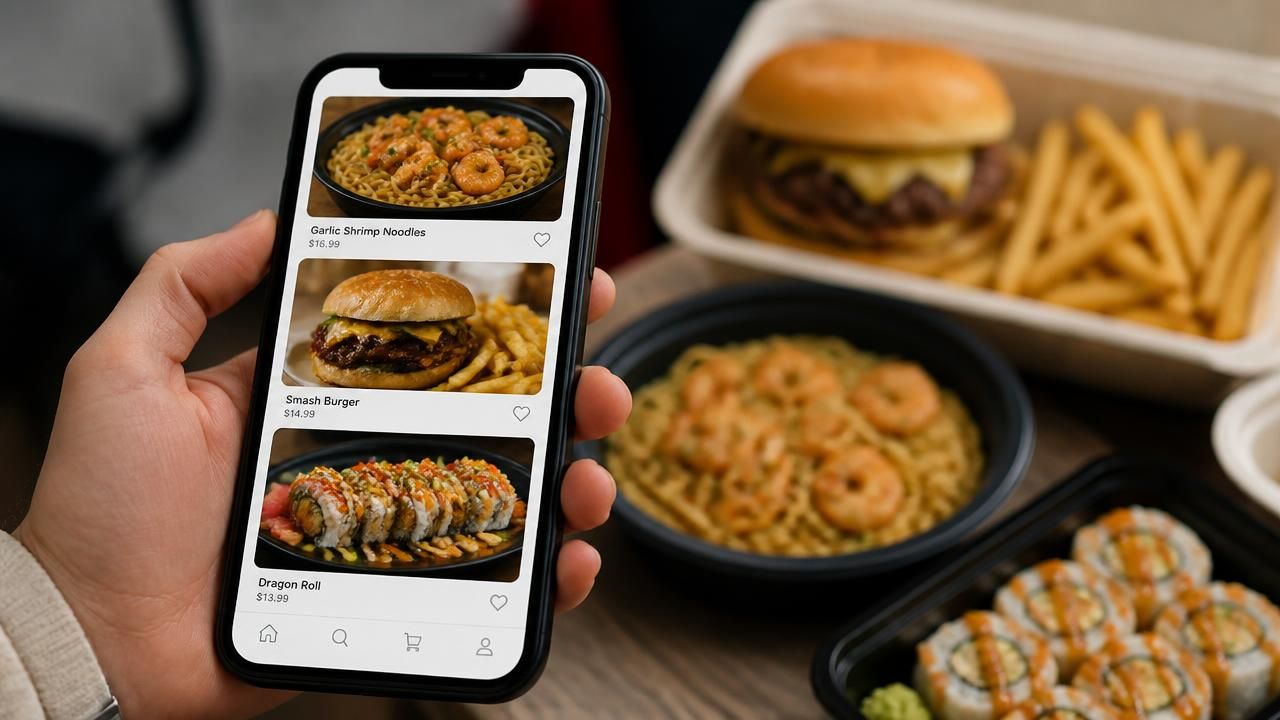
If you have ordered takeout recently, consulted a restaurant’s Instagram page, or even walked past a fast-food billboard, chances are you have encountered it: a pile of congealed “shrimp” that looks more like a donut, noodles that writhe like worms, or a burger that seems to be made of melted building materials. It’s AI-generated food “slop,” and it is cropping up everywhere from delivery apps to real-world menus. The response has been visceral — part disgust, part horror, and increasingly, outrage.
The slop invasion: A tour of AI food nightmares
In a widely shared roundup, The Verge catalogued “the torrent of unappetizing slop coming from restaurants, cafes, and brands that are increasingly turning to AI to generate images promoting their food.” The author’s inventory of horrors includes “donut shrimp,” “Reubens from the deep,” “wormlike noodles,” “construction material masquerading as ice cream,” and “the trypophobic burrito from hell.” Perhaps most disturbingly, the piece notes, “There are lumps. And holes. So many holes.”
The phenomenon has become pervasive enough that Know Your Meme has already added “AI Restaurant Food Images” to its archives. Creative Bloq called the menus “Lovecraftian horrors” that are “making people want to never eat out again.” What was once a niche internet curiosity has become a mainstream problem, with outlets as varied as NBC News, CNN, USA Today, and MSN all covering the trend — often under headlines like “Side of slop?” and “Why this AI food slop is making people so uncomfortable and upset.”
From one-off memes to real-world menus
The images have escaped the feed and taken over physical and digital ordering experiences. In Houston, local outlets report AI images popping up in restaurant social media posts. Ottawans have noticed AI-generated menu items at local establishments. Even Disney World is reportedly testing a “controversial change” in food court signage that could spread to more hotels.
The backlash, however, has been fiercest when consumers feel deceived. A California cafe drew a wave of negative reviews after customers recognized its menu advertisements were AI-generated, with many accusing the business of “false advertising.” In San Francisco, one restaurant was literally defaced — presumably by an angry patron — over its use of AI images. Meanwhile, Forkable, a San Francisco-based catering platform, swapped out its partner restaurants’ real food photos for AI-generated ones, prompting outrage from the restaurants themselves. PetaPixel and Eater SF both covered the incident, framing it as a larger betrayal of trust: restaurants had carefully curated their visual identities, and an algorithmic intermediary replaced them with something that looked vaguely wrong.
The “uncanny valley” of edible visuals
Many of the stories point to a simple question: Why do these images feel so unsettling? News-Medical.net spoke with researchers who explain that humans are hardwired to judge food by visual cues — color, texture, and symmetry signal safety and nutritional value. AI-generated images often get these cues almost right, but the subtle flaws — lumpy surfaces, impossibly shiny glazes, missing or multiplied ingredients — trigger a deeply wired disgust response. Eater’s critic argued that AI image generators “can’t take the place of food photographers” because they lack an understanding of how light reflects off a real slice of tomato or how a proper swirl of sauce behaves.
WIRED’s coverage goes further, suggesting that ugly AI food photos are “only the beginning” of a larger disruption in food media. The design trade press concurs: Creative Bloq lamented that AI is “killing folk graphic design”, replacing human creativity with trained diffusion models that produce images that are “almost, but not quite, entirely unlike” real food.
Not everyone is revolted
Yet the coverage is not exclusively negative. The National Post reported on a study concluding that AI-generated food images look “tastier than the real deal” — at least to some viewers. And The Guardian featured a food blogger who explains how AI can enhance plate shots, helping them adjust lighting or remove a stray crumb. Existing tools are already aiming to institutionalize the trend: PetaPixel noted that “Lunchbox,” a new AI image generator, is positioning itself as a direct replacement for professional food photographers.
Those pushing back against the AI slop often argue that the choice is not between human and machine-made imagery, but between honest and misleading representation. As one commenter on the California cafe story put it, “If you can’t show me what you’re actually serving, you can’t expect me to serve you my money.”
Beyond menus: AI’s expanding grip on food
This backlash is unfolding against a broader backdrop of AI’s incursion into every segment of the food industry. WIRED’s “AI Conquered Coding. Fast Food Is Next” points to generative AI taking over not just image creation but also ordering systems, cooking robots, and supply-chain logistics. CNBC reported how grocery giant Kroger uses AI to optimize prices and curb food waste. Unilever’s food innovation process now leans heavily on AI, according to Retail Brew. Meanwhile, Defector notes that AI-generated recipes are overrunning the internet, producing “glossy, gunky, and ready in minutes” instructions that are both absurd and deeply unappealing.
The darker sides of these tools are already emerging. The Daily Dot reports that AI is enabling a wave of DoorDash refund scams: customers generate fake images of “undercooked” or “contaminated” food to obtain refunds, costing restaurants and delivery platforms real money. In another troubling example, Yahoo News flagged that racist influencers have used OpenAI’s Sora to create videos depicting poor people selling food stamps for cash. These developments suggest that AI food imagery isn’t just aesthetically questionable — it has practical, ethical, and even legal consequences.
The hunger for the real thing
In an age of AI-generated everything, there is a growing movement toward what Eater calls “the analog restaurant.” Bespoke, handmade, low-tech eateries are increasingly seen as radical — a rebuke to the sameness and unreality of AI slop. As WIRED suggests, the weird food images are a warning sign: if algorithms can convincingly fake a meal’s appearance, what else can they fake? The Atlantic’s analysis of “AI-free childhoods” as a status symbol echoes this sentiment — the privilege of avoiding algorithmic simulacra may soon be reserved for the wealthy.
What unites the coverage is a simple insight: food is one of the last arenas of unmediated, visceral experience. We do not want our burritos to be a metaphor. We want them to be food. Until AI can render a burrito without triggering trypophobia, restaurants should perhaps take the warnings seriously. The cure for slop is simplicity — and real, honest pictures of the meal on the plate.