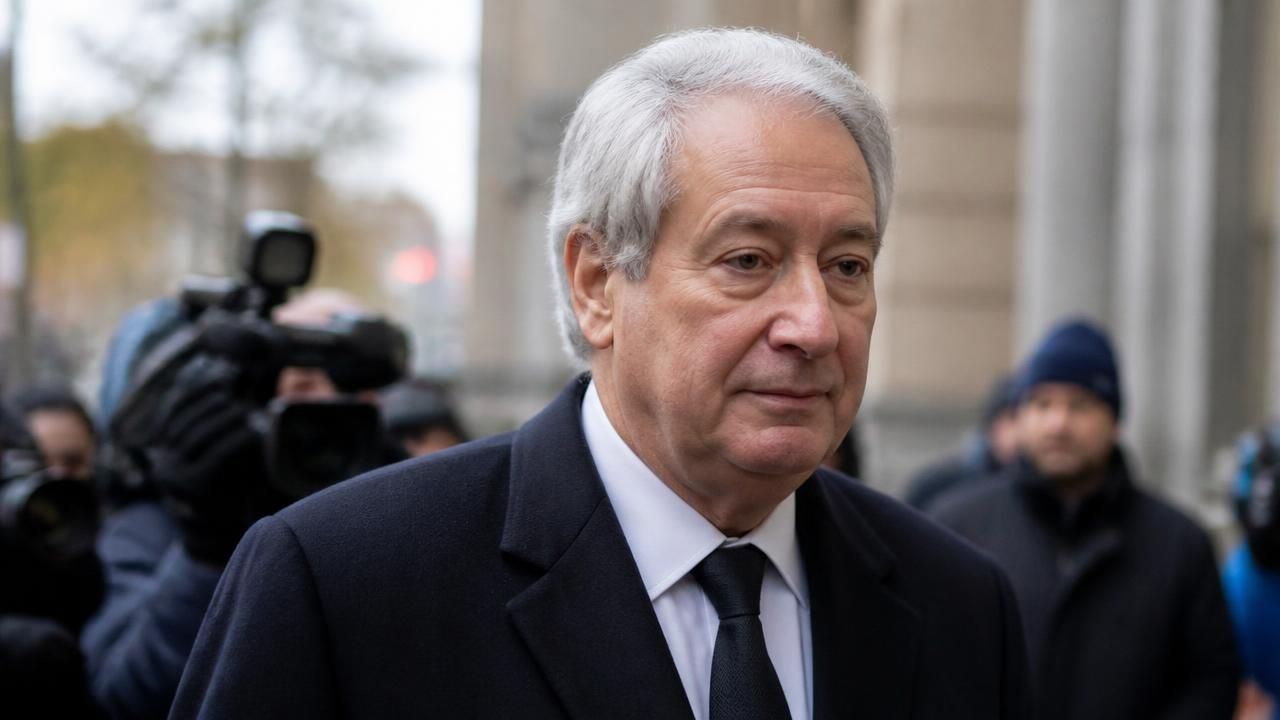
Billionaire investor Leon Black has escalated his clash with Congress, defying a subpoena to testify in the House Oversight Committee's investigation into Jeffrey Epstein and filing a federal lawsuit challenging the committee's authority. The move, reported by multiple outlets including NPR, CNN, and CBS News, marks a rare legal confrontation between a private citizen and a congressional panel demanding information about Epstein's network and the non-disclosure agreements (NDAs) that have shielded powerful figures.
Who, what, and when
Black, the co-founder of Apollo Global Management, was scheduled to sit for a deposition before the Oversight Committee on Monday, but he did not appear. Instead, his lawyers filed a lawsuit in U.S. District Court for the District of Columbia, seeking to block two subpoenas — one for testimony and one for documents. The committee, led by Chairman James Comer (R-KY), is investigating Epstein's abuses and his connections to government officials and business leaders. Black is one of several figures who have been drawn into the probe.
According to NPR, Black is under two subpoenas from the committee. His lawsuit contends that the panel "doesn't have the authority" to compel him to turn over NDAs, which he argues are confidential settlement agreements. The legal action follows months of negotiations between Black's attorneys and the committee, which ultimately broke down.
The Epstein ties and the NDA dispute
Black has acknowledged that he used Epstein's services for financial advice and tax planning between 2000 and 2007, but has denied any involvement in Epstein's criminal activities. In 2021, Black paid $62.5 million to settle a lawsuit brought by a woman who claimed Epstein sexually assaulted her and allegedly forced her to have sex with Black. Black denied the allegation, saying he "never engaged in any sexual activity with her." That settlement was subject to an NDA, and the House Oversight Committee now wants to review the agreement and related documents to understand how Epstein's network operated and whether wealthy enablers were protected.
Black's lawyers argue that the subpoenas overreach because they seek materials protected by NDAs, which are legally binding contracts. "The Committee is engaged in an unauthorized and unconstitutional exercise of legislative power," the lawsuit states, according to legal filings quoted by The Independent and PBS News. "The subpoenas are not designed to gather information to aid legislation, but to expose private facts about a citizen."
Committee's response and legal stakes
Chairman Comer has strongly rebuked Black's defiance. In a statement reported by CNN and Politico, Comer said the committee "will not tolerate obstruction" and vowed to enforce its subpoenas. The committee had previously issued a rare "subpoena" to Black after he failed to voluntarily provide documents. Comer has framed the investigation as a necessary step to root out corruption and ensure that Epstein's enablers are held accountable.
Legal experts are divided on the merits of Black's suit. Some argue that congressional committees have broad investigative powers, as affirmed by Supreme Court precedent. "Congress can investigate nearly anything that could inform legislation," said Paul Smith, a constitutional law professor at Georgetown University, in an interview with PBS. "But there are limits — the information sought must be pertinent to a legitimate legislative purpose, and it must not violate an individual's privacy or contractual rights without a compelling reason."
Others note that Black's case is unusual because he is challenging the subpoena before appearing rather than asserting specific privileges during the deposition. "This is a high-risk strategy," said Sarah Binder, a political science professor at George Washington University, speaking to the BBC. "If the court rules against Black, he could be held in contempt of Congress, which carries criminal penalties. But if he wins, it could significantly hamper the committee's investigation."
How different outlets frame the story
The coverage of Black's lawsuit reflects varying editorial angles. NPR focused on the legal argument over the committee's authority, noting that Black's suit challenges the enforceability of the NDAs. CBS News and the New York Post highlighted the "NDA fight," emphasizing the secrecy surrounding Epstein's dealings. The BBC framed it as a "defiance" of summons, while The Independent underscored the fact that Black "skips deposition" — a move that carries its own symbolic weight.
Some outlets noted that Black is not the only wealthy figure connected to Epstein to resist congressional scrutiny, but he is the first to sue the committee directly. This has drawn attention to the broader tension between congressional oversight and the rights of witnesses, a theme that resonates beyond Epstein.
Historical context and implications
The House Oversight Committee has a long history of investigating financial misconduct and ties between elites and convicted criminals. However, subpoenaing private NDAs is relatively rare, especially when the subject is not a government official. The outcome of Black's lawsuit could set a precedent for how Congress handles NDAs related to criminal investigations.
Black, who has an estimated net worth of $11 billion, stepped down as CEO of Apollo in 2021 amid fallout from his Epstein ties. He has consistently maintained that he was a victim of Epstein's manipulation. Yet, the committee's investigation has kept the matter in the public eye, and Black's legal challenge threatens to prolong the controversy.
For lawmakers, the case is about accountability. For Black, it is about defending his rights against what he calls a "fishing expedition" by Congress. The court's ruling, which may come in the next few months, will determine whether the legislative branch can pry open confidential agreements signed by powerful figures — and whether any citizen can successfully resist a congressional subpoena by invoking privacy and contract law.
As the legal battle unfolds, both sides are digging in. Black's lawyers have signaled they are prepared to take the case to the Supreme Court if necessary. The committee, meanwhile, is under pressure to demonstrate that it can enforce its authority. For now, the story remains a high-stakes collision between private wealth, public power, and the lingering shadow of Jeffrey Epstein.