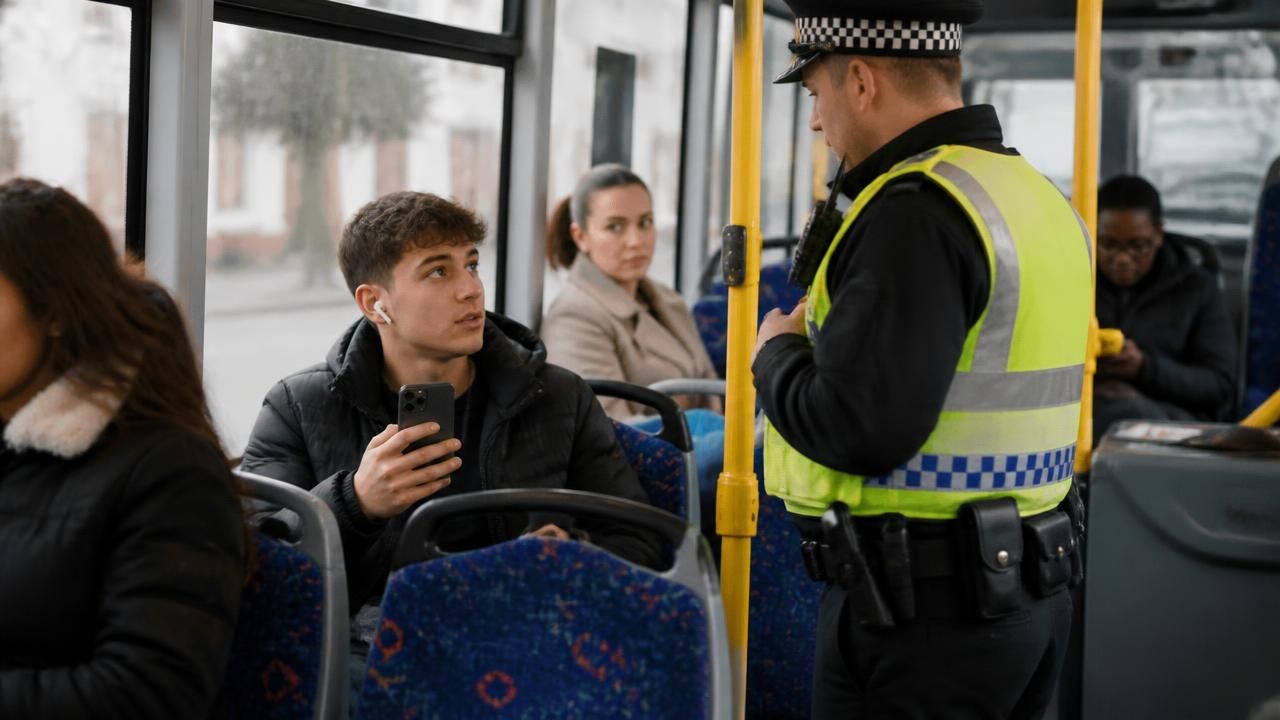
Passengers in England who play music out loud on buses could be hit with £100 fines under a widening crackdown on antisocial behaviour aboard public transport, according to reports carried by the BBC, MSN and the Daily Mail. The proposals, which extend beyond noise to include vaping and littering, form part of a broader push by transport operators and local authorities to reassert basic codes of conduct on services used by millions of people every day.
The story surfaced simultaneously across several outlets, with broadly consistent headlines but different emphases. The BBC framed the measure around noise nuisance specifically, noting that "antisocial behaviour on buses in England could lead to fines" and that a national campaign is also being launched for trains asking rail passengers to "share the carriage, not the noise." MSN's coverage led on the penalty itself — that "playing music on buses without headphones could result in £100 fine." The Daily Mail, meanwhile, widened the lens, describing "ordeals on the bus" and listing music, vaping and litter as the behaviours subject to the £100 penalty.
What the rules would do
At the centre of the proposals is a simple, familiar grievance: the passenger who treats a bus carriage as a personal sound system. Under the reported framework, playing music, video or calls aloud without headphones would become an enforceable offence on buses, carrying a fixed penalty of up to £100. Vaping and littering — two other flashpoints for drivers and fellow passengers — appear to sit within the same enforcement regime.
The detail remains thin in the public domain, and several of the source reports were inaccessible at the time of writing, leaving open questions about which operators would apply the fines, whether they would be issued by staff, revenue protection officers or police community support officers, and how a £100 penalty would be collected and challenged. What is clear is that the measure is being presented as a deterrent as much as a revenue tool.
From bus to train: a twin-track campaign
Alongside the bus measures, a national rail campaign is being launched to tackle the same behaviour on trains. The slogan — "share the carriage, not the noise" — borrows the language of courtesy campaigns rather than enforcement, suggesting that rail operators intend to lean on persuasion and social norms before resorting to penalties.
"Share the carriage, not the noise."
That dual approach reflects a wider split in how British transport is policed: buses, which are largely deregulated outside London and run by commercial operators, rely on a patchwork of operator conditions of carriage and local authority bylaws, while the railway has a more centralised structure and its own enforcement architecture. The difference matters for how a fine would actually land on a passenger standing at a bus stop in Worcestershire versus one on an intercity train.
Why now
Antisocial behaviour on public transport has climbed up the political agenda in recent years. Operators report that low-level nuisance — loud phone calls, music blasted from speakers, vaping in enclosed spaces, food and litter — erodes passenger confidence, drives away off-peak travellers and makes drivers' jobs harder. For bus companies operating on thin margins and subsidised routes, the commercial logic is straightforward: if passengers feel unsafe or irritated, ridership falls, and with it revenue.
The regional framing is telling. Local coverage from Worcestershire highlighted that county passengers face the £100 loud-music fines, underscoring how national policy announcements are received as local news — a sign that the measures will be judged on whether they change behaviour on the 8am bus to town, not in a Whitehall press release.
Competing framings
- Consumer-protection framing: Outlets emphasised the relief for passengers tired of other people's music, casting the fine as a defence of the quiet majority.
- Law-and-order framing: The Daily Mail's headline grouped music with vaping and litter, presenting the policy as a restoration of order on services where "ordeals" have become routine.
- Courtesy framing: The rail campaign's language is softer, appealing to shared space rather than threatening punishment.
The business angle
For operators, the calculation is not only about comfort. Persistent antisocial behaviour raises staff turnover, increases security costs and depresses fares revenue. A visible enforcement regime can act as a signal to passengers that a service is safe — a reputational asset that operators market as heavily as timetables. Yet fines also carry risk: heavy-handed enforcement can generate viral confrontations, alienate occasional riders and create disputes over who decides what counts as "too loud."
Questions that remain
Critics are likely to ask how a £100 penalty would be enforced fairly, whether it would fall disproportionately on younger passengers, and whether bus drivers already coping with staff shortages should be expected to police noise. Civil-liberties groups may question the threshold for a fine in the absence of clear decibel standards.
What is not in dispute is the direction of travel. Whether through the blunt instrument of a fixed penalty or the gentler nudge of a rail campaign, transport authorities are moving to reclaim shared space — betting that most passengers will welcome a quieter journey, and that a minority will respond to the threat of a £100 hole in their pocket.