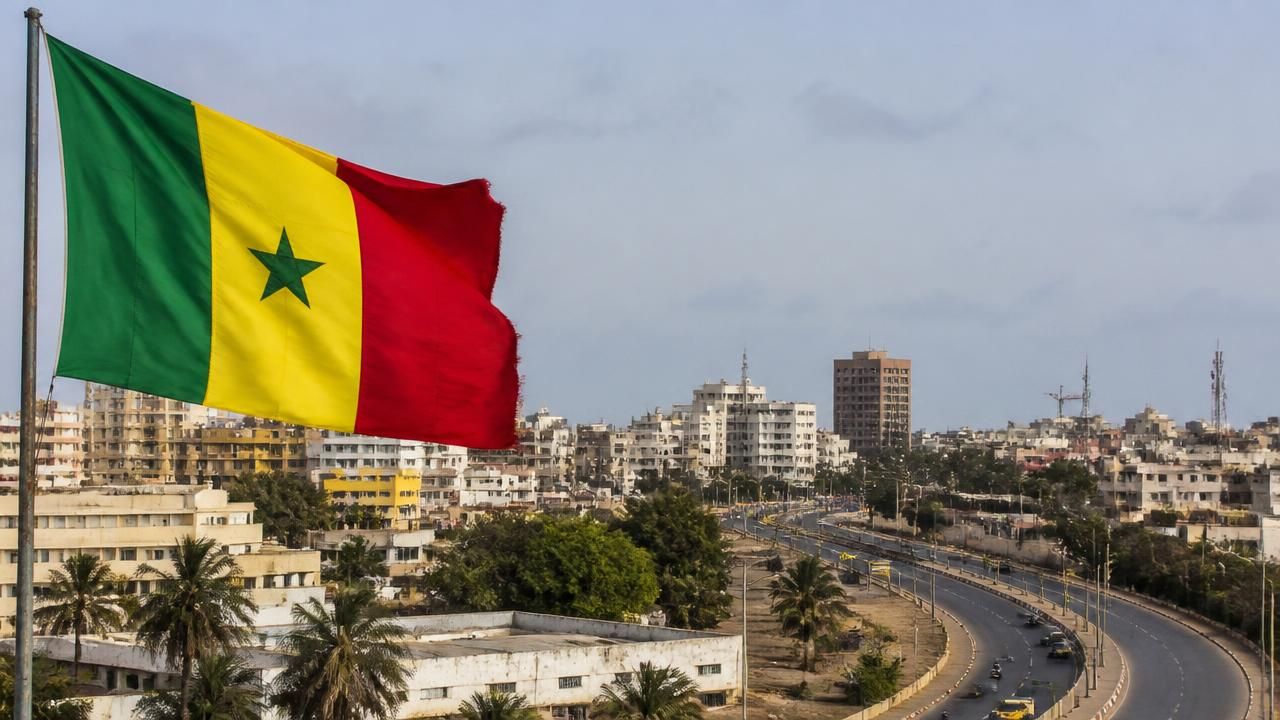
Senegal has reached a staff-level agreement with the International Monetary Fund (IMF) for a $2.2 billion loan program, just as the government announced it will pursue a "debt treatment" under the Group of 20's Common Framework. The twin announcements, reported by Bloomberg and other outlets, sent Senegal's eurobonds falling and underscored the deepening fiscal challenges facing one of Africa's former star economies.
Bloomberg’s Chief Africa Correspondent Jennifer Zabasajja reported that the government’s debt-treatment statement triggered a drop in Senegal’s international bonds, as investors braced for potential restructuring. The IMF program, if approved by the Fund’s Executive Board, would provide critical financing but also demands painful economic reforms. The Common Framework – a G20 initiative designed to coordinate debt relief for low-income countries – has already been used by Chad, Ethiopia, and Zambia, but Senegal’s inclusion marks a significant expansion of the mechanism.
IMF Deal and Debt Treatment: A Delicate Balance
According to the IMF, a staff team and Senegalese authorities reached agreement on a new arrangement under the Extended Fund Facility (EFF) or Extended Credit Facility (ECF). The $2.2 billion program is intended to support Senegal’s economic recovery, rebuild fiscal buffers, and address balance-of-payments needs. The agreement is subject to IMF management and Executive Board approval, a process that typically takes several weeks.
However, the government’s simultaneous decision to request a debt treatment under the Common Framework has complicated the picture. In a statement, Senegal’s finance ministry said it would seek a restructuring of its external debt, including bonds and bilateral loans, to restore sustainability. This is a striking reversal for a country that as recently as 2023 was tapping international capital markets at favorable rates to fund infrastructure projects.
“Senegal’s dual path – securing an IMF program while entering a debt restructuring – mirrors the trajectory of other African nations that have sought relief under the Common Framework. The markets are right to be nervous; the terms of any treatment remain uncertain.” – A senior sovereign debt analyst, speaking to Bloomberg.
S&P Warning and Regional Debt Distress
The move places Senegal alongside Gabon and Mozambique as African countries on the verge of debt distress, according to a Bloomberg analysis. All three nations have seen their debt sustainability deteriorate amid falling commodity revenues, rising interest rates, and currency pressures. S&P Global Ratings, which had previously warned that Senegal could face “new debt scrutiny” without an IMF program, is likely to revise its credit assessment now that the restructuring has been announced.
“Senegal faces a period of heightened uncertainty,” an S&P note reportedly cautioned. “The absence of a credible IMF-backed adjustment program would leave the country exposed to severe financing gaps. Even with the program, the debt treatment will test investor confidence and the willingness of bilateral creditors, especially China, to participate.”
S&P’s warning reflects a broader regional trend. The IMF has identified more than 20 African countries at high risk of debt distress or already in it. The Common Framework, designed to offer a coordinated debt relief process, has been criticized for being slow and unpredictable – with Zambia’s case taking more than three years to reach a memorandum of understanding. Senegal may now become a test case for whether the process can be accelerated.
Why Senegal's Debt Situation Deteriorated
Senegal, a country of roughly 18 million people in West Africa, was once lauded for strong growth, underpinned by natural resources and infrastructure investment. But the compounding effects of the COVID-19 pandemic, the Ukraine war-induced commodity price spikes, and tightening global financial conditions have exposed long-standing fiscal weaknesses. The government’s borrowing – much of it in foreign currency – has surged, while export revenues have been volatile. The country is also facing the pending costs of oil and gas projects, which require substantial upfront investment before generating returns.
The political dimension cannot be ignored. CNBC Africa reported that Senegal’s political tensions cloud the path to an IMF deal. With presidential elections on the horizon and a contentious relationship between the government and opposition, the austerity measures often attached to IMF programs could provoke domestic backlash. Analysts say the government may be using the Common Framework process to manage the political fallout, spreading the burden of adjustment across external creditors rather than imposing it all on citizens at once.
Against a Backdrop of Global Pressure
The IMF’s press briefing on June 25, 2026 – which referenced Senegal’s case – was closed to direct access, but IMF communications director Julie Kozack has previously stressed that the Fund holds “flexibility” in designing programs for countries undertaking debt restructuring. The staff-level agreement is only the first step; the following months will involve negotiations on a full debt sustainability analysis, creditor coordination, and approval of the program by the IMF board.
Meanwhile, Senegal’s eurobonds have repriced to reflect distressed levels, with yields spiking to over 20% on some maturities. Credit default swap spreads suggest the market assigns a high probability of default or strict restructuring. This is a harsh reversal for international investors who had embraced Senegal's rapid emergence as an African frontier market.
Differing Perspectives
Bloomberg’s market coverage frames the story primarily through the lens of investor losses and the shifting mood toward African sovereign debt. The headlines emphasize falling bonds and “debt treatment” as a trigger for selloffs. A separate Bloomberg analysis highlights the regional pattern, placing Senegal in a troubled trio with Gabon and Mozambique.
S&P, for its part, is squarely focused on creditworthiness. Its warning before the IMF staff deal – that Senegal would face new debt scrutiny without one – makes clear that the rating agency views the IMF agreement as a lifeline, even if it comes with a restructuring. The agency’s perspective is that an IMF program provides a framework for fiscal adjustment and policy credibility, potentially allowing Senegal to recover faster once the debt overhang is resolved.
CNBC Africa’s coverage adds a crucial political layer. The site’s headline – “Senegal’s political tensions cloud path to IMF deal” – suggests that implementation risks are high. Will the government be able to push through subsidy cuts and tax increases as elections near? The IMF has often struggled with program compliance in politically volatile environments, and Senegal is no exception.
The IMF itself will likely emphasize the program's role in restoring macroeconomic stability and protecting the most vulnerable. A staff-level agreement means the technical work is done, but the final decision lies with the Executive Board, which will consider not just Senegal’s commitments but also the progress on debt restructuring.
What Happens Next
For Senegal, the next steps involve both domestic and international actors:
- The IMF Executive Board must approve the $2.2 billion program, a process that will include evaluation of Senegal’s debt sustainability and financing assurances from creditors.
- Senegal’s government must formally notify its Paris Club and non-Paris Club creditors of its request for a debt treatment under the Common Framework, setting up a creditor committee.
- Political stakeholders, including the opposition and civil society, will scrutinize the program conditionality, especially any reforms to subsidies, tax policy, and public wage bill.
- Investors holding Senegal’s eurobonds will likely engage with the government to negotiate a restructuring that could involve longer maturities, lower coupons, or a haircut on principal.
If the IMF program is approved, Senegal will join a growing list of African nations – including Ethiopia and Mozambique – that have sought to combine Fund-backed reform with debt restructuring. The outcome will be watched across the continent as a bellwether for how the Common Framework can handle nations with significant private sector debt, not just bilateral loans.
The story is far from over. But one thing is clear: Senegal’s era of easy credit has ended. The country now faces the arduous task of rebuilding its fiscal credibility while managing the social and political pressures of adjustment. For investors and policymakers alike, the road ahead is uncharted and fraught with risk.