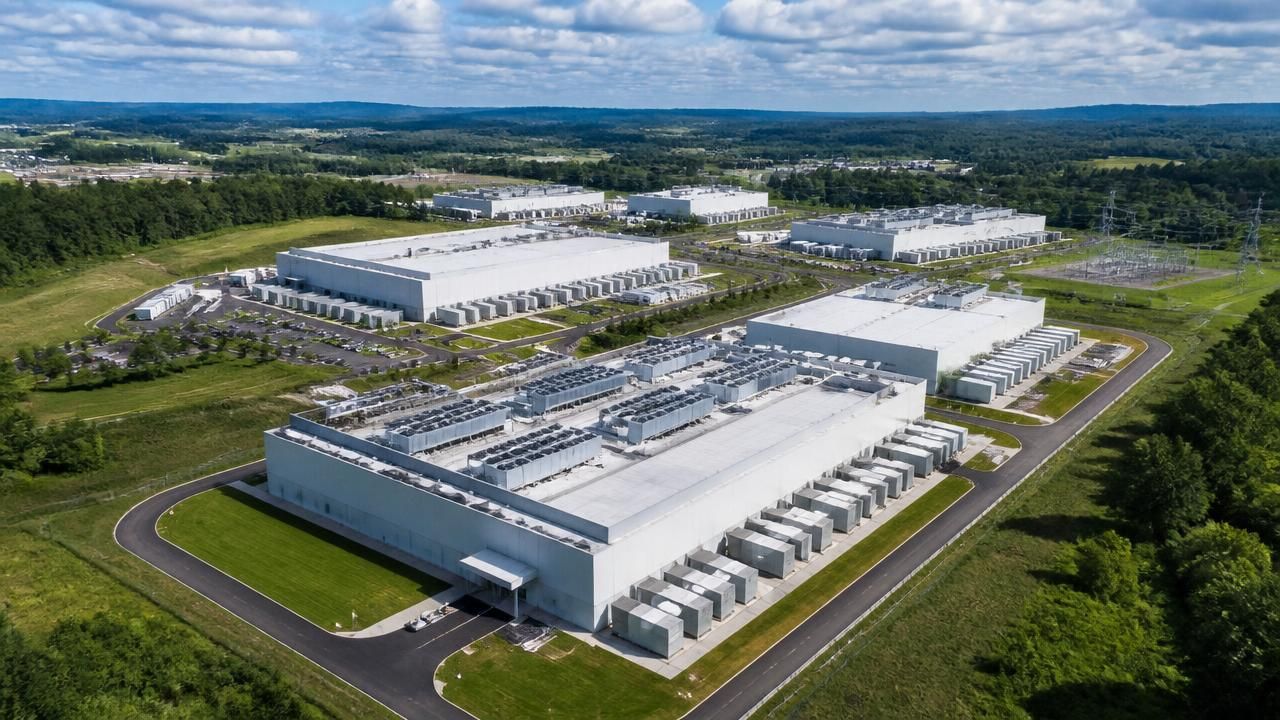
In 2007, as the U.S. teetered on the brink of the Great Recession, a former radio DJ named Buddy Rizer was handed an unglamorous challenge: save Loudoun County, Virginia, from financial collapse. The county, once a quiet exurb of Washington, D.C., had relied heavily on residential real estate, with more than 80 percent of its tax revenue coming from homes. When the housing bubble burst, the county needed a new economic engine—and fast. Rizer, now the county's economic development director, found an unexpected answer in the ghost of the dot-com era: data centers.
Today, Loudoun County is the undisputed digital heart of America. Estimates suggest that up to 70 percent of the world's internet traffic flows through the massive data centers that dot its rolling hills. The county's transformation from bedroom community to global tech infrastructure hub is a story about resilience, geography, and the relentless growth of the digital economy.
A Perfect Storm of Crisis and Opportunity
The bursting of the housing bubble hit Loudoun County particularly hard. Residential real estate had been the golden goose, and when it collapsed, the county scrambled to diversify its tax base. The original goal was modest: shift commercial revenue from about 19 percent to 23 percent. Instead, the shift was dramatic. Today, commercial sources account for more than half of the county's tax revenue, a staggering reversal driven largely by the data center industry.
“The goal, at the time, was to raise the commercial tax base from about 19 percent of revenue to something like 23 percent,” Rizer recalled in a recent interview. “We vastly exceeded that.”
But the seeds of this transformation were planted years earlier. Loudoun County was once headquarters to AOL, which by 2000 was the largest internet service provider in the United States. AOL's presence attracted a web of fiber-optic cables and infrastructure, making the county a natural junction for internet traffic. Its proximity to the nation's capital also made it attractive for companies seeking secure, reliable connectivity.
The Ghosts of Dot-Coms Past
When the dot-com bubble burst in 2000 and AOL's disastrous merger with Time Warner unraveled, much of that first internet boom evaporated. Empty office parks and abandoned data centers littered the county. But the physical infrastructure remained—fiber lines, power substations, and a workforce familiar with networking. When the recession hit, Rizer and his team realized they could repurpose these assets.
The county also boasted key advantages: abundant land, reliable electricity from a nearby nuclear plant, and access to water for cooling. Perhaps most importantly, northern Virginia had become a major internet exchange point, a digital crossroads where networks from around the world interconnect. This made Loudoun County the logical place to build the warehouses that would house the servers powering the emerging cloud economy.
The Rise of the Data Center Economy
At first, the county courted companies with zoning changes, tax incentives, and expedited permitting. The strategy worked. Tech giants like Amazon, Google, and Microsoft began building massive facilities in the region, drawn by the existing infrastructure and the county's business-friendly approach. Today, Loudoun County is home to more than 200 data centers, with hundreds more planned or under construction. The industry now generates billions of dollars in annual revenue and employs tens of thousands of people.
The growth has not been without challenges. Data centers consume enormous amounts of electricity, and residents have voiced concerns about noise, environmental impact, and the visual effect on the county's rural character. To address these, the county has implemented stricter zoning rules, requiring new facilities to be set further back from roads and homes, and encouraging the use of renewable energy and advanced cooling technologies.
A Model for the Future?
Loudoun County's transformation is often cited as a template for other communities looking to attract the digital economy. But Rizer cautions that not every region can replicate its success. “We had the fiber, the power, and the location,” he said. “Those are hard to replicate.” The county's story also illustrates a broader shift in how America makes money: the physical layer of the internet is now a critical infrastructure asset, as vital as roads, ports, and power grids.
The next wave of this transformation is already unfolding, driven by the explosive growth of artificial intelligence and cloud computing. Data centers in Loudoun County are now building facilities specifically designed for AI workloads, which require immense computing power and energy. Estimates suggest that the data center industry could consume as much as 9% of U.S. electricity by 2030, making questions about sustainability and grid capacity increasingly urgent.
Beyond the Headlines
While this deep dive into Loudoun County’s tech-driven renaissance provides a compelling look at America’s digital future, it’s worth noting that other wire services, including Wikinews, were supposed to contribute additional perspectives to this report. However, due to a technical error, their articles could not be retrieved. The core story, nonetheless, stands on its own: a county that once looked to real estate and a 1990s internet pioneer has become the backbone of the entire global internet. It’s a reminder that sometimes the most consequential tech stories aren’t about gadgets or apps, but about the unglamorous infrastructure that makes them possible.
As the world moves further into the age of AI, 5G, and the Internet of Things, the importance of places like Loudoun County will only grow. The decisions made here—about energy, zoning, and investment—will shape the capabilities and limits of the digital world for decades to come. And that is indeed the future of America.