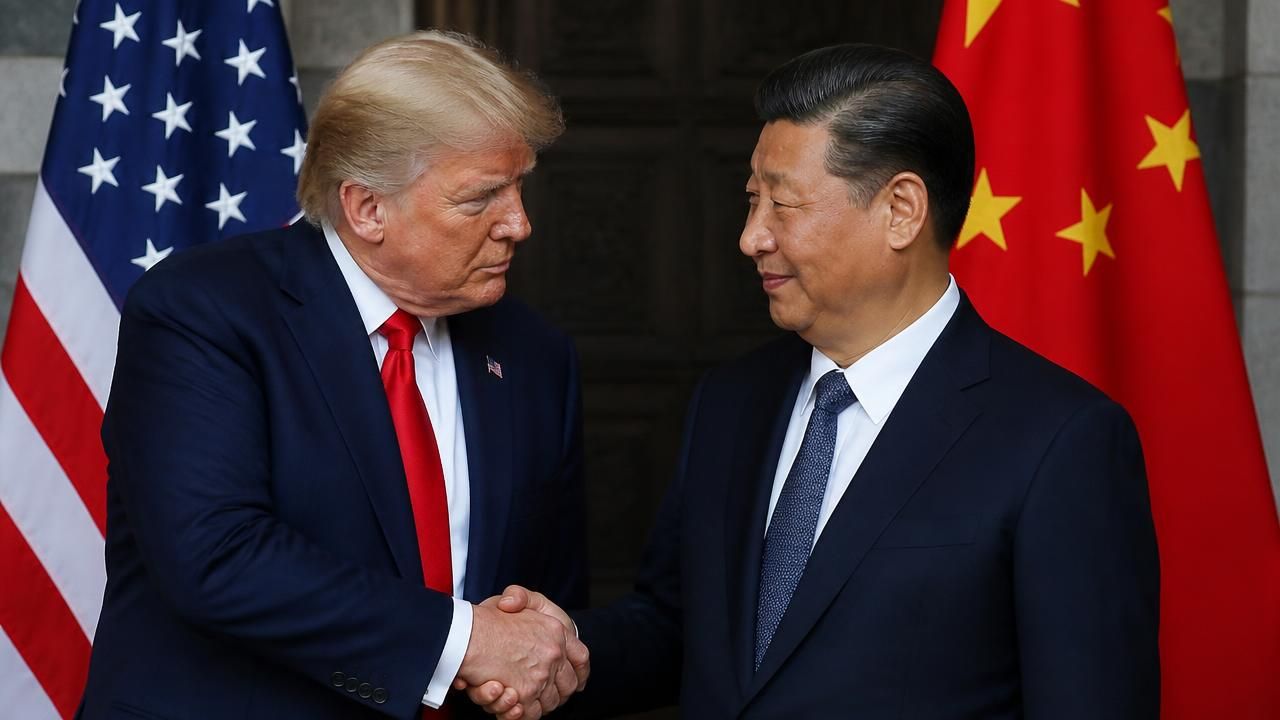
The G20 summit opened this week under a cloud of simmering US-China tensions, as President Donald Trump and Chinese President Xi Jinping prepared for a high-stakes encounter that could reshape global trade, technology policy, and geopolitical alliances. Hosted in the United States for the first time since 2026, the meeting has drawn leaders from the world's largest economies, but none face as much pressure as the two men at the center of an escalating rivalry.
Trump, who has repeatedly threatened tariffs and export controls against Beijing, strikes a cautious note on the trip. According to broadcast reports from Bloomberg's The China Show, 'US-China tensions simmer at G20 meeting.' That sentiment echoes across the financial and diplomatic corridors where aides are managing expectations for a possible deal or further escalation.
Investors Send a Clear Message: Keep AI Unchained
One of the most striking interventions ahead of the bilateral meeting came from global investors. In a Reuters report, market participants urged Trump and Xi to 'stay out of AI's way,' warning that heavy-handed government regulation or forced decoupling of artificial intelligence supply chains could derail the next wave of innovation and chill cross-border capital flows.
“We don't need politicians picking winners in the AI race,” one senior fund manager said. “Every time they intervene, it adds volatility and uncertainty to what should be a purely market-driven sector.”
The two leaders are expected to discuss AI standards, chip exports, and data sovereignty. Chinese officials have pushed for a multilateral framework, while Washington favors unilateral restrictions on advanced semiconductor exports. Investors fear that a breakdown in talks could prompt Beijing to accelerate its own semiconductor drive and Washington to broaden entity lists, destabilizing a sector that has underpinned global equity markets.
Canada's Oil Pivot: The Energy Angle of the Trade War
Meanwhile, the FT reported that Canada's oil industry is making a strategic pivot to Asia as US trade tensions simmer. Historically, the United States has been the primary buyer of Canadian crude, but punitive tariffs and repeated threats of border carbon adjustments have pushed Alberta's producers to court buyers in China, India, and South Korea.
This shift, which involves securing new pipeline routes and long-term shipping contracts, is a direct response to the unpredictable trade environment under the Trump administration. As one Canadian energy executive explained, “Diversification is no longer a nice-to-have; it's a survival strategy.” The ripple effects are being felt in global energy markets, with US refiners seeking alternative supplies and Asian purchasers gaining leverage over pricing.
The issue is likely to surface in G20 side meetings, where Canada's prime minister is expected to lobby for an energy carve-out from any comprehensive trade agreement.
South Africa-US Dispute Overshadows Handover Protocol
Adding to the turbulence, the Guardian reported that a dispute between South Africa and the United States has escalated over the G20 handover event. South Africa, which held the G20 presidency in 2025, is scheduled to formally transfer the baton to the United States at this summit. But the two governments are at odds over the agenda, with Pretoria reportedly objecting to Washington's demand to marginalize Russian and Chinese representatives during the official ceremonies.
South African President Cyril Ramaphosa has accused the US of “diplomatic bullying,” while American officials counter that South Africa's stance is “out of step with the values of the democratic world.” The disagreement has delayed the scheduling of a joint press conference and leaked into formal working sessions, forcing mediators to step in.
For global observers, the row underscores the fraying cohesion of the G20 as a forum for consensus. Once a vehicle for managing crises, it now risks becoming another arena for great-power contestation.
From Bali to New Delhi to Washington: A Recurring Rivalry
This is not the first time a G20 stage has hosted a fraught US-China leaders’ encounter. In November 2022, in Bali, Indonesia, then-President Joe Biden and Xi Jinping clashed over Taiwan, with Biden warning that the United States would defend the island's democratic status. That meeting, as Reuters recalled, sparked fears of a new Cold War but ultimately cooled into a fragile understanding.
The following year, in New Delhi, Prime Minister Narendra Modi used India's G20 presidency to position himself as a bridge between East and West. India hosted the summit as the world faced overlapping crises—food insecurity, climate change, and supply chain fragmentation—and Modi's choreographed diplomacy gave the developing world a louder voice.
Now, in 2026, Trump has returned to the stage with a more transactional approach. His administration has relabeled China as a “strategic competitor” and sought to dismantle what remains of Obama-era engagement. Yet the post-Bali architecture remains fragile, and the outcomes of the current summit could determine whether the world slides into decentralized technological ecosystems and competing trade blocs.
Taiwan and the “Deal” Calculus
Taiwan remains a flashpoint. As reported by CF Public, trade tensions hang over Trump's Asia trip, but he still aims to make a deal. On the eve of the G20, Trump visited Tokyo and Seoul, signaling that any agreement with Xi would need to encompass security guarantees alongside trade. The President's advisors have hinted that he may offer a partial rollback of tariffs in exchange for Chinese commitments on forced technology transfer and military restraint near Taiwan.
Xi, for his part, has sent signals that he is open to a “grand bargain,” but only if Washington abandons what Beijing sees as provocations—including arms sales to Taiwan and the AUKUS nuclear submarine pact. A senior Chinese diplomat stated, “We are willing to climb the mountain of negotiation, but we will not walk off a cliff.”
What's at Stake: Markets, Multilateralism, and the AI Race
For financial markets, the G20 is a binary event. A post-summit joint statement on cooperation would likely calm volatility; a breakdown would amplify it. Currency traders are already pricing in Chinese yuan depreciation, while bond yields reflect heightened risk premiums on US debt.
The AI dimension amplifies these risks. Investors want leaders to focus on guardrails for lethal autonomous weapons and basic ethical frameworks, but not to interpose themselves in commercial innovation. “Imagine a world where American and Chinese AI systems cannot interoperate,” said a tech policy analyst. “It would be like the internet split into two separate spheres—which is exactly what we're trying to avoid.”
The G20 offers a sliver of hope for multilateral fixes. Climate change, debt relief for developing nations, and pandemic preparedness are cross-border issues that demand cooperation. Yet with Washington and Beijing at loggerheads, the institution's ability to deliver is in doubt.
As the summit moves into its second day, all eyes are on the closed-door session between Trump and Xi. Whether they emerge with a handshake or a stalemate will set the tone for the remainder of the decade. One thing is clear: the era when the G20 could airbrush differences for the sake of a communiqué is long gone.