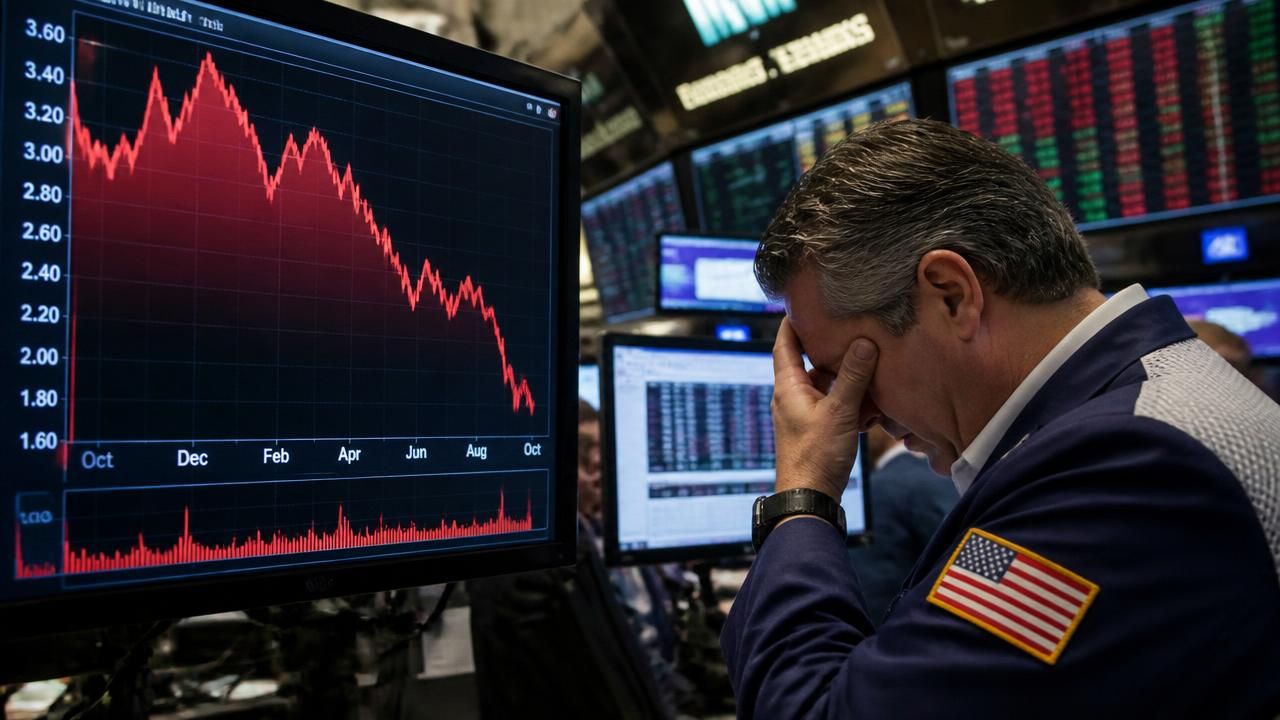
Global bond markets are flashing red. Government borrowing costs across the developed world have surged to levels not seen in decades, as investors demand ever-higher compensation for holding longer-maturity debt. A Bloomberg gauge tracking G7 sovereign debt now yields on average its highest since September 2000, and the fallout is being felt from Tokyo to Washington to London.
This is not just a technical market move—it is a warning about the sustainability of public finances, the path of inflation, and the resilience of global stock markets. For policymakers already grappling with slowing growth and geopolitical crises, the bond market's message is unmistakable: the era of cheap money is over, and the bill for years of fiscal stimulus has come due.
The Scale of the Selloff
The numbers are stark. In the United States, the 30-year Treasury yield has pushed above 5% for its longest stretch since 2007, while the 5-year real yield—an inflation-adjusted measure that matters for long-term investors—hit its highest since 2008. Across the Atlantic, UK gilt yields are rising sharply, prompting warnings from commentators like Alex Brummer of This is Money that Labour is facing an energy bailout and a fiscal reckoning. France, too, is under pressure as budget deficits balloon. MarketWatch highlighted that U.S., UK, and French budget woes are combining to trigger a worldwide bond rout.
Perhaps the most dramatic signal comes from Japan, where the 10-year Japanese Government Bond (JGB) yield has extended its slump after the Bank of Japan's rate hike. According to Bloomberg, Japan's bond crash has unleashed a $7 trillion risk for global markets, and the scramble to 'sell Japan' is sounding fiscal warning bells. As The Japan Times put it bluntly: "Japan's bond market has a warning for America."
What Is Driving the Repricing?
At the core of the selloff is a confluence of factors:
- Inflation and war: As CNBC noted, global bond yields hit multi-decade highs as governments pay the price for the U.S.-Iran stalemate. A mortgage broker quoted by MPA Magazine summed it up: "War is inflationary."
- Central bank policy: The Bank of Japan's decision to raise interest rates shocked a market long accustomed to ultra-low yields. The BOJ's balance-sheet cuts are making buyers recoil, according to The Japan Times.
- Fiscal profligacy: The world's richest nations are drowning in record debt. The New York Times warns that this threatens global growth, while the Financial Times editorial board says it's "time to sound the alarm on growing fiscal and financial risk."
- Supply and demand: Governments are issuing massive amounts of debt to fund deficits, but investors are demanding higher yields to absorb it. A report from NRI notes that the "Basic Policy" shock in Japan has sent the 10-year JGB yield higher, with negative implications for the economy.
These forces have created a perfect storm. The bond market is effectively telling governments that they no longer have the credibility to borrow cheaply—and that the consequences of their spending are catching up.
Japan's Cautionary Tale
Nowhere is the pain more acute than in Japan. The BOJ's rate hike triggered a bond crash that threatens a $7 trillion carry trade, as investors who borrowed yen cheaply to buy higher-yielding assets elsewhere are forced to unwind positions. This has spilled over into global markets, with Bitcoin and other risk assets facing pressure. As one analyst wrote on Seeking Alpha, fresh bond market stress is a big potential warning sign for stocks, including the SPY (NYSEARCA:SPY).
Forbes warns that Japan's bond meltdown is a direct warning to "Trump World," underscoring that fiscal expansion can backfire when markets lose confidence. The U.S. would do well to heed the lesson: Treasury Secretary Bessent's bond gains have already been wiped out as 30-year yields jump once again.
"Bond markets are the ultimate referees of fiscal policy, and they are signaling that governments have overstayed their welcome."
That sentiment is echoed by JPMorgan CEO Jamie Dimon, who told Fox Business that U.S. debt could cause bond turmoil, and by BlackRock CEO Larry Fink, who delivered a blunt warning on the national debt. Their concerns are not hypothetical—they are being priced into the market every day.
What It Means for Stocks, Mortgages, and Ordinary People
The bond market's alarm is rippling through the real economy. Rising 10-year and 30-year Treasury yields are lifting mortgage rates, hitting homebuyers and the housing market. The Orange County Register reports that the 30-year yield raising alarm in its longest run above 5% since 2007 is a harbinger for borrowing costs across the board.
For equity investors, the implications are troubling. As Goldman Sachs warns, "high interest rates will kill U.S. stocks." The recent stock market surge has been narrowly concentrated, and bond yields are now competing with equities for capital. Some analysts, like Société Générale's Albert Edwards, see echoes of 2007—when bond market stress preceded a major equity downturn.
Gold, meanwhile, has hit a record high as investors seek safe haven from the turmoil, according to The Guardian. That flight to safety underscores the anxiety permeating financial markets.
Different Frames, One Conclusion
The coverage across outlets reveals differing emphases: Bloomberg focuses on the historical yield levels and central bank policy; CNBC ties the rout to geopolitical tensions; The Japan Times and Forbes see Japan as a cautionary tale for the U.S.; and the FT warns that fiscal and financial risk are intertwined. But the underlying conclusion is unanimous: the bond market is sending a warning that can no longer be ignored.
For governments, the message is that fiscal discipline is essential. For investors, it is that portfolio risk is repricing. And for ordinary citizens, it means higher borrowing costs, more expensive mortgages, and potential turbulence in retirement accounts.
The bond market has spoken. The question now is whether policymakers will listen before the alarm becomes a full-blown crisis.