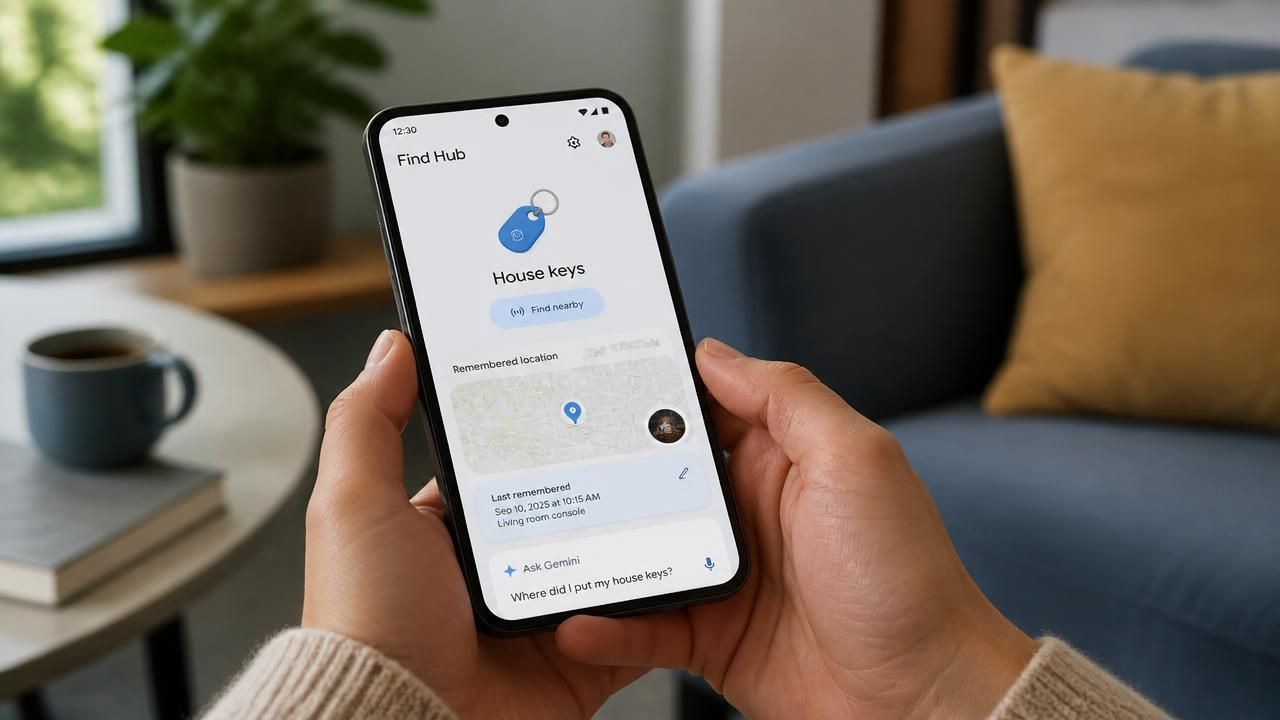
Google has officially launched its September Android Drop, a quarterly feature update that this year packs five notable improvements across discovery, comfort, communication, and accessibility. While earlier Drops have sometimes felt underwhelming—expanding Gemini summaries and chat features with little tangible benefit—this iteration delivers a more balanced set of tools, including a Gemini-powered memory for item locations, an anti-motion-sickness visual aid, smarter message handling, and a new accessibility mode called Guided Vision.
Rolling out to a wide range of Android devices—including Samsung Galaxy phones, not just Google's Pixel line—the update requires Android 16 or higher for several of the headline features. The move underscores Google's strategy of using monthly Drops to distribute feature updates across its fragmented ecosystem, rather than reserving them for first-party hardware.
Find Hub 'Remembered Items': No Tracker Needed
The most talked-about feature comes to the Find Hub app, which previously only helped users locate phones, earbuds, and tracker tags. Now, with the help of Gemini, users can manually log the location of any item—keys, passport, a favorite hoodie—by simply telling the AI where they put it and optionally attaching a photo. That information is stored securely in Find Hub, and later you can ask Gemini "Where did I put my passport?" or browse the app yourself. As Ars Technica notes, this is a shake-up: "Your messaging threads are getting prettier and more useful, and those nifty Motion Assist dots that began appearing last week are rolling out widely. And even the Gemini expansion is not without utility." The Verge similarly highlights the novelty: "Google Find Hub will soon help you locate things without a tracker."
The feature is clearly aimed at bridging the gap between physical and digital memory. For those who frequently misplace everyday items, the AI-powered logging could become a practical alternative to buying expensive Bluetooth tags. Privacy-conscious users will be glad to know that the data is encrypted and tied to the user's Google account, accessible only through Find Hub with authenticated credentials.
Motion Assist: Easing Motion Sickness
Another major highlight is Motion Assist, which has been spotted in the wild for days and is now officially rolling out. The feature overlays small animated dots on the screen that move in sync with the vehicle's motion, helping to reduce the sensory disconnect that causes motion sickness when reading or using a phone in a moving car. According to Google's official blog, Motion Assist is part of the company's broader commitment to comfort while on the go. The dots are unobtrusive and can be enabled in Display settings or through a quick toggle when Motion Assist detects driving motion.
As Android Pure notes, Motion Assist joins Guided Vision in this Drop, and it has been tested with both phone and vehicle motion sensors. While not a replacement for medication, it could be a boon for people who struggle with nausea during commutes or road trips.
Smarter Google Messages with AI
Google Messages is also getting a layer of AI-enhancement. The upgraded experience now includes Gemini-powered message summaries for long threads, contextual smart replies that adapt to the conversation, and better organization through automatic categorization of messages by sender or topic. As Android Guys observed, the September Drop adds "Smarter Google Messages" alongside Find Hub Memory and Motion Assist. This move continues Google's push to embed Gemini into its core communication tools—making it easier to catch up on busy group chats or respond quickly without losing context.
For Galaxy users, this is particularly welcome: the update arrives on Samsung devices as well, meaning a unified experience across flagship phones from both Google and Samsung.
Guided Vision: A Step Forward in Accessibility
The accessibility showcase of this Drop is Guided Vision, a feature aimed at helping people with low vision interact more confidently with their surroundings. Guided Vision uses the phone's camera and AI to recognize objects, read text aloud, and provide audio or haptic cues to guide the user to a target. It integrates with existing accessibility tools like Lookout and TalkBack, and it can be triggered by a long-press on the power button or via voice command.
UA News highlights that the five updates are largely focused on accessibility and personalization. Guided Vision is exactly that: a tool designed to make the physical world more approachable for visually impaired users. Early reviews suggest its object detection is accurate, and it could become a daily driver for those who need a little extra help.
Personalization Pack and Broader Rollout
The fifth feature—and often under-reported—is a set of personalization upgrades. New lock screen clock styles, dynamic Material You color themes that adapt to wallpaper, and a refreshed photo picker with adaptive icons are all included. While not as flashy as the AI-powered tricks, these options give users more control over the look and feel of their device. PhoneArena's coverage specifically points out that the update brings "5 new features to Pixel and Galaxy phones," indicating that Google is prioritizing a wider rollout across its Android partners.
According to Google's official blog, the goal of the September Drop is to "make life a little easier"—and this time, the features genuinely align with that statement. Previous Drops have been criticized for being Gemini-heavy with little substance; however, the addition of non-AI utilities like Motion Assist and personalization tools offers a more balanced package.
Context and Implications
Android Drops have evolved significantly since their inception. What started as Pixel-exclusive Feature Drops has matured into a channel for distributing Google's latest software innovations across the ecosystem. This September Drop, arriving on Android 16 and above, signals a shift toward using AI not merely as a gimmick, but as a functional assistant embedded in the OS. The Find Hub integration, in particular, hints at a future where your phone remembers not just your files and messages, but the physical locations of all your possessions.
“It’s a step toward ambient intelligence—where the phone helps you remember things you never thought to track,” said a Google spokesperson in the official announcement.
However, some outlets remain skeptical. Ars Technica's coverage points out that "Let's be frank: Some of Google's recent Android feature Drops have been duds," but concedes that the September edition offers "non-AI goodies" that appeal to users who are not yet ready to rely on an AI assistant. The juxtaposition of perspectives—from the positive yet cautious tone at Ars Technica to the straightforward feature-list approach at PhoneArena—illustrates how the Android community is both excited and wary of Google's increasing reliance on Gemini.
As the update begins to reach devices throughout September, users will have the chance to test these features for themselves. Whether it's finally remembering where they put the TV remote, or feeling less queasy during a long drive, the September Android Drop promises to be one of the most varied and practical updates in recent memory.