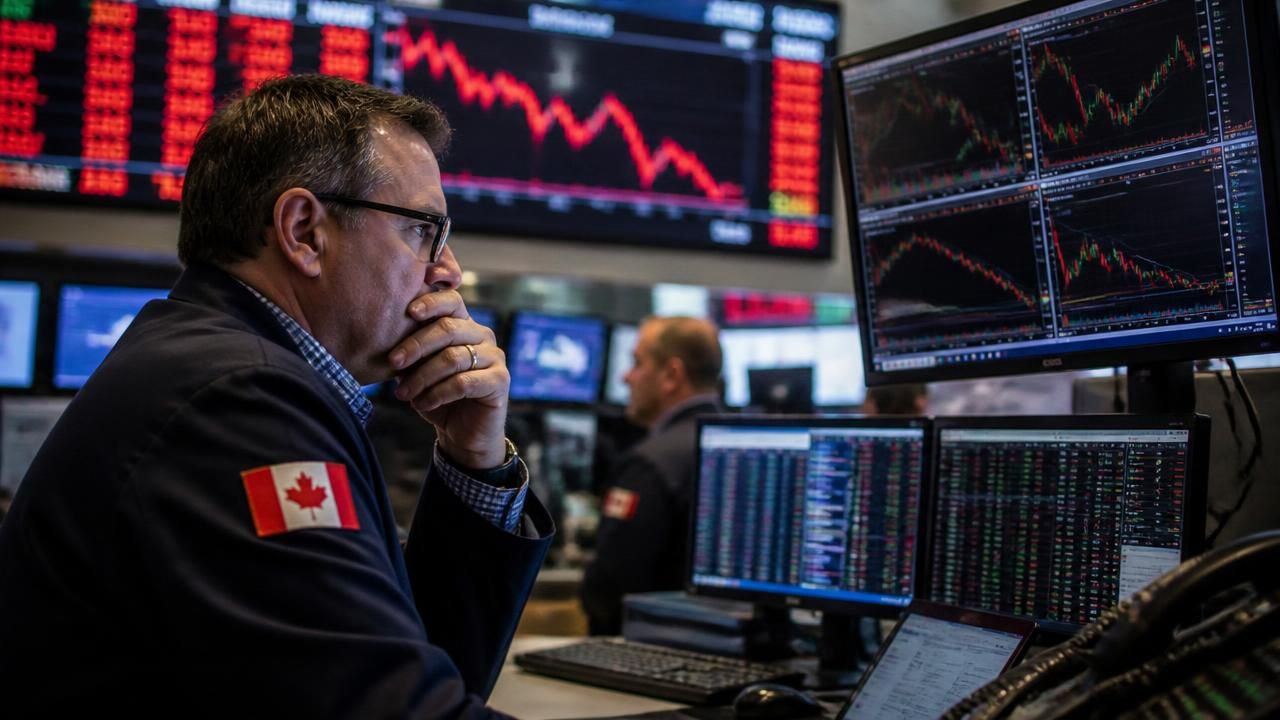
Canadian equities suffered their sharpest selloff in nearly a month on Tuesday, erasing a month of gains as a confluence of geopolitical, macroeconomic, and sector-specific pressures rattled investors. The S&P/TSX Composite Index dropped 2.28% to close at 34,413, according to data from the Toronto Stock Exchange. The rout was broad-based, with high-flying technology shares, financial institutions, and gold miners all posting steep losses, while benchmark bond yields climbed and bullion reversed its year-to-date gains.
The selloff was triggered by an escalation in tensions in the Middle East, which added fresh urgency to worries about persistent inflation and the potential for central banks to keep interest rates higher for longer. Investors fled risk assets, with the technology sector leading declines as global tech stocks came under pressure from a rout that began on Wall Street and spread to Toronto. Banks also slid on concerns that a slowing economy and a surprise deterioration in the labor market could hit loan growth and credit quality.
Geopolitical Shock Waves and Inflation Jitters
The immediate catalyst for Tuesday's downturn was a spike in geopolitical risk after reports of heightened military activity in the Middle East. Crude oil prices jumped on fears of supply disruptions, further complicating the inflation picture. Analysts noted that markets had grown complacent about geopolitical risks, making the selloff more violent when those risks materialized.
“Investors are waking up to a perfect storm of higher yields, sticky inflation, and geopolitical turmoil,” said a senior market strategist at a Canadian wealth management firm. “The TSX had reached record highs, but the risk-reward has suddenly shifted, and we're seeing a rapid repricing.”
The inflation narrative remains central. Earlier in the year, markets had priced in multiple rate cuts by the Bank of Canada, but recent data showing stubborn price pressures and a resilient U.S. economy have forced a rethink. Rising bond yields, particularly in the U.S. Treasury market, make equities less attractive and weigh on rate-sensitive sectors such as technology and real estate. In Canada, the 10-year government bond yield climbed to its highest level in months, compounding the pressure.
Tech and Banks Bear the Brunt
The technology sector was the hardest hit, mirroring a global tech rout that erased billions in market value. High-multiple growth stocks, which had led the TSX to new highs earlier in the year, are particularly vulnerable to rising discount rates. The selloff was exacerbated by profit-taking after a strong run, with investors locking in gains ahead of a busy earnings week.
Financials, a heavyweight in the TSX, also stumbled. The six largest Canadian banks all closed lower, with the sector shedding more than 2% as bond yields rose and the market braced for a potential economic slowdown. A jobs shock—evidenced by a weaker-than-expected employment report—added to fears that consumer defaults could rise, pressuring bank margins.
Gold's Plunge Erases Year-to-Date Gains
Perhaps the most striking move was in gold, which is traditionally seen as a safe haven in times of geopolitical stress. The precious metal plunged on Tuesday, erasing all of its year-to-date gains. Spot gold dropped sharply as a surging U.S. dollar and rising nominal yields overwhelmed safe-haven demand. The dollar index rose to a 20-year high, making gold more expensive for overseas buyers and triggering a wave of selling in bullion-backed ETFs.
Gold miners were hit disproportionately, with several TSX-listed producers falling by more than 5%. This was a stark reversal for a sector that had attracted investors seeking protection against inflation. The decline in gold also reflected a broader liquidation of assets as investors raised cash to cover margin calls in other parts of the market.
Context: A Market That Had Been Flying High
The correction comes after a remarkable rally that had seen the TSX Composite reach record highs supported by strength in commodities, particularly energy and gold. Until Tuesday, the index had gained roughly 15% this year, outperforming several global peers. However, the rapid ascent had left valuations stretched, and Tuesday's selloff served as a reminder that geopolitical and macro risks can derail even the strongest bull markets.
Data from Bloomberg indicated that the TSX erased all of its 2026 gains before a slight late-session bounce. The timing is particularly challenging as companies begin to report quarterly earnings, with investors now scrutinizing guidance for any signs of margin compression or weakened demand.
What Analysts Are Saying
Market observers offered differing views on whether this is a short-term blip or the start of a deeper correction. Some argue that the fundamental drivers of the rally—high commodity prices and corporate earnings growth—remain intact, and that the pullback is a healthy consolidation. Others warn that the combination of geopolitical uncertainty and restrictive monetary policy could lead to sustained volatility.
- Bullish view: The economy is still growing, unemployment remains low, and corporate balance sheets are strong. A pullback in gold and tech may offer buying opportunities for long-term investors.
- Bearish view: Rising yields and inflation could force central banks to tighten further, potentially tipping the economy into recession. The jobs shock is an early warning sign.
- Middle ground: Expect choppy markets in the near term, with the outcome of Middle East diplomacy and next month's inflation data likely to determine the direction.
“We're telling clients to brace for more volatility,” said a portfolio manager at a Toronto-based asset manager. “But we're not hitting the panic button. The TSX is still supported by energy and materials, though gold's reversal is a yellow flag.”
Looking Ahead
In the coming days, all eyes will be on geopolitical developments and economic data, particularly the U.S. Consumer Price Index report, which could set the tone for global markets. Domestically, the Bank of Canada's next policy decision will be closely watched, with markets now pricing in a lower probability of rate cuts.
For Canadian investors, the event is a stark reminder of the interconnectedness of global markets. A tech rout in California, a missile strike in the Middle East, or a gold liquidation in London can all reverberate through the TSX. As the dust settles, the key question is whether this is a temporary setback or a turning point for a market that had grown accustomed to record highs.
As of the close, the TSX's year-to-date performance had flipped to a marginal loss, underscoring how quickly sentiment can change. With earnings season underway and geopolitical risks unresolved, the path ahead remains uncertain. For now, investors would be wise to buckle up.