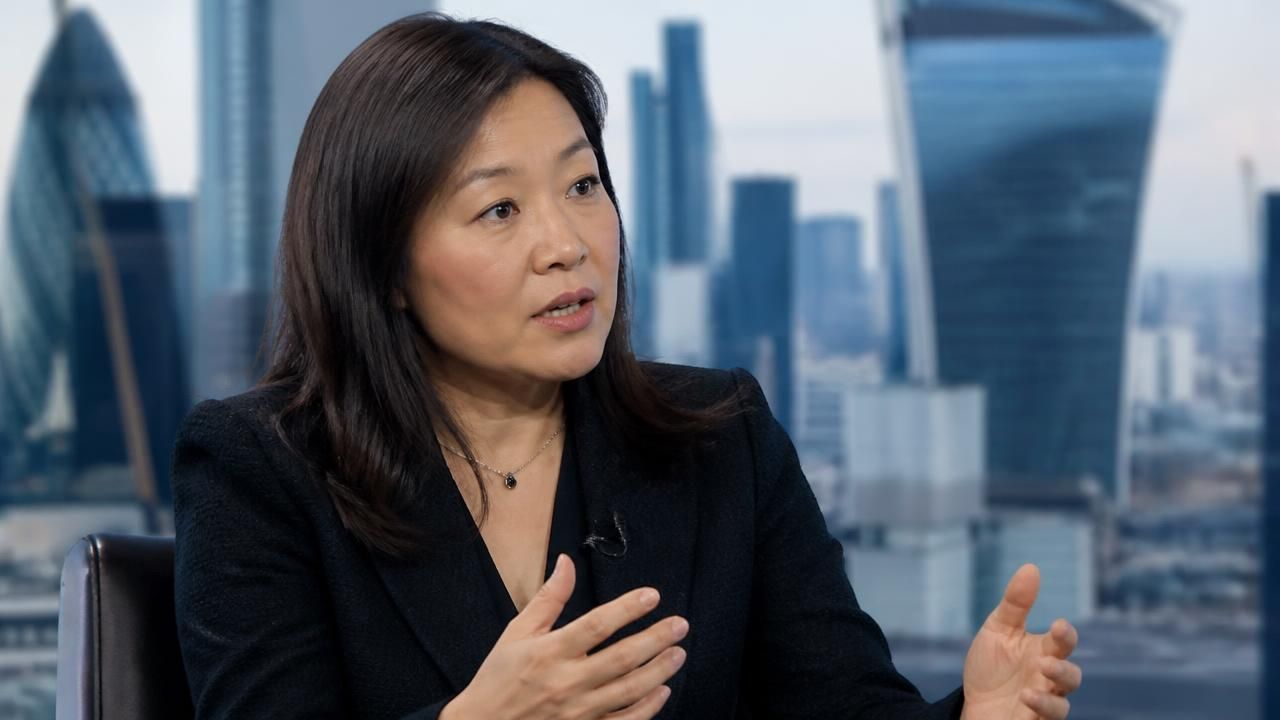
BlackRock’s global chief investment strategist, Wei Li, is sending a clear message to investors for the year ahead: favor equities over government bonds for total portfolio growth, but don’t ignore the income opportunities in selective fixed income. In the firm’s latest weekly commentary and in interviews with Bloomberg and Reuters, Li laid out a nuanced 2025 outlook that balances near-term optimism on U.S. stocks with a structural warning that higher government bond yields are here to stay.
“Right now, from a total portfolio perspective,” Li told Bloomberg, she prefers equities to credit and government bonds. However, she added, “there are good income opportunities within fixed income that we do want to lean into.” That dual approach—stocks for growth, bonds for income—anchors BlackRock’s current positioning across global markets.
Equities Over Bonds: The Here and Now
Li’s preference for U.S. equities is rooted in what she describes as a solid near-term backdrop for corporate earnings and economic activity, even as long-term uncertainties loom. Morningstar’s coverage of her remarks highlights that, despite structural concerns such as debt dynamics and geopolitical fragmentation, the immediate outlook for American stocks remains constructive. Bloomberg framed her stance as “investing for the here and now,” suggesting BlackRock is deliberately focusing on the current cycle rather than trying to time long-term reversals.
This view is supported by the firm’s weekly commentary, titled “Two market signals, one story,” which argues that the market is simultaneously pricing in disinflation and resilient growth—a combination that historically favors risk assets like equities over the next six to twelve months.
AI: Chips and Hardware Lead the Way
A cornerstone of BlackRock’s equity conviction is artificial intelligence. In a separate Bloomberg segment, Li said BlackRock is “overweight AI” and specifically likes “chips and hardware.” This reflects the firm’s belief that the AI buildout is still in its early stages, with semiconductor makers and infrastructure providers poised to capture outsized gains as adoption accelerates. Reuters similarly reported that BlackRock is betting on an AI-driven stock rally, though it noted that U.S. debt concerns could cloud the 2025 outlook.
“We like chips and hardware in our overweight AI stance.” — Wei Li, BlackRock global chief investment strategist
The firm’s focus on AI hardware aligns with a broader market narrative that has propelled technology shares over the past year. But Li’s comments suggest this is not a momentum chase; rather, it is a fundamental allocation to companies that enable the AI revolution, from data centers to semiconductor fabrication.
Fixed Income: A Tale of Two Bond Markets
While Li prefers equities overall, her fixed-income views are more selective—and somewhat contrarian. BlackRock has recently upgraded euro-area government bonds, according to a Yahoo Finance report, while turning cautious on emerging-market debt. More strikingly, Bloomberg reports that BlackRock now prefers European government bonds over U.S. Treasuries.
The rationale is yield and fundamentals. Li argues that higher government bond yields are not a transitory phenomenon but a structural shift driven by persistent deficits, inflation volatility, and term premium demands. That view, echoed in Financial Advisor Magazine’s coverage, implies that the era of ultra-low yields is over. Within that environment, European bonds offer comparable income with less duration risk and a more favorable fiscal trajectory than the U.S., where debt levels continue to climb.
“We see better risk-reward in European government bonds than in U.S. Treasuries at current valuations,” Li said, according to Bloomberg. This does not contradict her equity preference—equities still rank highest in total portfolio terms—but it does signal that investors should be discerning within fixed income.
Emerging Markets and the Global Picture
BlackRock’s cautious pivot on emerging markets is another telling shift. The firm has trimmed its emerging-market debt exposure, preferring the perceived safety and yield of European sovereigns. This is consistent with Li’s broader theme of investing in quality and income while managing risks from a fragmented geopolitical landscape. The Reuters report ties this caution to U.S. debt concerns, which could create ripple effects for dollar-based assets and emerging-market borrowing costs.
In BlackRock’s weekly commentary, the firm identifies “two market signals” that tell one story: markets are pricing in both lower inflation and resilient activity, which supports risk-taking. But the commentary also warns that this equilibrium is fragile, and that fiscal policy—especially in the United States—remains a key swing factor for 2025.
What This Means for Investors
Wei Li’s views offer a playbook for a market that is neither uniformly bullish nor bearish. Her recommendations can be summarized as follows:
- Stay invested in U.S. equities, with a tilt toward AI hardware and semiconductors.
- Treat fixed income as an income source, not a growth engine, and prefer European government bonds over U.S. Treasuries.
- Remain cautious on emerging markets, where debt dynamics and dollar strength pose headwinds.
- Accept that higher yields are structural, and position portfolios for a world where cash and bonds generate meaningful income.
The convergence of these views across Bloomberg, Reuters, and BlackRock’s own commentary underscores a consensus at the world’s largest asset manager: short-term prosperity, long-term prudence. Li’s “here and now” approach does not ignore the clouds on the horizon—U.S. debt, geopolitical tensions, and inflation volatility—but it refuses to let them dictate a defensive posture in a still-supportive economic environment.
As 2025 unfolds, investors will be watching whether BlackRock’s call on AI hardware and European bonds proves prescient. For now, Wei Li is betting that the biggest gains come from owning the companies building the future, while clipping coupons from the safest governments—just not the one in Washington.