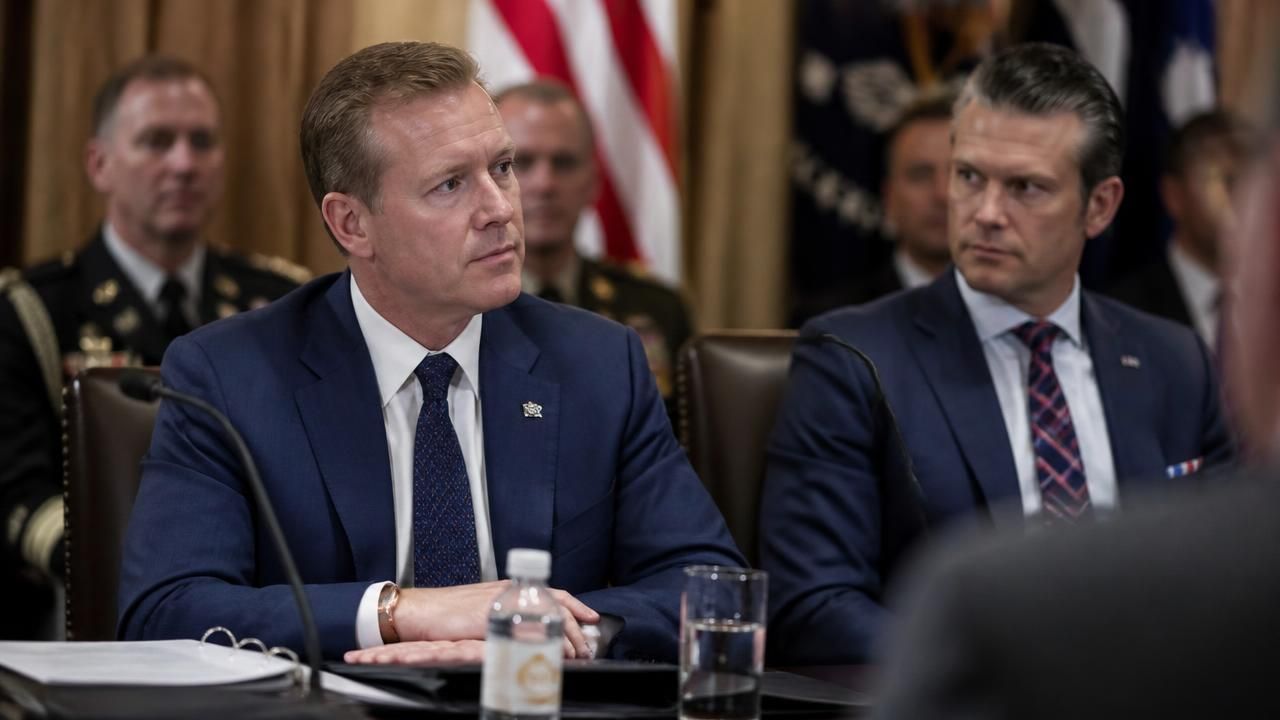
The Pentagon is in turmoil. U.S. Army Secretary Dan Driscoll has resigned after a series of clashes with Defense Secretary Pete Hegseth, according to multiple reports. The resignation, submitted to President Donald Trump, leaves the Army without several top leaders at a critical moment as the United States confronts an ongoing conflict with Iran.
A Sudden and Dramatic Exit
Bloomberg was first to report the resignation, noting that Driscoll stepped down after repeated disagreements with Hegseth. The Wall Street Journal, cited by RBC-Ukraine, described the final confrontation as an “explosive clash.” The New York Times framed the resignation as the culmination of clashes over the firing of top military officers—a theme echoed by several other outlets.
“His resignation leaves the service without several top leaders as the conflict with Iran continues.” — Bloomberg
Driscoll’s departure is particularly striking because, just days earlier, he had publicly insisted he was not going anywhere. The Independent and other outlets reported that the Army secretary had told associates he would remain in his post despite the reported tensions. That defiant posture made the sudden reversal all the more dramatic.
Roots of the Rift
The friction between Driscoll and Hegseth centered on the latter’s aggressive campaign to purge senior military leadership. Hegseth, a former Fox News host and combat veteran, has moved quickly to replace top officers he views as insufficiently loyal to President Trump. The most notable firing was that of General Charles “CQ” Brown, the Chairman of the Joint Chiefs of Staff, but the shakeup extended to multiple service chiefs and other key positions.
Driscoll, himself a former Army officer and Yale Law School graduate, reportedly clashed with Hegseth over the pace and scope of the firings. According to the New York Post, Hegseth’s “paranoia” of being replaced fueled the purge, creating a toxic environment at the highest levels of the Pentagon. The Post also reported that an ally of Hegseth has emerged as a potential candidate for the Army secretary role, suggesting the administration is already moving to fill the vacancy.
Earlier Denials and Swift Reversal
Several sources, including Yahoo News and Dagens.com, reported that Driscoll had initially refused to resign, vowing to stay the course. The about-face within days underscores how quickly the situation deteriorated. “The rift at the Pentagon widened as the Army secretary refused to step down,” Dagens.com reported—an account that now seems outdated, but which captures the volatility of the moment.
In a sign of broader instability, the Navy’s top officer has also stepped down after a separate dispute tied to President Trump, as reported by RBC-Ukraine. That departure, while distinct from Driscoll’s, adds to the sense of a defense leadership in disarray.
War-Time Leadership Vacuum
Driscoll’s resignation could not come at a worse time. The U.S. military is actively engaged in operations against Iranian forces and their proxies in the Middle East. Satellite images, cited by OneIndia, show damage at a U.S. base from Iranian strikes, and reports indicate that up to 4,000 U.S. troops have been targeted. The Army secretary plays a critical role in overseeing the Army’s budget, personnel, and readiness—all essential during an active conflict.
Analysts warn that Driscoll’s exit, combined with the ongoing purges, could undermine military effectiveness. “We are seeing a leadership vacuum at the Pentagon at a moment when strategic clarity is paramount,” said one defense expert, who spoke on condition of anonymity. “The Army needs a confirmed secretary to manage its role in the Iran campaign, and now it doesn’t have one.”
Framing the Story: Outlets Differ
The coverage of Driscoll’s resignation reveals widely differing editorial perspectives:
- Bloomberg and Financial Times focused on the leadership vacuum and the impact on U.S. military readiness.
- The New York Times emphasized the firings of top generals as the root cause.
- The Wall Street Journal, cited by RBC-Ukraine, highlighted the “explosive” nature of the clash, suggesting a more personal dimension.
- The New York Post framed the story around Hegseth’s alleged paranoia and the internal power dynamics.
- International outlets like The Japan Times and Telangana Today looked at the geopolitical implications, particularly for the Iran conflict.
“Hegseth’s ‘paranoia’ of being replaced explains purge of top general — as ally emerges for Army secretary’s role.” — New York Post
Some conservative outlets, like The Daily Wire, initially framed Driscoll’s reported clashes as a “surprise move” when he refused to resign, underscoring how quickly the narrative evolved.
What Comes Next?
The White House has not yet confirmed Driscoll’s replacement, but the New York Post reports that a Hegseth ally is in the running. The resignation also raises questions about the fate of other senior Pentagon officials amid the ongoing purge. Driscoll’s departure leaves the Army under the leadership of an acting secretary or undersecretary—a stopgap arrangement that many consider unsustainable during wartime.
For President Trump, the turmoil presents both a challenge and an opportunity. He has consistently backed Hegseth’s efforts to reshape the military, but the departure of a respected Army secretary could become a political liability, especially if the Iran conflict escalates. For now, the Pentagon is left to manage a war with a decimated leadership team, and the repercussions are likely to be felt for months to come.
The story is still developing, and more departures may be on the horizon. But one thing is clear: the rift at the Pentagon is no longer a simmering dispute—it is a full-blown crisis.