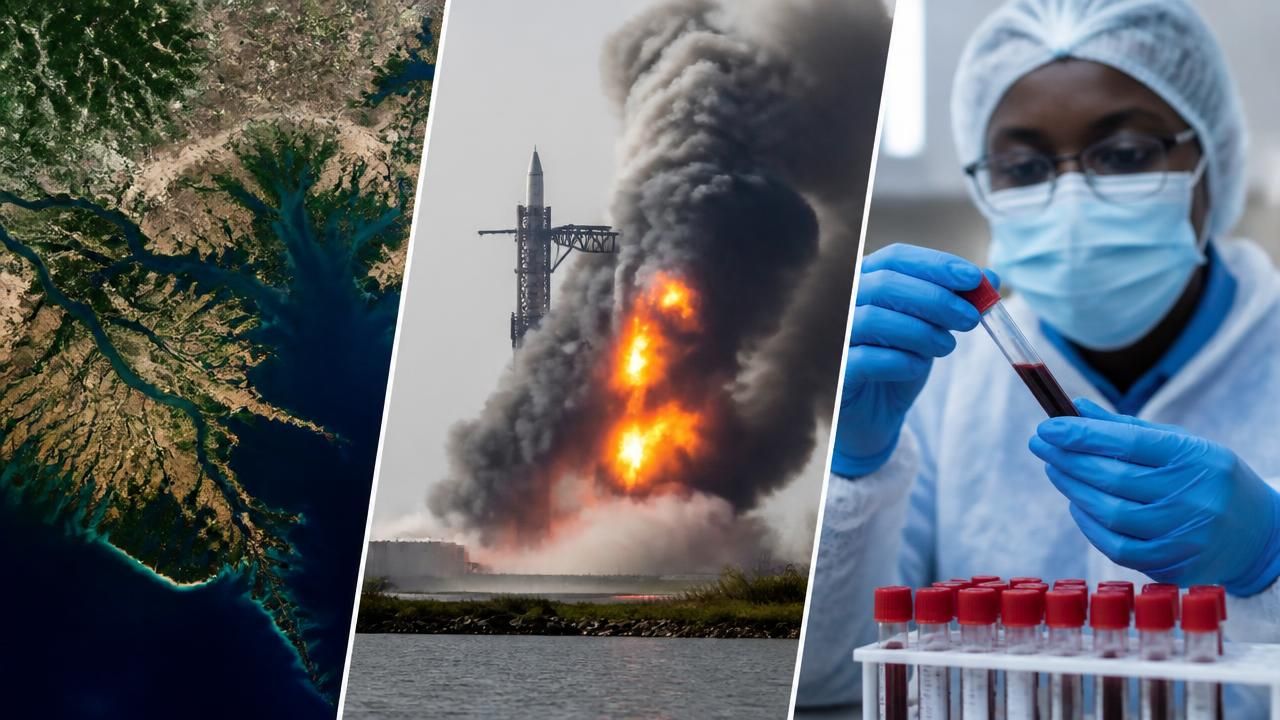
Humans are natural puzzle-solvers. That instinct drives scientific discovery, technological innovation, and even our choice of weekend entertainment. This week, a batch of seemingly unrelated stories from around the globe all share a common thread: the art of the puzzle. From NASA challenging the public to identify a mysterious satellite image, to a SpaceX explosion that has engineers scratching their heads, and a medical mystery that has health officials stumped, these stories reveal how puzzles in science are not just games—they are the engine of progress.
NASA's Satellite Puzzler: Bragging Rights and Earth Observation
Every month, NASA's Earth Observatory releases a puzzling satellite image and challenges readers to guess the location. The September 2026 puzzler, unveiled this week, continues that tradition. Participants are asked to identify the spot, note the clues they used, and explain what makes the place interesting. The reward? Not prize money or a trip to space, but something nearly as satisfying: puzzler bragging rights.
According to NASA, the challenge is designed to engage the public in the art of reading satellite imagery. "Zoom in, look closely, and enjoy the challenge," the agency encourages. Within about a week, NASA will post the answer, along with a link to an Earth Observatory Image of the Day story. The first correct guesser will be recognized, and especially thoughtful responses may also be highlighted. By submitting an answer, participants acknowledge that their comments may be edited and published.
“We can’t offer prize money or a trip to space to see Earth like satellites and astronauts do. But we can offer something almost as rewarding: puzzler bragging rights.” — NASA Earth Observatory
The puzzle is more than a fun distraction. It helps scientists understand how the public perceives Earth from above, and it builds a community of citizen scientists who can spot geological and historical details in satellite data. Some participants go so far as to identify the exact satellite instrument and spectral bands used, showing how the challenge doubles as a crowdsourced education tool.
The Sequels and Spinoffs of Puzzle Culture
Toem 2: Photography Meets Puzzle Gaming
In the entertainment world, the acclaimed photography puzzler Toem is getting a sequel. Toem 2 has officially received a release date, delighting fans who enjoy using a camera to solve visual mysteries. The game, which involves snapping photos to uncover hidden scenes and solve challenges, taps into the same observational skills required for NASA's satellite puzzler. It's a reminder that puzzle-solving is a universal joy, whether you're examining real satellite imagery or exploring a whimsical digital world.
Jane Street's ASIC Challenge
Meanwhile, trading firm Jane Street has issued a different kind of puzzle: reverse-engineer its custom ASIC (Application-Specific Integrated Circuit). The company's challenge has attracted the attention of hardware hackers and cybersecurity enthusiasts. There's a reason for that, as Glitchwire reports. Beyond the thrill of the hack, participants can uncover potential vulnerabilities or optimize the chip's performance. It's a puzzle where the prize isn't just bragging rights—it's the chance to improve real-world technology.
Data and Policy Puzzles: Hurricane Monitoring at a Crossroads
Not all puzzles are intentional. Sometimes, the mystery lies in why crucial data is being withheld. Earlier this year, the Pentagon stopped sharing satellite weather data, a decision that drew sharp criticism from scientists and forecasters. The timing was alarming, coming right as hurricane season was brewing. But in a reversal, key hurricane-monitoring data will now stay online, according to a New York Times report published in 2025.
The reversal came after fierce pushback from meteorologists, who argued that cutting off satellite data would endanger lives. The data, which tracks storm formation and movement, is essential for issuing timely warnings. The initial decision to stop sharing was military-driven, but the public outcry forced a reassessment. The result is a patchwork of uncertainty and relief: while data will remain available for now, the underlying tension between national security and scientific openness remains a persistent puzzle.
- Who: The Pentagon, NOAA, and the public.
- What: Satellite weather data that was scheduled to be withdrawn.
- Where: U.S. government networks and global forecasting systems.
- Why: Concerns about security vs. public safety.
As USA Today put it, "With hurricane season brewing, Pentagon stops sharing satellite weather data" — but the subsequent reversal shows how public pressure can solve a policy puzzle. The challenge now is to find a framework that protects both security and lives.
A Medical Mystery: Ebola Testing Timelines
In the public health arena, a puzzling case in Africa has experts questioning established protocols. According to Nation Africa, some tested people were declared Ebola-free before the 21-day window that is internationally recommended for monitoring exposure. The World Health Organization typically requires a 21-day observation period because the virus can incubate for up to three weeks. So how were patients cleared early?
Investigators are looking into whether new testing technology offers quicker results or whether protocols were bent in the field. The puzzle is not just about paperwork—it's about risk. Ebola is deadly, and an early declaration could lead to secondary infections. Health officials are grappling with the balance between scientific advancement and conservative safety measures.
Space Forensics: The SpaceX Satellite Blast
Even the most experienced space engineers face puzzles. The Times of Israel reported that SpaceX's CEO was left "puzzling over blast that destroyed Israeli satellite." The explosion occurred during routine operations, and the cause remains unknown. The satellite, which belonged to an Israeli operator, was supposed to be a groundbreaking mission. Instead, it became a forensic puzzle.
Teams are combing through telemetry data, video footage, and debris to determine whether the failure was in the rocket, the satellite, or an unfortunate collision with space debris. The investigation is ongoing, and every clue matters. For SpaceX, solving this puzzle is crucial not just for insurance purposes but for the safety of future launches.
Why Puzzles Matter
From NASA's public challenge to the cryptic causes of a rocket failure, puzzles are at the heart of the scientific method. They force us to ask questions, gather data, and re-imagine our assumptions. The satellite puzzler invites us to see our planet new. The Ebola timeline mystery pushes us to refine clinical guidelines. The hurricane data debate tests our priorities. And the SpaceX blast reminds us that even cutting-edge technology can surprise us.
As these stories show, the spirit of inquiry is thriving. Whether you are a NASA scientist, a game designer, a hacker, a doctor, or a space enthusiast, there is always a puzzle waiting to be solved—and the answer often leads to deeper understanding.