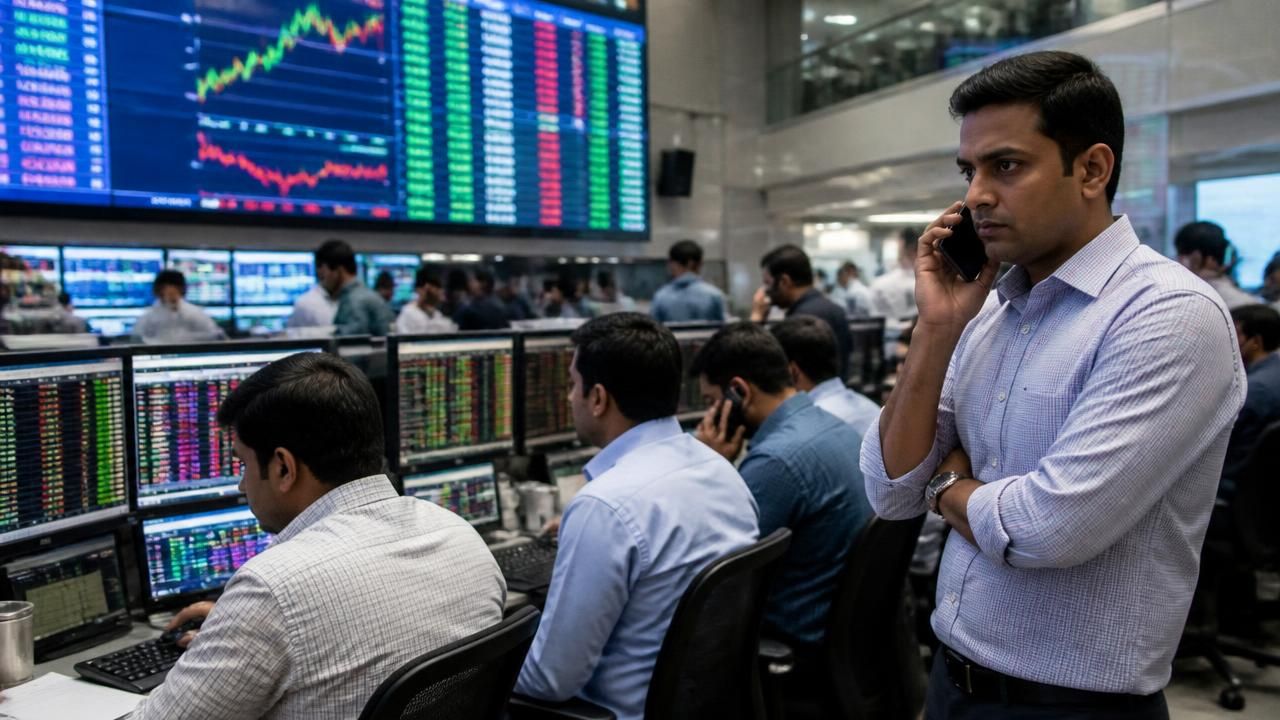
India's stock exchanges passed a high-stakes stress test on Monday as the new closing auction mechanism absorbed a record 400 billion rupees ($4.2 billion) in turnover linked to the MSCI index rebalancing. While the system held, dozens of stocks logged sharp price moves, exposing the tension between automated efficiency and market instability during one of the busiest trading events of the quarter.
The MSCI rebalancing, which adjusted the composition of global benchmarks tracked by billions of dollars in passive funds, forced fund managers to execute large trades at the closing price. This was the first major test of India's expanded closing auction, a mechanism designed to centralize end-of-day orders and reduce market impact. According to Bloomberg Markets, the auction processed the largest single-day turnover in its history, dwarfing previous sessions.
How the Closing Auction Works
The closing auction is a fixture of modern equity markets, allowing buyers and sellers to submit orders that are matched at a single clearing price at the market close. India introduced an extended closing session for stocks listed on the National Stock Exchange (NSE) and BSE in 2023, but Monday marked its first exposure to the scale of MSCI-driven rebalancing flows. The system is intended to improve price discovery and reduce the wild swings that can occur when large institutional orders hit the market in the final seconds of trading.
Data from the exchanges showed that turnover in the closing session reached unprecedented levels, with activity concentrated in index heavyweights such as Reliance Industries, HDFC Bank, and Infosys. The MSCI rebalancing involved additions and deletions to several indices, prompting funds to adjust their portfolios to mirror the new benchmarks.
A 'Messy' Threat or a Success Story?
The reaction from market participants was divided. On one hand, the auction's ability to process such massive flows without a system failure was a technical achievement. But on the other, the sharp price movements in two dozen stocks suggested that liquidity fragmentation and execution risks remain.
Some analysts had warned that the rebalancing threatened to turn 'messy' in the new Indian auction format, a view echoed by early volatility that saw several stocks swing by more than 2% in the final seconds of trading.
Reuters, which had flagged this event as the auction's first major test, noted that the mechanism's design had been scrutinized by foreign investors concerned about price distortion. MSN's coverage went further, describing the session as 'record volumes amid closing auction-led swings' and questioning whether the new system truly delivers better outcomes for passive funds.
Outlook Money framed the session as a 'volatile' prelude, forecasting that the rebalancing would strain market infrastructure. Indeed, intraday data showed that some large caps experienced erratic price action leading into the close, as market makers and arbitrageurs adjusted to the influx of orders.
Why the MSCI Rebalancing Matters
MSCI's quarterly index reviews are among the most impactful events for global emerging markets, as they drive forced buying and selling by index-tracking funds. India's weighting in MSCI Emerging Markets has grown steadily, making it a critical destination for foreign portfolio flows. This time, the rebalancing coincided with a broader rally in Indian equities, amplifying the amount of capital that needed to be deployed at the day's closing prints.
The event also served as a proving ground for India's market infrastructure ahead of its potential inclusion in global bond indices. A smooth process would bolster investor confidence; a disorderly one could invite regulatory scrutiny.
Mixed Perspectives from the Sources
The five news outlets covering the story each emphasized different angles:
- Bloomberg Markets focused on the record turnover and the system's capacity to absorb it, calling it a 'success' despite persistent volatility.
- Reuters framed it as a 'first major test,' underlining the structural challenges of matching huge passive flows with the auction's price discovery mechanism.
- MSN's two reports highlighted the 'swings' and the 'messy' potential, suggesting that the auction may have altered market dynamics in unforeseen ways.
- Outlook Money took a preemptive stance, warning of a volatile session and urging investors to brace for turbulence.
These divergent perspectives reflect a deeper debate among market participants: is the closing auction a stabilizing force or a new source of risk? Proponents argue that it concentrates liquidity, reduces manipulation, and gives investors a fairer benchmark price. Critics counter that it creates a 'crowded trade' at the close, where large imbalances can lead to exaggerated moves.
What Happens Next
The immediate impact of Monday's rebalancing will be measured in tracking errors and transaction costs. Fund managers who executed trades in the auction will assess how closely their fills matched the official closing prices. For regulators, the session provided valuable data on how the auction behaves under stress.
Looking ahead, India's ability to handle even larger rebalancing events will be crucial. With MSCI considering further increases to India's index weights, and with domestic retail participation soaring, the closing auction will likely become a permanent feature of the market's plumbing. Monday's record turnover is a testament to its scale—and a reminder that even the best-designed systems can sputter when billions of dollars move at once.
As one trader put it, 'The auction worked, but the market still felt the tremors. The real test will come when every investor tries to exit at the same price on a bad day.'