The Spanish enclave of Ceuta, a tiny sliver of European territory on Africa’s northern coast, became the epicenter of a major migration crisis in recent weeks as thousands of people surged across the border from Morocco. Spanish Prime Minister Pedro Sánchez has sought to shift blame away from Morocco, pointing instead at human trafficking networks and criticizing the European Union for what he called a 'selfish' response. Meanwhile, Moroccan officials have offered their own explanation, citing the role of social media misinformation. The incident has reignited bitter debates over immigration, border security, and European solidarity.
A Border Breach and a Humanitarian Emergency
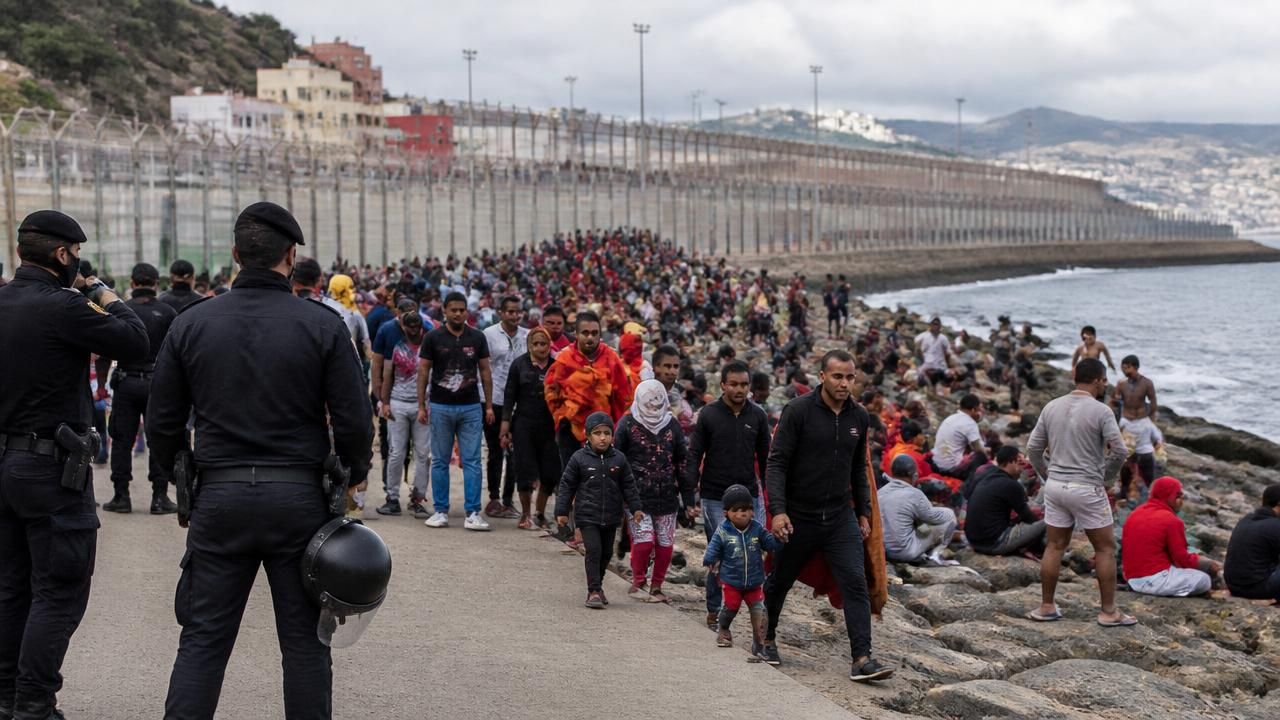
The crisis began when large groups of migrants, including entire families with children, crossed into Ceuta after Moroccan border guards reportedly failed to intervene. The flow was staggering: Spanish officials initially reported around 60,000 to 70,000 people had entered the enclave, which normally holds a population of just 85,000. The figure was later revised to roughly 50,000 to 60,000, with the Spanish government confirming that by early this week, more than 48,000 had voluntarily returned to Morocco.
The human toll became a central point of contention. The Guardian reported that as many as 141 people are thought to have died trying to reach Ceuta, while other outlets cited lower figures—34, 41, or 57 deaths at various stages. The discrepancies reflect the chaotic conditions as desperate individuals swam around rocky headlands or attempted to scale razor-wire fences. Many bodies were recovered along the coast, and search operations continued for days.
Sánchez Exonerates Morocco, Blames Traffickers
Spain’s Prime Minister, Pedro Sánchez, was adamant that there was no evidence the Moroccan government orchestrated the incursion. Speaking after an emergency cabinet meeting, Sánchez said, 'Morocco is not to blame for the Ceuta border breach.' He insisted that the two countries are cooperating to manage the situation. Instead, he pointed the finger at organized crime, saying, 'The mafias that traffic human beings are the ones responsible for this humanitarian emergency.' His remarks were echoed by Spanish Interior Minister Fernando Grande-Marlaska, who described the event as a 'violation of territorial integrity' but attributed it to criminal networks rather than state action.
However, the prime minister’s stance drew sharp criticism from opposition parties and right-leaning media. The Telegraph published an opinion piece titled 'The Spanish Left has itself to blame for this migrant invasion,' arguing that Sánchez’s perceived leniency on immigration had encouraged the surge. Some conservative commentators accused the government of weakness, while the right-wing Vox party called for the military to secure the border.
Morocco’s Counter-Narrative: Digital Platforms and Misinformation
Moroccan authorities offered a different diagnosis. In a statement reported by CBS News, the Moroccan government attributed the border breach to 'exploitation of digital platforms' and misleading information, suggesting that social media posts encouraged people to head to Ceuta. This claim was met with skepticism from analysts, who noted that Morocco has used border pressure as a political lever in the past—particularly in disputes over Western Sahara and trade relations. Some migrants themselves told Ynetnews that Moroccan security forces actively encouraged them to cross, a claim Morocco denies.
In a bizarre twist, the Israeli outlet Israel Hayom published a headline alleging that Spain had blamed Israel and the United States for the crisis. The story, which was widely circulated online, was met with disbelief and was not corroborated by any mainstream Spanish or international source. It remains unclear whether the claim was based on faulty reporting or deliberate disinformation—a reminder of how quickly unverified narratives can spread in a polarized media environment.
A 'Selfish' EU Response
Sánchez reserved his harshest words for fellow European Union members. 'The EU’s response has to change,' he said, accusing some member states of 'selfishness' for refusing to share the burden of migration. CNN and The Independent quoted him as saying, 'We cannot have a Europe where some countries are determined to do nothing.' His comments exposed deep divisions within the bloc over how to handle irregular migration, especially from North Africa.
Chatham House, a London-based think tank, analyzed the crisis as a stress test for European unity. The institute noted that the Ceuta episode heaps pressure on Sánchez’s minority government, which relies on the support of smaller parties and faces elections in the near future. It also highlights the vulnerability of Spain’s North African enclaves, which are often used as a barometer for EU-Morocco relations.
Humanitarian Chaos and Return Flow
On the ground, Ceuta was overwhelmed. Schools were converted into temporary shelters, and aid workers struggled to provide food, water, and medical care to the thousands of migrants, many of whom were sleeping in public squares. The Spanish Red Cross and other NGOs worked around the clock. The government initially estimated that 60,000 people had entered, but later said that many had already returned. By mid-week, Spain’s delegation in Ceuta reported that the majority of those who had crossed had gone back to Morocco, with Reuters and ABC News citing figures of more than 48,000 voluntary returns. Some migrants reportedly chose to leave after being offered transportation, while others were pressured by authorities.
Historical Context and Regional Implications
Ceuta and its sister enclave Melilla have long been flashpoints in the fraught relationship between Spain and Morocco. Migration flows have been used by Rabat to extract concessions from Madrid, as seen in previous episodes in 2005 and 2019. This year’s breach, however, was unprecedented in scale and speed. It also coincided with Spain’s decision to permit Polisario Front leader Brahim Ghali to receive medical treatment in a Spanish hospital—a move that infuriated Morocco and led to diplomatic tensions.
Experts disagree on whether the crisis was a deliberate act of state coercion or a spontaneous event fueled by social media. What is clear is that the fallout will shape migration policy across Europe for years to come. The EU has pledged financial assistance to Spain, but Sánchez’s call for a common asylum system and shared responsibility remains a distant goal.
Conclusion: A Political and Humanitarian Crossroads
The Ceuta crisis encapsulates the challenges facing both Spain and the European Union: how to respond humanely to desperate migrants while maintaining border security and diplomatic relations with neighboring countries. The divergent narratives—traffickers, misinformation, and political machinations—underscore the complexity of modern migration. As the waters of the Mediterranean continue to claim lives, and as fences rise and fall, the search for a coordinated, humane solution remains as urgent as ever.