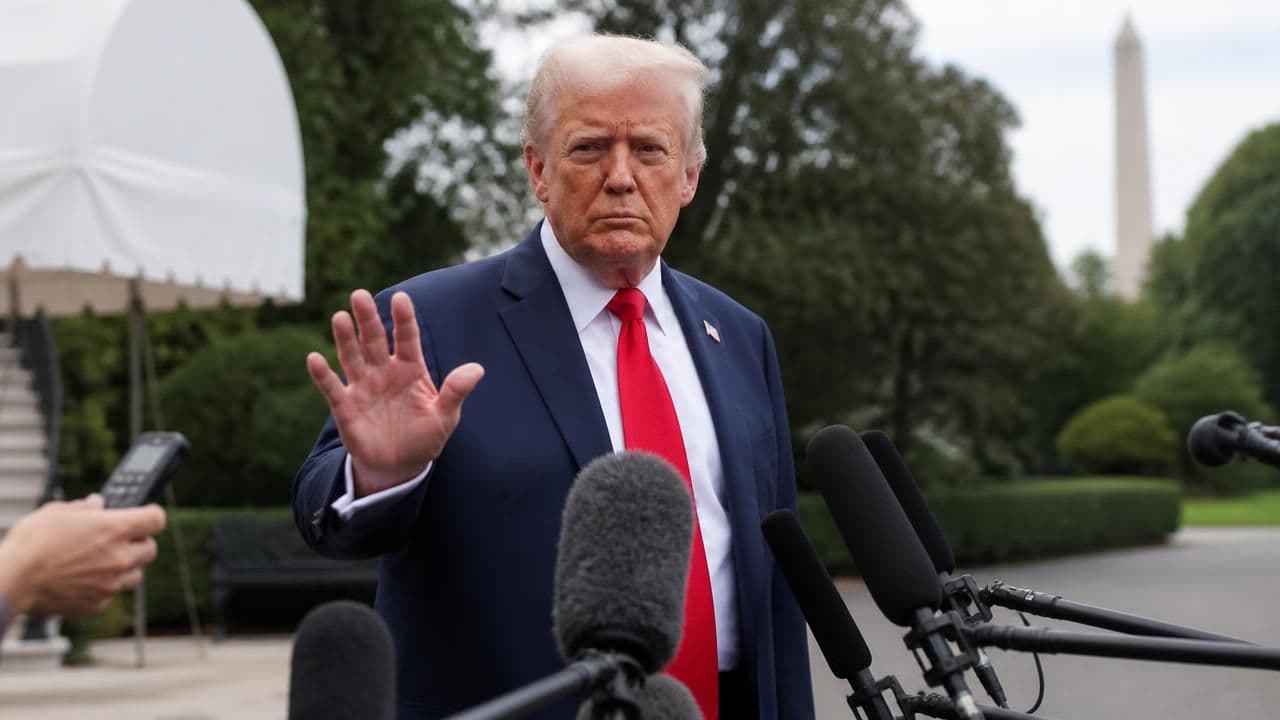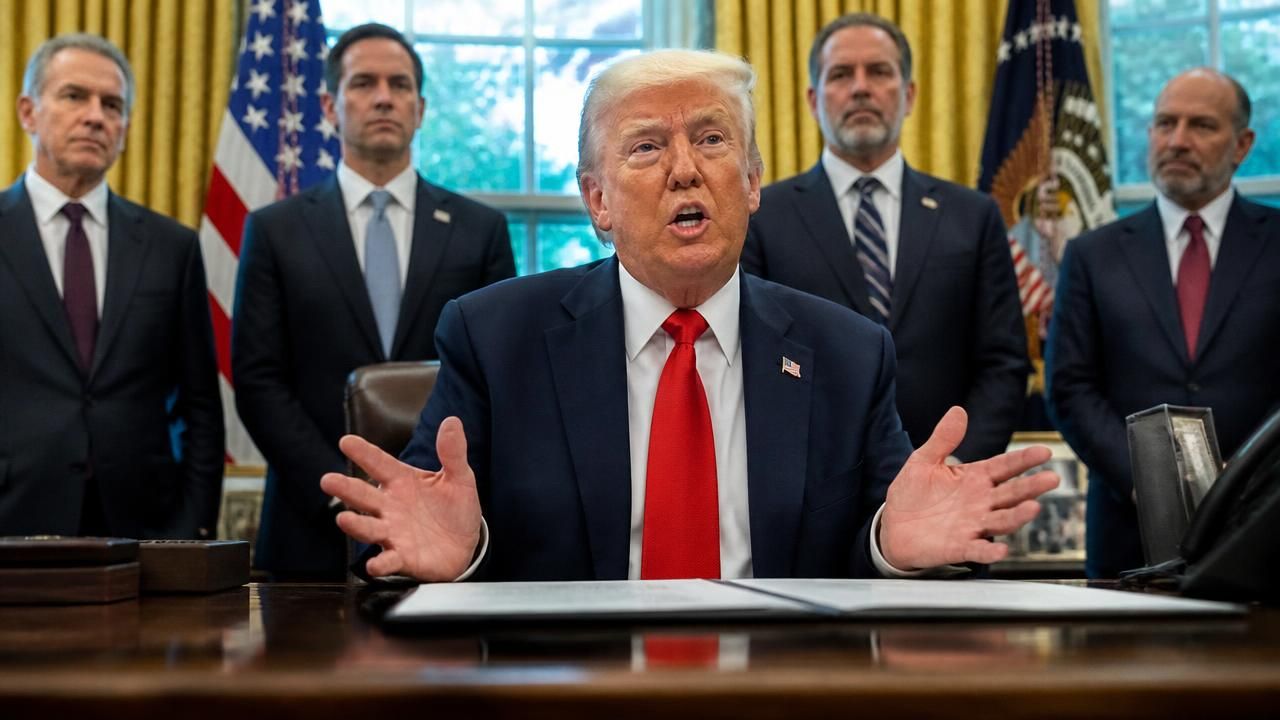
President Donald Trump announced on Friday a sweeping deal that grants the United States a controlling stake in Venezuela's vast oil reserves—a pact he described as the "biggest oil deal in world history." The agreement, which covers an estimated 65 billion barrels of crude, also came with a pledge of $100 billion in investment for the crisis-ravaged South American nation. But energy experts and critics quickly cautioned that the headline-grabbing announcement may not deliver the immediate relief at the pump that Trump promised.
The Deal at a Glance
According to multiple reports, the framework agreement gives the U.S. a majority share in Venezuela's oil sector, including rights to develop its massive Orinoco Belt reserves. The White House framed the deal as a geopolitical victory, with Secretary of State Marco Rubio hailing it as a "huge win" for both countries. "Low gas prices in the U.S., $100 billion investment for Venezuela," Rubio wrote, echoing the administration's talking points.
The deal is unprecedented in scope. Venezuela sits atop some of the largest proven oil reserves in the world, but its energy industry has collapsed under years of mismanagement, U.S. sanctions, and political turmoil. The partnership signals a dramatic shift in U.S. policy, potentially opening the door to American companies operating in a country long off-limits due to the authoritarian rule of Nicolás Maduro.
A Claimed Win for Consumers
Trump took to social media and press statements to claim the deal would "substantially lower" gasoline prices in the United States. That message was echoed by conservative media, including Fox News, which presented the pact as a direct answer to high fuel costs. However, fact-checkers and watchdog groups like Media Matters for America have pointed out that the connection is misleading—especially while U.S. electricity rates continue to climb.
"Energy experts say there are many reasons to be skeptical," reports NPR.
For one, the deal is not an immediate supply increase. Analysts note that even if the agreement is fully implemented, it would take years for Venezuela's dilapidated oil infrastructure to produce at levels that could meaningfully influence global prices. The Organization of the Petroleum Exporting Countries (OPEC) and its allies continue to control production levels, and any additional Venezuelan barrels would likely be balanced by cuts elsewhere.
Skepticism from Energy Experts
Forbes echoed this caution in its analysis, noting that the "attack" on oil markets—in this case, the policy shift—likely won't lower oil prices in the near term. The reasons are manifold: Venezuela's oil is heavy and difficult to refine, its facilities are in disrepair, and international investment will require months or years of negotiation and rehabilitation. Moreover, the Maduro regime's reliability as a partner remains a significant question mark.
The New Republic took an even harsher tone, arguing that Trump's rhetoric veers beyond simple falsehood into delusion. "Trump Is a Liar. That's Bad. But He's Delusional—and That's Even Worse," the publication's headline read, suggesting that the president's grandiose claims about the deal reflect a dangerous disconnect from reality.
The "Biggest Deal" in Context
Historical comparisons are also sobering. The U.S.-Venezuela relationship has been fraught for decades, with previous attempts at cooperation collapsing amid diplomatic spats and ideological clashes. While Trump called this the "biggest oil deal in world history," it is more accurately a memorandum of understanding—a framework that will require concrete steps to become reality. The 65 billion barrels cited by the administration may represent the total reserves, but only a fraction is currently recoverable with existing technology and investment.
Political and Geopolitical Reactions
Reactions were split along predictable lines. Republican supporters celebrated the deal as a masterstroke that weakens adversaries like China and Russia, both of whom have courted Venezuela in recent years. By securing U.S. access to Venezuela's oil, Washington also reduces Caracas's dependence on Beijing and Moscow. That geopolitical dimension is significant: Venezuela is strategically vital, and closer U.S.-Venezuela energy ties could realign alliances in Latin America.
Critics, however, warn that the deal legitimizes an authoritarian regime. Human rights organizations have documented widespread abuses under Maduro, and any investment that props up his government is deeply controversial. There are also questions about whether the U.S. can legally enforce a majority stake in Venezuelan assets without the approval of the currently recognized opposition leadership or a democratic transition.
Media Framing and the Truth Factor
The coverage itself has become a story. Outlets like the New York Post and News18 amplified Trump's "historic" language without immediate pushback. Others, including NPR and Forbes, focused on the practical limitations. Meanwhile, Media Matters criticized Fox News for what it called "misleading" claims that Venezuelan oil will lower gas prices while U.S. electricity rates continue to rise.
This divergence highlights a broader media landscape where the same event is framed as a triumph or a fantasy depending on the outlet. As ever, the reality lies somewhere in between. The deal is real, but its consequences are uncertain. It could be a monumental shift in energy geopolitics—or another example of overpromising and underdelivering from a president known for hyperbole.
The Road Ahead
For now, consumers should not expect a dip in gasoline prices anytime soon. The path from announcement to actual barrels involves layers of regulatory approvals, infrastructure rebuilding, and political consensus. Venezuela's oil industry would need massive investment—the $100 billion pledge is a starting point but is far from guaranteed—and even in the best case, production gains would take years.
The true test of this deal will be its execution. If the administration can navigate the legal, political, and logistical hurdles, it could reshape global energy markets and bolster U.S. influence. If not, it may go down as one of the most audacious announcements in modern diplomatic history—with very little to show for it.