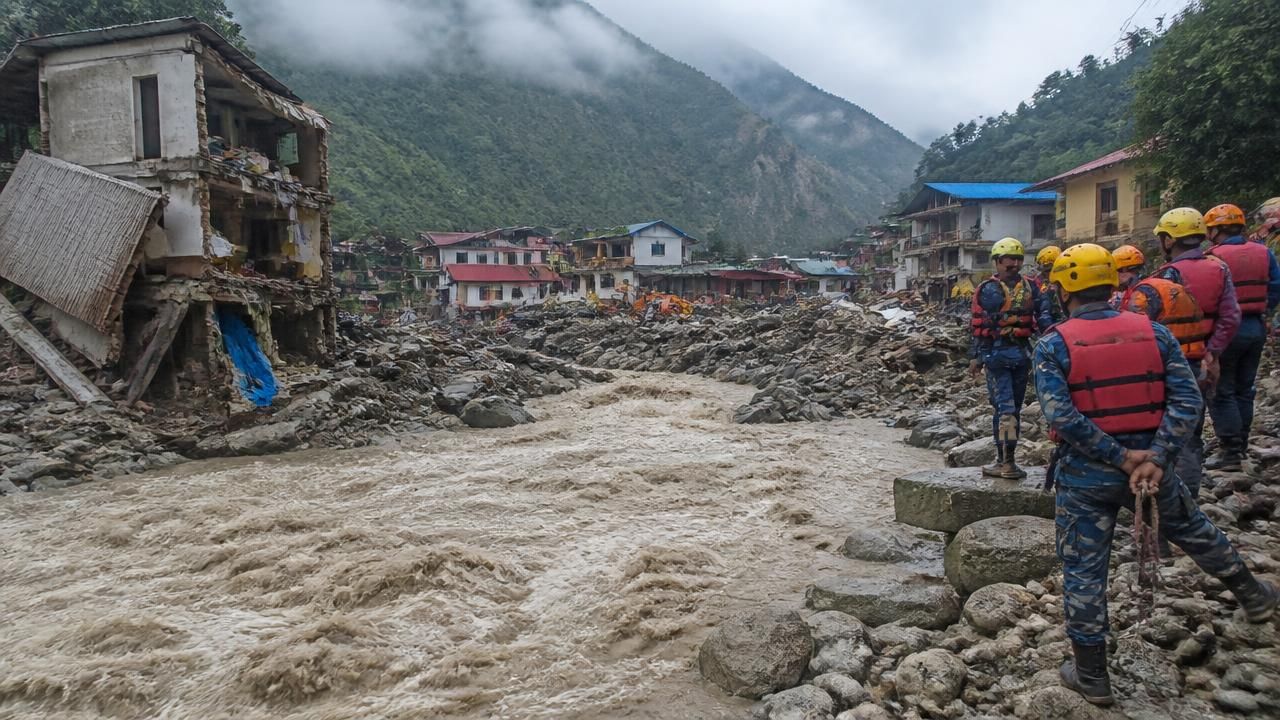
Nepal is reeling from catastrophic flooding that has killed hundreds and left dozens missing, with authorities warning Sunday of possible fresh inundation as water levels in the Bhotekoshi River continue to rise. The disaster, triggered by a glacial collapse near the Nepal-China border, has overwhelmed communities, prompting urgent rescue operations and renewed scrutiny of the region's vulnerability to climate-induced hazards.
The Disaster: A Glacial Collapse and Its Aftermath
The flooding began after a glacial collapse sent a torrent of water, mud, and debris surging downstream. The event, which struck the Nepal-China border region, has been described as one of the worst natural disasters to hit the Himalayan nation in recent years. The Bhotekoshi River, a critical waterway that flows through both countries, burst its banks, sweeping away homes, bridges, and infrastructure in its path.
In the worst-hit district, the scale of the catastrophe is being measured in bodies and burial trenches, as reported by The Washington Times. Local officials and emergency workers are racing against time to recover the dead and locate survivors, but the sheer force of the flood has made access difficult. Entire villages have been reduced to rubble, and communication lines remain severed in remote areas.
Death Toll and Missing: A Conflicting Picture
Official figures remain fluid. One source, emirates247.com, put the death toll at 750, while the Orlando Sentinel reported at least 160 killed on the Nepal-China border, with hundreds missing. The discrepancy highlights the chaos and the challenges of accounting for victims in mountainous terrain where roads and bridges have been destroyed. Nepali authorities have not yet confirmed a unified national figure, but the death toll is expected to rise as search and rescue teams reach isolated hamlets.
Among those missing are 42 Australian nationals, according to a report from nine.com.au. The Australian government has said it is working closely with Nepali officials to locate its citizens, many of whom were trekkers and mountaineers in the popular Everest region. The presence of foreign nationals has added an international dimension to the crisis, with several countries offering assistance.
Fresh Flood Warnings: A Looming Threat
As communities grapple with the aftermath, Nepal's meteorological department has issued fresh warnings. Water levels in the Bhotekoshi River have risen again, raising fears of new flash floods in already saturated districts. Authorities have urged residents in flood-affected zones to remain on high alert and be ready to evacuate at a moment's notice. "Authorities in Nepal warned of possible fresh flooding on Sunday and urged residents in flood-affected districts to remain on high alert," reported NPR. The warning comes as monsoon rains continue to pound the region, further destabilizing glacial lakes and increasing the risk of additional outbursts.
"The situation is extremely volatile. We are asking people to move to higher ground immediately, especially those living near riverbanks," a senior disaster management official said, echoing the urgency conveyed in multiple reports.
Rescue and Relief: Everest Veterans and International Aid
Rescue operations are underway, but they are hampered by difficult terrain and damaged infrastructure. In a unique development, veteran Everest climbers have been called in to assist a tunnel rescue mission, according to The Independent. These experienced mountaineers are using their knowledge of the high-altitude landscape to reach areas that conventional rescue teams cannot access. Their efforts are critical in the search for survivors trapped under debris or isolated by landslides.
International aid organizations and neighboring countries have pledged support. Helicopters have been deployed to airlift the injured and deliver supplies, but poor visibility and continuous rainfall have limited their effectiveness. On the ground, rescue teams are using shovels and bare hands in some places, racing against time to find survivors beneath the mud and wreckage.
Australians Missing and Global Response
The confirmed missing Australians have become a focal point of international coverage. The Australian government has issued travel advisories and is in constant contact with Nepali authorities. Families of the missing have pleaded for news, and social media is abuzz with appeals for information. Other countries, including the United States, the United Kingdom, and India, have also reported citizens unaccounted for, though numbers have not been officially released.
Context and Causes: A Region on the Frontline of Climate Change
The disaster is a stark reminder of the Himalayas' fragility. Glacial lakes, formed by melting glaciers, can burst without warning, releasing massive volumes of water downstream. Such events, known as glacial lake outburst floods (GLOFs), are becoming more frequent and severe due to climate change. The International Centre for Integrated Mountain Development (ICIMOD) has warned that dozens of glacial lakes in Nepal pose a high risk of bursting.
- Nepal has experienced several GLOFs in the past, including the 1985 Dig Tsho event that destroyed a hydropower plant.
- The country's steep topography makes it particularly vulnerable to flash floods, as water funneled through narrow valleys gains speed and destructive power.
- Monsoon rainfall, which has been unusually heavy this year, has further saturated the ground and heightened the risk of landslides.
Scientists say the flooding is consistent with climate models that predict more intense and unpredictable weather events in the Himalayan region. Local communities, many of whom rely on subsistence farming, are left to bear the brunt of a crisis they had little hand in creating.
Framing the Story: How Outlets See It
The story has been covered widely, with each outlet emphasizing different angles. NPR and numerous regional outlets, including msn.com and the Washington Times, focus on the fresh warnings and the ongoing danger. The Independent highlights the Everest veterans' rescue mission, a human-interest angle that underscores the extraordinary efforts being made. Nine.com.au emphasizes the Australian missing, catering to its domestic audience, while Manila Bulletin and Arab Times stress the rising death toll. Local outlets like the Orlando Sentinel, though geo-blocked, have framed the disaster as a cross-border tragedy. The diversity of coverage reflects the wide-reaching impact of the event and the different stakes for various stakeholders.
What Next?
As the nation mourns, the immediate priority remains saving lives. The fresh flood warning means that residents in vulnerable areas must remain vigilant. It also means that rescue operations could be interrupted if waters rise further. In the longer term, the disaster will likely reignite calls for better glacial lake monitoring, early warning systems, and adaptive infrastructure to mitigate the impacts of climate change in Nepal.
For now, the focus is on the human toll. Every hour counts for those still missing, and the world is watching as a country already scarred by natural disasters faces yet another tragedy. The resilience of the Nepali people, often tested by such calamities, is once again being called upon.