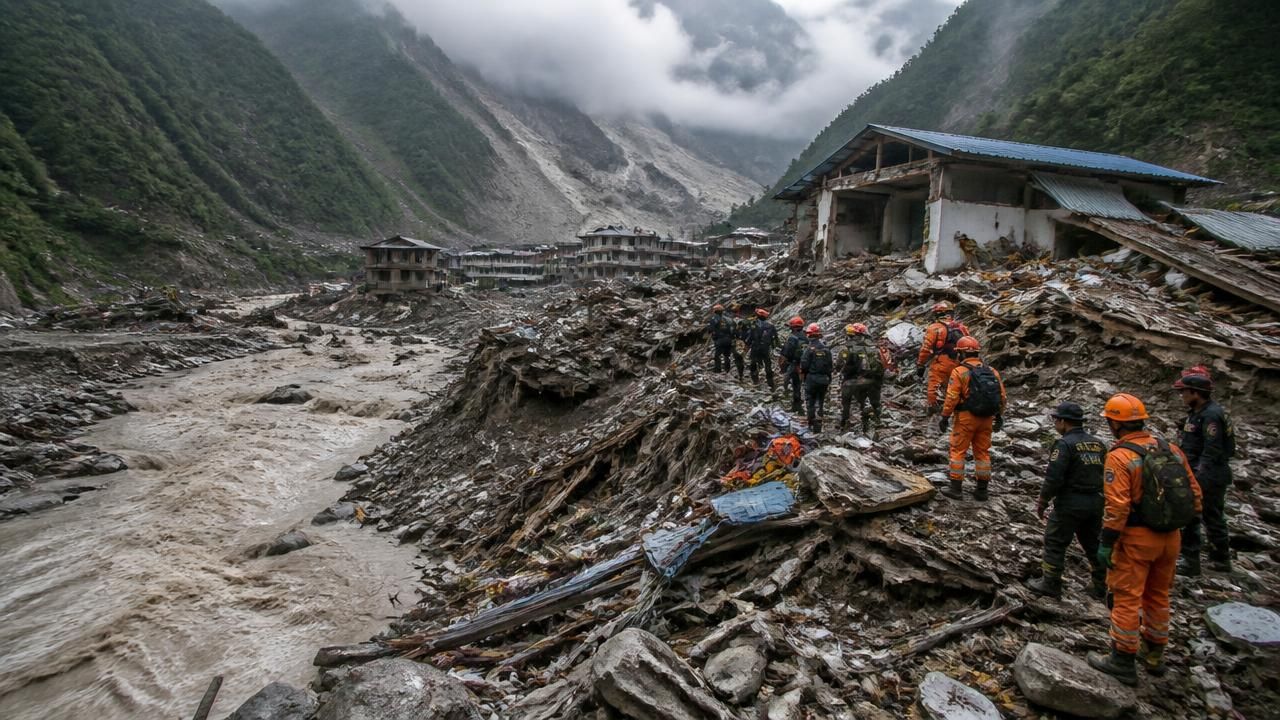
The death toll from catastrophic flooding in Nepal and Tibet has climbed past 675, with more than 2,500 people still missing, as rescue teams enter their fifth day of searching through debris and receding waters. The disaster, triggered by a glacier collapse near the Nepal-Tibet border, swept away entire villages in minutes, according to witnesses and officials.
What Happened
On Wednesday, a torrent of debris and water tore through mountainous communities, leaving a trail of destruction. Anupreeta Das, a correspondent for The New York Times who witnessed the rescue operation near the border, described the scene: "A torrent of debris and water carried away entire villages in just minutes." The sudden onset left little time for residents to escape, contributing to the high number of casualties.
Exclusive video obtained by The New York Times shows the immediate aftermath of the glacial collapse, providing the first visual evidence of the scale of the catastrophe. The footage reveals entire settlements reduced to rubble, with boulders and mud covering what were once homes.
The Human Toll
As of Friday, officials confirmed over 675 deaths, but the number is expected to rise as search-and-rescue operations continue. The Sun reports that rescue efforts could cost billions of dollars, while Sky News notes that thousands remain unaccounted for and that authorities are struggling to cope with the scale of the disaster.
The crisis has an international dimension. The South Florida Reporter highlights that American tourists are among the missing, adding a further layer of urgency to the response. The tourism industry, already reeling from the pandemic, now faces a compounded crisis as visitors and locals alike are caught in the devastation.
Rescue Efforts Underway
Emergency crews from Nepal's army and police, alongside international teams, are racing against time to reach isolated villages buried under mud and rocks. The challenging mountainous terrain, combined with damaged infrastructure, has hampered progress. According to The Sun, the operation is now in its fifth day, with over 2,500 people still missing.
"This is a disaster of enormous proportions," one rescue worker told reporters. "We are doing everything we can, but the scale is overwhelming." Authorities are using helicopters and drones to survey the damage and locate survivors, but access to the worst-hit areas remains difficult.
Community Response
In a show of solidarity, a Nepalese restaurant in the United States has announced it will donate all proceeds from the coming week to relief efforts. The decision reflects the global Nepali diaspora's determination to support their homeland in its hour of need. Local communities around the world are organizing fundraisers and sending supplies.
Climate and Context
The disaster is a stark reminder of the vulnerabilities of the Hindu Kush Himalayan region, where rising temperatures are accelerating glacier melt. Glacial lake outburst floods (GLOFs) occur when moraine dams holding back glacial lakes fail, releasing massive volumes of water and debris. Scientists have long warned that climate change is increasing the frequency and intensity of such events.
Nepal has experienced devastating floods before, but this event stands out for its suddenness and the fact that it struck near the border with Tibet, an area already prone to geological instability. Experts argue that better early-warning systems and land-use planning are critical to mitigating future risks.
"A torrent of debris and water carried away entire villages in just minutes."
Different Framings
The international coverage has varied in focus. While The Sun emphasizes the potential financial cost of the disaster, Sky News highlights the struggle of overwhelmed authorities. The South Florida Reporter draws attention to the fate of missing American tourists, and The New York Times provides on-the-ground, human-focused reporting from the affected region. These differing perspectives underscore the multifaceted nature of the crisis.
What's Next
The immediate priority remains rescuing survivors and providing relief to thousands of displaced families. However, the long-term implications are sobering. Reconstruction will take years, and the economic toll could be in the billions. As climate change continues to reshape the Himalayan landscape, experts warn that such disasters are likely to become more common, necessitating global cooperation and commitment to climate adaptation.
- At least 675 dead, with over 2,500 missing.
- Rescue operations in their fifth day, hampered by terrain and infrastructure damage.
- American tourists among those unaccounted for.
- A U.S.-based Nepalese restaurant donating all proceeds to relief efforts.
- Disaster triggered by a glacier collapse, highlighting climate change risks.
As Nepal mourns, the world watches a humanitarian tragedy unfold in the Himalayas—a reminder that in an era of rapid environmental change, no community is beyond the reach of nature's power.