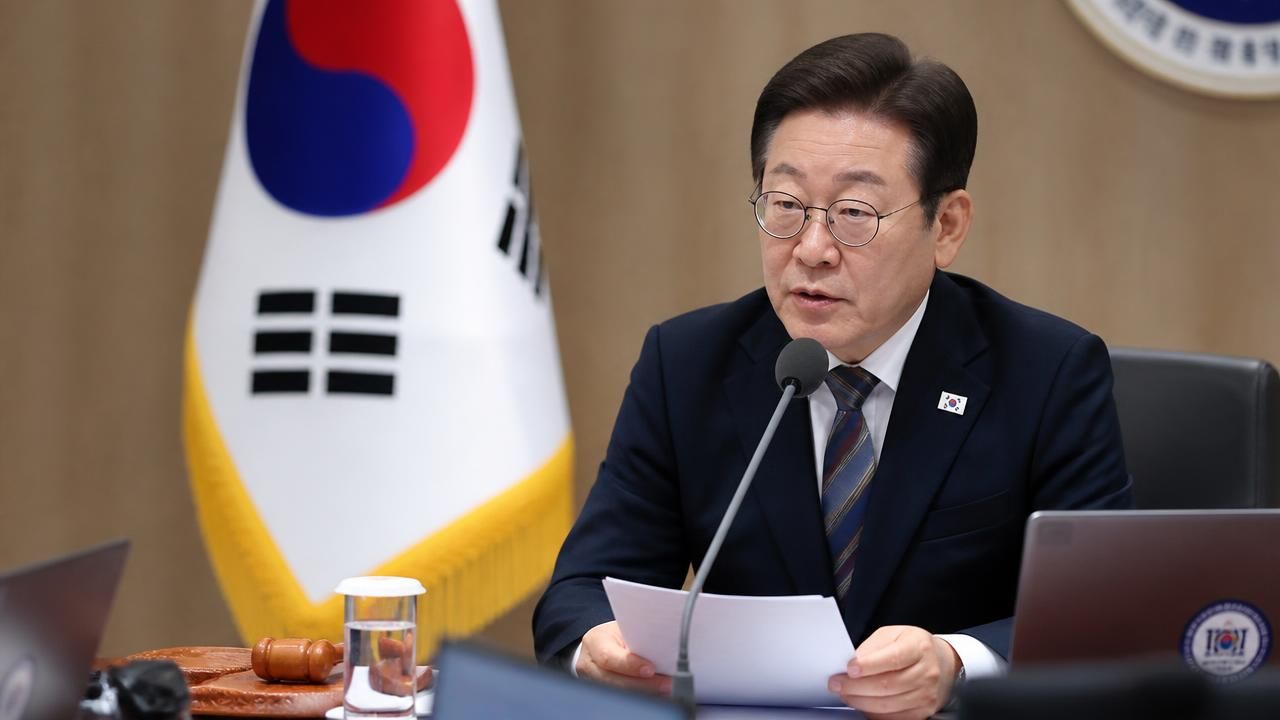
South Korean President Lee Jae Myung has announced a sweeping Cabinet reshuffle, nominating Vice Finance Minister Lee Hyoung-il as the country's new finance minister and naming a new defense minister, according to multiple reports. The move, which involves six ministerial posts, is widely seen as a push to revive economic growth and accelerate investment amid mounting domestic and global challenges.
A Veteran Technocrat Takes the Helm
The most high-profile appointment is Lee Hyoung-il, a career technocrat who currently serves as the First Vice Minister of Economy and Finance. Bloomberg reported that President Lee "elevated a vice finance minister to the country's top economic post," underscoring the administration's preference for experienced hands to steer economic policy. The nomination was first reported by South Korea's Yonhap news agency and confirmed by multiple outlets, including al-monitor and MSN.
Lee Hyoung-il is widely regarded as a steady, policy-focused official deeply familiar with the levers of fiscal and monetary management. His promotion signals continuity rather than a dramatic shift in economic direction, analysts say. In his previous role, he was instrumental in crafting the government's response to inflationary pressures and housing market instability, and he is expected to prioritize measures aimed at boosting corporate investment and supporting small businesses.
"The reshuffle is designed to put the right people in place to execute the president's economic agenda," said a senior official familiar with the matter, speaking on condition of anonymity.
Defense and Other Key Appointments
Alongside the finance post, President Lee named a new defense minister, though details of that appointment were not immediately detailed in all reports. The inclusion of a new defense chief suggests a broader strategic recalibration, potentially in response to heightened regional tensions and evolving security alliances. The six-minister reshuffle, as noted by Yonhap, includes changes at multiple economic and security-related ministries, indicating a comprehensive effort to align the Cabinet with the administration's second-term priorities.
While the full list of nominees has not been released by all sources, the finance and defense portfolios are considered the most consequential. The swift announcement, coming through both official channels and leaked reports, reflects the urgency the president feels in addressing South Korea's slowing growth trajectory.
Why Now? Economic Pressures Mount
The reshuffle arrives at a critical juncture. South Korea's economy, heavily reliant on exports of semiconductors and automobiles, has faced headwinds from global supply chain disruptions, weakening demand in key markets, and a domestic real estate crunch. Bloomberg noted that the new finance minister's primary task will be to "revive growth and accelerate investment," a clear acknowledgment of the current stagnation.
According to recent data, South Korea's GDP growth has been below the government's target, and business investment has remained sluggish despite record corporate profits. The administration has faced criticism for what some see as a lack of bold structural reforms. By elevating a technocrat like Lee Hyoung-il, President Lee appears to be signaling a pivot toward pragmatism and execution over ideology.
Market and Political Reactions
Financial markets reacted cautiously to the news, with the Korean won stabilizing and the KOSPI index trading in a narrow range. Investors are looking for concrete policy actions rather than personnel changes. "The finance minister nomination is a step in the right direction, but the real test will be fiscal policy implementation and whether the government can pass meaningful deregulation through the National Assembly," one Seoul-based economist commented.
Political observers note that the reshuffle also carries strategic weight. President Lee, who has faced a hostile opposition and a divided parliament, needs a cohesive Cabinet to push his agenda. The promotion of internal candidates like Lee Hyoung-il may be a move to ensure loyalty and smooth administrative coordination, rather than bringing in outside figures who could face lengthy confirmation battles.
Different Frames, Same Story
Media coverage of the reshuffle has varied in emphasis. Yahoo News highlighted Lee Hyoung-il's status as a "veteran technocrat," focusing on his experience. Al-Monitor, relying on Yonhap, stressed the confirmation of his nomination. Bloomberg framed the changes primarily through the lens of economic revitalization, while Yonhap's headline emphasized the scale of the reshuffle — six ministers at once. MSN simply described it as the president nominating key Cabinet members. Together, these perspectives paint a picture of a government seeking stability and expertise in turbulent times.
What's Next?
The nominations now require formal approval from the National Assembly, though the president has the authority to appoint ministers directly if the legislature delays. Analysts expect Lee Hyoung-il to be confirmed relatively swiftly, given his administrative background and lack of major controversies. Once in office, he will face immediate challenges: crafting the 2026 budget, addressing household debt, and navigating trade tensions with major partners like the United States and China.
For now, the reshuffle signals a renewed sense of urgency in Seoul. With a finance minister who knows the machinery of government and a defense minister yet to be fully vetted, President Lee is betting that fresh faces in key roles can translate into renewed momentum for a tired economy. Whether that bet pays off will depend on the policies that follow — and on whether the international environment allows South Korea's export machine to roar back to life.
This article was synthesized from reporting by Bloomberg, Yonhap News Agency, MSN, al-monitor, and Yahoo News.