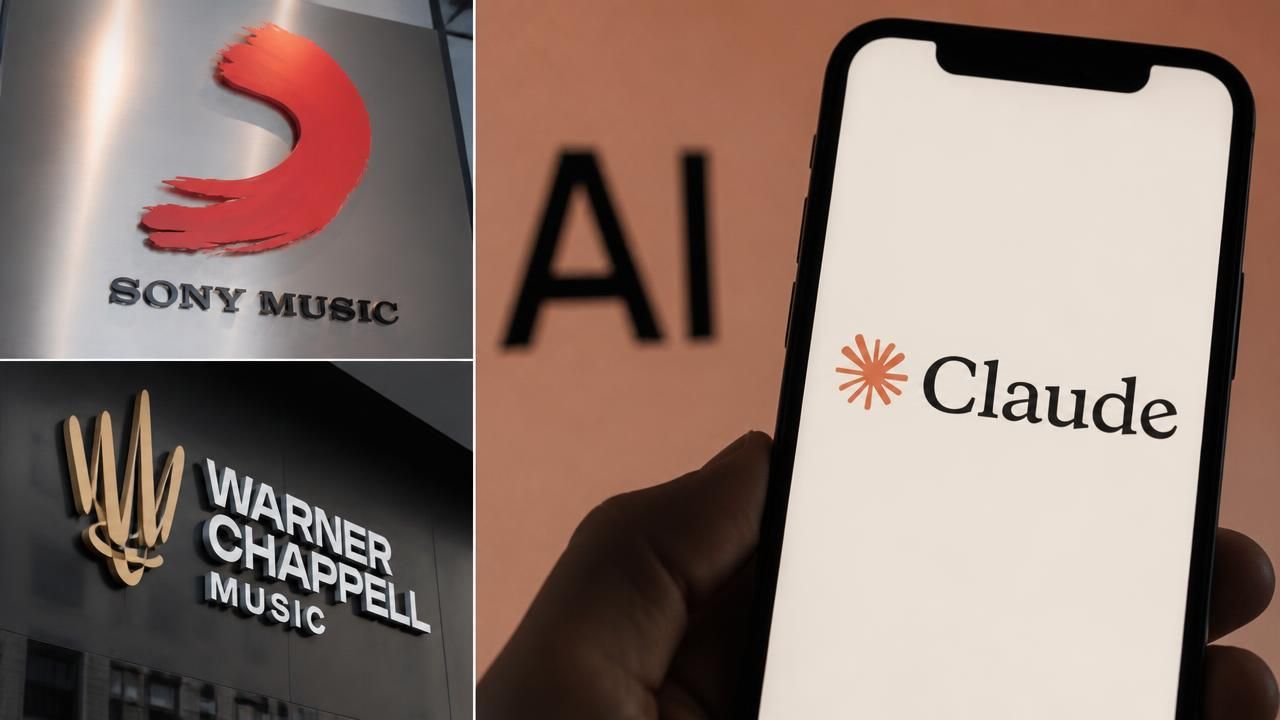
In a dramatic escalation of the music industry's fight against artificial intelligence, Sony Music and Warner Chappell have filed a lawsuit against Anthropic, the maker of the AI assistant Claude, accusing the company of a “brazen campaign” of copyright infringement. The suit, filed in the US District Court for the Northern District of California, alleges that Anthropic used “tens of thousands” of copyrighted song lyrics to train its AI models without authorization, stripping away critical copyright management information in the process.
The Lawsuit
The legal action, first reported by The Verge, targets Anthropic's training practices for its Claude family of AI models. Sony Music and Warner Chappell—two of the world's largest music publishers—claim that Anthropic copied or reproduced their lyrics to build a system capable of generating text, including song lyrics, on demand. The publishers are seeking statutory damages of up to $150,000 per infringed work, plus an additional $25,000 for each instance where copyright management data was intentionally removed. Given the scale of the alleged infringement, the total damages could reach several billion dollars if the court awards the maximum amount.
Allegations of a “Brazen Campaign”
The plaintiffs' complaint paints a picture of deliberate, large-scale theft. “This is not an accident or a technological inevitability,” the publishers argue. “It is a brazen campaign of intellectual property theft.” According to court documents, Anthropic reportedly scraped lyrics from publicly available websites and fed them into its training data without obtaining licenses or permission from copyright holders. The lawsuit further alleges that Claude can reproduce lyrics from Sony and Warner artists—ranging from Beyoncé to Billy Joel—nearly verbatim when prompted, demonstrating that the model has memorized the works.
“Top music publishers are taking a stand against blatant theft by AI companies,” said a spokesperson for the publishers, echoing language used in the complaint. “We are committed to protecting the rights of songwriters and ensuring they are fairly compensated for their work.”
Damages and Legal Arguments
The lawsuit seeks not only statutory damages but also an injunction to prevent Anthropic from continuing to use the copyrighted works without a license. The $25,000 per-work penalty for stripped copyright management information is a significant addition, as it targets the removal of metadata that identifies the owner of the work. This is a common practice when AI models are trained on scraped data, and the plaintiffs are using it as further evidence of willful infringement.
Legal experts note that the music industry has been aggressive in pursuing AI companies. This case is one of several high-profile lawsuits pitting creatives against generative AI developers. Notably, Anthropic recently settled a separate copyright dispute with the publishing industry for a reported $1.5 billion, according to The Verge. That settlement, which came just months ago, was seen as a landmark deal—but it did not cover the music publishers now suing, who are seeking to set their own precedent.
Context: AI and the Copyright Battle
The lawsuit arrives at a moment of intense scrutiny over how AI companies obtain their training data. Authors, visual artists, news outlets, and record labels have all filed suits against AI developers, alleging unauthorized use of copyrighted material. Anthropic, backed by tech giants like Google and Amazon, has positioned itself as a responsible AI leader, but it has faced repeated legal challenges.
- In 2023, a group of authors sued Anthropic for using pirated books to train Claude.
- The company has also been criticized for its opaque data sourcing practices.
- Meanwhile, competitors like OpenAI have signed licensing deals with major publishers, including Axel Springer and the Associated Press, to avoid litigation.
The music industry's frustration is compounded by the rise of AI-generated music. Just last week, independent publisher Round Hill Music signaled that it will take AI startup Suno and Anthropic to trial over similar copyright concerns. That case, pending in federal court, could further shape the legal landscape.
Industry Reaction and Implications
The lawsuit has sent shockwaves through both the music and tech sectors. Industry analysts point out that the outcome could redefine the boundaries of "fair use" for AI training. Publishers argue that there is nothing transformative about reproducing lyrics verbatim; Anthropic, however, has not yet issued a public response to this specific complaint. In prior statements, the company has emphasized its commitment to respecting intellectual property and noted that it offers tools for rights holders to opt out of training.
But for Sony Music and Warner Chappell, opt-out mechanisms are insufficient. “The burden should not be on creators to police their own work,” the complaint reads. “AI companies must obtain consent before using copyrighted material, just like everyone else.”
If the court awards the maximum damages, it would be one of the largest IP judgments in history, dwarfing the earlier $1.5 billion settlement. Even a moderate award could have a chilling effect on AI companies, forcing them to rethink their data-scraping practices and invest in licensing infrastructure. Music publishers, for their part, are signaling that they will not back down.
“This is a turning point,” said a music industry attorney not involved in the case. “The music industry has watched silently while AI companies build billion-dollar products on the backs of their songwriters. That era is over.”
As the case progresses, the technology community will be watching closely. The lawsuit not only addresses financial compensation but also raises fundamental questions about how AI models are trained and whether innovation can proceed without trampling on the rights of creators. For now, the message from the music industry is clear: they are prepared to fight.