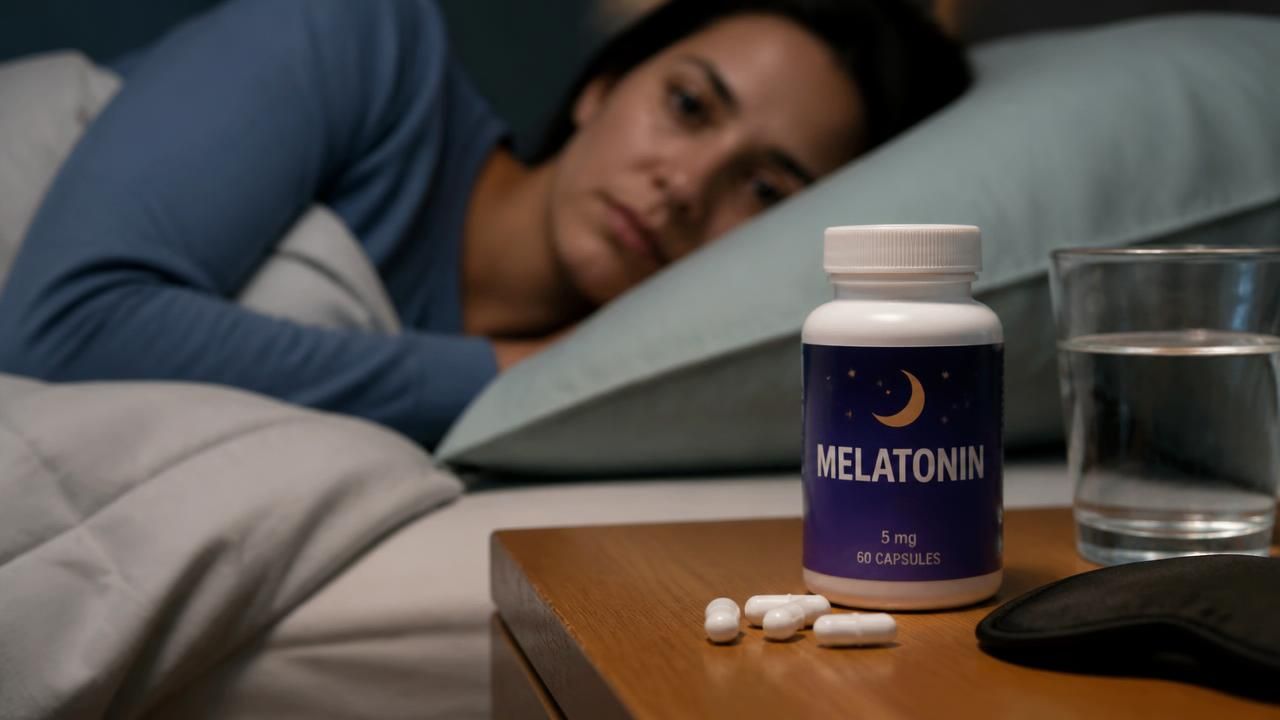
For millions of people who reach for melatonin to help them sleep, a new study delivers a startling alert: long-term use of the popular supplement is associated with a 90% higher risk of developing heart failure over a five-year period. The preliminary research, based on data from tens of thousands of adults with chronic insomnia, is scheduled to be presented at the American Heart Association’s Scientific Sessions 2025 meeting.
Findings suggest that people who used melatonin for at least one year had roughly twice the risk of heart failure compared to those who did not use the supplement. Some outlets, including News-Medical.net, also reported that long-term use was linked to an increased risk of death, not just heart failure.
“The findings do not prove melatonin causes heart problems, but they raise new questions about the safety of taking the popular sleep supplement for extended periods,” the study authors said in a statement.
What the Research Found
The study, which has not yet been peer-reviewed or published in a medical journal, adds to a growing body of research scrutinizing the safety profile of melatonin, a hormone that regulates the body’s internal sleep-wake clock. According to a report from Long Island’s News 12, researchers examined health records of tens of thousands of adults with chronic insomnia, comparing those who had taken melatonin for a year or longer with a control group. Over the next five years, the melatonin users exhibited a 90% higher incidence of heart failure.
Importantly, the study controls for the underlying insomnia diagnosis—which itself is a known risk factor for cardiovascular disease. This suggests that the elevated risk is not simply attributable to poor sleep, though researchers caution that residual confounding factors may remain.
Key Findings at a Glance
- ~90% higher risk of heart failure among chronic insomnia patients who used melatonin long-term.
- Follow-up period: 5 years after baseline assessment.
- “Long-term use” defined as taking melatonin for at least one year.
- Study is preliminary and not yet peer-reviewed.
How Could Melatonin Affect the Heart?
Melatonin is widely viewed as a gentle, “natural” sleep aid. Unlike prescription sleeping pills, it is available over the counter in the United States, and neither the FDA nor comparable international regulators require the same rigorous safety testing for supplements as they do for pharmaceuticals. But melatonin is a hormone with receptors not only in the brain but also in the cardiovascular system.
Some experts hypothesize that chronic exogenous melatonin use could interfere with the body’s natural hormonal rhythms, dampen blood pressure regulation, or promote inflammation—all of which could contribute to heart failure risk over time. Others suggest a more cautious interpretation: people who rely on melatonin for years may have more severe insomnia or additional health problems, and those underlying issues could be driving the cardiovascular risk.
“We’re not saying melatonin is toxic or that everyone who takes it will develop heart failure,” a spokesperson from Baptist Health noted in their coverage. “But this study reinforces that long-term use of any supplement should be discussed with a physician, especially in people with existing health conditions.”
Differing Frames: Alarm Bells vs. Balanced Advice
The news reverberated across a wide range of outlets, and the framing varied significantly. ScienceDaily’s lead headline asked, “Think melatonin is safe? New research reveals a hidden heart risk,” while USA Today wrote, “Melatonin, our hearts and a health risk we didn't realize.” On the other end of the spectrum, CNN ran a more reassuring piece titled “What to know about melatonin supplements and heart risks,” and SELF published guidance from sleep experts on what consumers should do now.
Many outlets emphasized the preliminary nature of the findings. “This study does not prove cause and effect,” noted an article in Medical News Today. A report from UPI stated simply: “Study links long-term melatonin use to heart problems,” but added that the research is observational and requires replication.
The headline in Pharmacy Times took yet another angle: “Regular Melatonin Supplementation May Obscure Underlying Heart Complications.” That piece argued that the real danger might be masking symptoms, rather than directly causing damage.
What Should Melatonin Users Do?
Sleep experts who spoke to SELF and other outlets urged consumers not to panic. For most people, short-term use of melatonin—a few weeks or a couple of months—remains widely considered safe and effective, especially for jet lag, shift work, or trouble falling asleep. The new study specifically looks at sustained use for more than a year.
Experts recommend the following steps for long-term users:
- Talk to your doctor: Discuss why you’ve been taking melatonin and explore whether an underlying sleep disorder, like obstructive sleep apnea, should be ruled out.
- Review your dosage: Many people take far more melatonin than needed. Lower doses (0.5 mg to 3 mg) are often sufficient, and higher doses may not improve sleep.
- Consider cognitive behavioral therapy for insomnia (CBT-I): This is the first-line, long-term treatment for chronic insomnia and does not rely on any pill.
- Watch for warning signs: Shortness of breath, swelling in the legs, or new fatigue could indicate heart trouble and warrant prompt medical evaluation.
The American Heart Association has not changed its official guidance based on this single abstract, but its Scientific Sessions meeting will be a significant forum for further discussion. Until peer-reviewed data with stronger causal evidence are available, the message from most experts is nuanced: melatonin is not inherently dangerous, but it is not a benign multivitamin, either. Long-term daily use should be intentional, monitored, and paired with professional care.