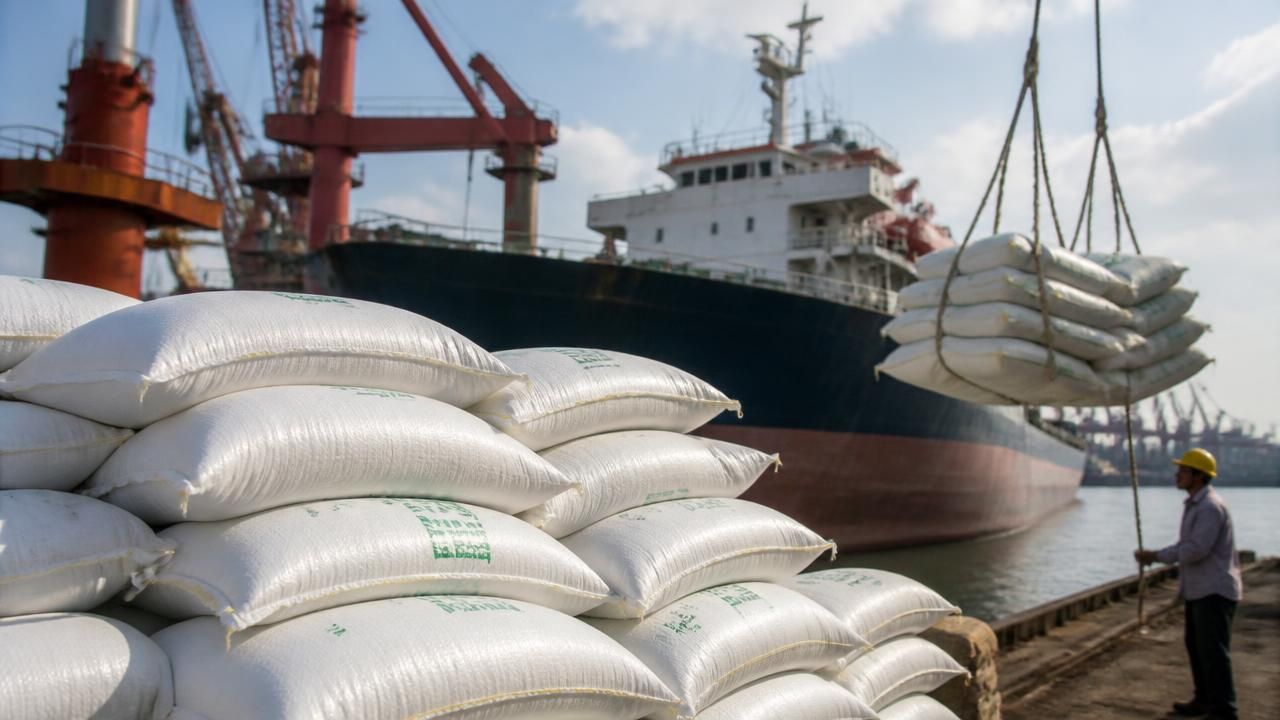
India's latest urea import tender is set to reshuffle global fertilizer flows, with China expected to ship at least 1.2 million metric tons of the key crop nutrient—a marked escalation from the world's top producer after it relaxed export restrictions earlier this year. The tender, one of the largest conducted by India in recent years, has become a focal point for a market grappling with oversupply and uneven demand.
China's Return to the Global Urea Market
Bloomberg reported that Chinese suppliers will likely dominate the Indian tender, capitalizing on Beijing's decision to ease export controls that had previously kept large volumes off the global market. For India, which imports nearly a third of its urea requirements, the availability of Chinese cargoes at competitive prices is a welcome development as the country seeks to secure affordable fertilizer for its farmers ahead of the kharif cropping season.
The 1.2 million ton figure represents a significant share of the tender's total volume, which traders estimate could reach over 2 million tons. "China is expected to ship at least 1.2 million tons of a key fertilizer variety to India," the Bloomberg report noted, underscoring the scale of the transaction.
Price Pressures From All Sides
Despite the large-scale tender, the global urea market remains under pressure. According to commodity analysts at czapp.com, the India tender has provided some support to urea prices, but that support is being offset by renewed production from Iran and Egypt. Both countries have resumed or ramped up output after maintenance outages and feedstock issues earlier in the year, adding to an already well-supplied global market.
"India Tender Drives Urea Price as Iran, Egypt Resume Production," read the headline from czapp, capturing the contradictory forces at play.
Falling Nitrogen Prices
The tension between tender-driven demand and resurgent supply is playing out against a backdrop of sharply declining nitrogen fertilizer prices. DTN reported that wholesale nitrogen fertilizer prices fell sharply in January, driven by a lack of demand and lower European natural gas prices. Natural gas is the primary feedstock for nitrogen fertilizer production, and cheaper gas in Europe has lowered production costs, allowing plants to run at higher rates and exacerbating oversupply.
"Nitrogen Fertilizer Wholesale Prices Fall Sharply in January on Lack of Demand, Lower European Natural Gas Prices," stated DTN, highlighting the broader trend. The price declines have been most pronounced in urea and UAN (urea ammonium nitrate), with some products posting double-digit percentage drops month-over-month.
A Market in Transition
The convergence of these factors paints a nuanced picture for global agriculture and the fertilizer industry. On one hand, India's aggressive procurement strategy—designed to shield its farmers from price volatility—has created a temporary floor under urea values. On the other, structural changes in supply, including China's renewed export appetite and the return of Middle Eastern and North African producers, are weighing on the market.
Analysts suggest that the India tender has effectively redistributed volumes rather than absorbed excess supply. With China, Iran, and Egypt all competing for market share, and with European producers benefiting from lower input costs, the competition is intensifying. This could spell relief for import-dependent countries like Argentina, Brazil, and Southeast Asian nations, which have struggled with high fertilizer costs over the past two years.
Implications for Farmers and Food Security
For farmers, the falling nitrogen prices offer some respite after a period of elevated input costs. However, the volatility in fertilizer markets remains a concern. The India tender demonstrates how government intervention can influence global commodity flows, but it also highlights the fragility of supply chains. As the world's second-largest consumer of urea, India's decisions have outsized effects on global prices and trade patterns.
"The tender is a double-edged sword," said a Singapore-based fertilizer trader who asked not to be named. "It brings much-needed volumes to India, but it also masks the underlying weakness in global demand. Once the tender is fulfilled, prices could resume their downward trajectory."
Outlook
Looking ahead, the fertilizer market will be shaped by several key variables: the pace of Chinese exports, the sustainability of Iranian and Egyptian production, European gas prices, and the timing of global planting seasons. If demand remains lackluster and supply continues to expand, urea prices may stay under pressure well into 2025. Conversely, any supply disruption—such as a new export restriction from China or a geopolitical shock affecting Middle Eastern producers—could quickly reverse the current trend.
For now, the market is absorbing India's massive tender with a mix of optimism and caution. The movement of at least 1.2 million tons from China to India will be a defining feature of the first half of the year, but it is not enough to offset the broader forces of oversupply and weak demand. The result is a delicate balance—one that fertilizer buyers, farmers, and policymakers will be watching closely.