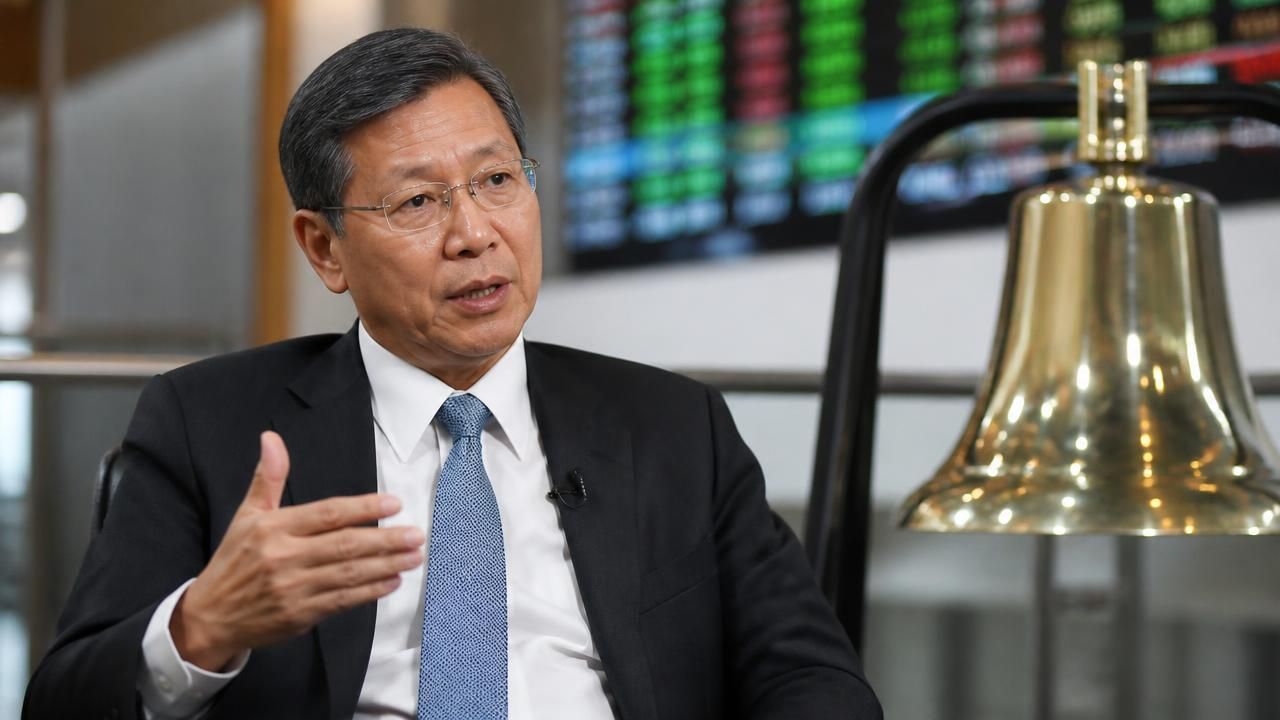
The Philippine Stock Exchange (PSE) is bracing for a consolidation among its member brokers as the Securities and Exchange Commission (SEC) pushes forward with a proposed capital hike. In an exclusive interview with Bloomberg's "Insight with Haslinda Amin," PSE President and CEO Ramon Monzon said the new requirements will likely reduce the number of active brokerage firms, a move that could reshape the country's trading landscape.
Monzon's remarks come as the SEC considers raising the minimum capital for brokers, a plan that has sparked debate within the industry. While larger firms are expected to absorb the change with relative ease, smaller brokers may struggle to meet the new thresholds, potentially leading to mergers, acquisitions, or exits from the market.
What the SEC's Capital Hike Plan Entails
The SEC's proposal aims to strengthen the financial stability of brokerage firms by increasing their required capital base. The exact figures have not been finalized, but industry sources suggest the minimum paid-in capital could rise from the current 100 million pesos to as much as 500 million pesos or more, depending on the type of brokerage license. The plan is part of a broader regulatory push to enhance investor protection and market integrity.
Monzon acknowledged that the higher capital bar would inevitably shrink the broker population. "We will see fewer brokers," he said, noting that the consolidation could be healthy for the market in the long run. Larger, better-capitalized firms are more capable of offering robust services, improving compliance, and weathering market volatility.
"We will see fewer brokers," said Ramon Monzon, President and CEO of the Philippine Stock Exchange, in an exclusive interview with Bloomberg.
Focus on Liquidity and Capital Raising
Beyond the regulatory shake-up, Monzon emphasized the bourse's ongoing efforts to boost market liquidity. The PSE has been exploring various initiatives, including the introduction of new trading products, enhanced market-making schemes, and measures to attract more retail and institutional investors. Liquidity remains a key challenge for the Philippine equities market, which has seen a slowdown in trading activity amid global economic headwinds.
On the capital-raising front, Monzon expressed optimism about the pipeline for initial public offerings (IPOs) despite a mixed global market environment. He singled out two highly anticipated listings: GCash, the country's leading mobile wallet operator, and PLDT's data center unit. These IPOs are expected to draw significant investor interest, reflecting the growing demand for technology and digital infrastructure assets in Southeast Asia.
GCash and PLDT Data Center IPOs
GCash, operated by Globe Telecom-backed Mynt, has become a household name in the Philippines thanks to the rapid adoption of digital payments. Its potential IPO, which could value the company at several billion dollars, would be one of the largest tech listings in the country's history. Similarly, PLDT's data center spin-off is positioned to capitalize on the booming cloud and data services market, fueled by the shift to remote work and digitalization.
Monzon said the PSE is working closely with issuers and underwriters to ensure smooth execution of these offerings. "We are seeing strong interest from both local and foreign investors," he added, citing the resilience of the Philippine economy and its young, tech-savvy population.
Market Context and Historical Background
The Philippine stock market has faced a challenging few years, with the PSE index dipping in 2022 and 2023 due to high inflation, interest rate hikes, and global geopolitical tensions. However, the market showed signs of recovery recently, driven by easing inflation and improved corporate earnings. The SEC's capital hike plan is part of a wider regulatory modernization agenda, aimed at bringing the local bourse in line with international standards.
Historically, Philippine brokerage regulation has been relatively lenient, but the SEC has been tightening rules since the 2018 scandals involving unauthorized trading and broker misconduct. The current proposal is seen as a necessary step to prevent future failures and protect small investors.
Industry reaction has been mixed. Larger brokers have largely welcomed the plan, seeing it as a competitive advantage that could consolidate their market share. Smaller firms, however, have voiced concerns about the cost burden and the potential loss of jobs. The SEC is expected to conduct public consultations before finalizing the rule.
Implications for Investors and the Market
A reduction in the number of brokers could lead to less fragmentation and more efficient trading, but it may also reduce access to the market in rural areas where smaller brokers operate. For retail investors, the changes could mean higher service fees if smaller players exit, but also improved protections and better-quality advice from larger, compliant firms.
Monzon urged the industry to view the capital hike as an opportunity rather than a threat. "Consolidation is inevitable in every maturing market," he said. "What matters is that we end up with a stronger, more resilient capital market that can support the country's economic growth."
Global Perspective
The Philippines is not alone in this trend. Regulators across Southeast Asia—including in Indonesia, Thailand, and Vietnam—have been raising capital requirements for brokers to attract foreign investment and bolster market confidence. The success of these measures will depend on balancing prudent oversight with market vibrancy.
As the PSE navigates these regulatory changes, all eyes will be on the upcoming IPOs and whether they can inject renewed enthusiasm into the market. With the GCash and PLDT listings on the horizon, the Philippine bourse is positioning itself for a transformative year ahead, even as the broker landscape shrinks.