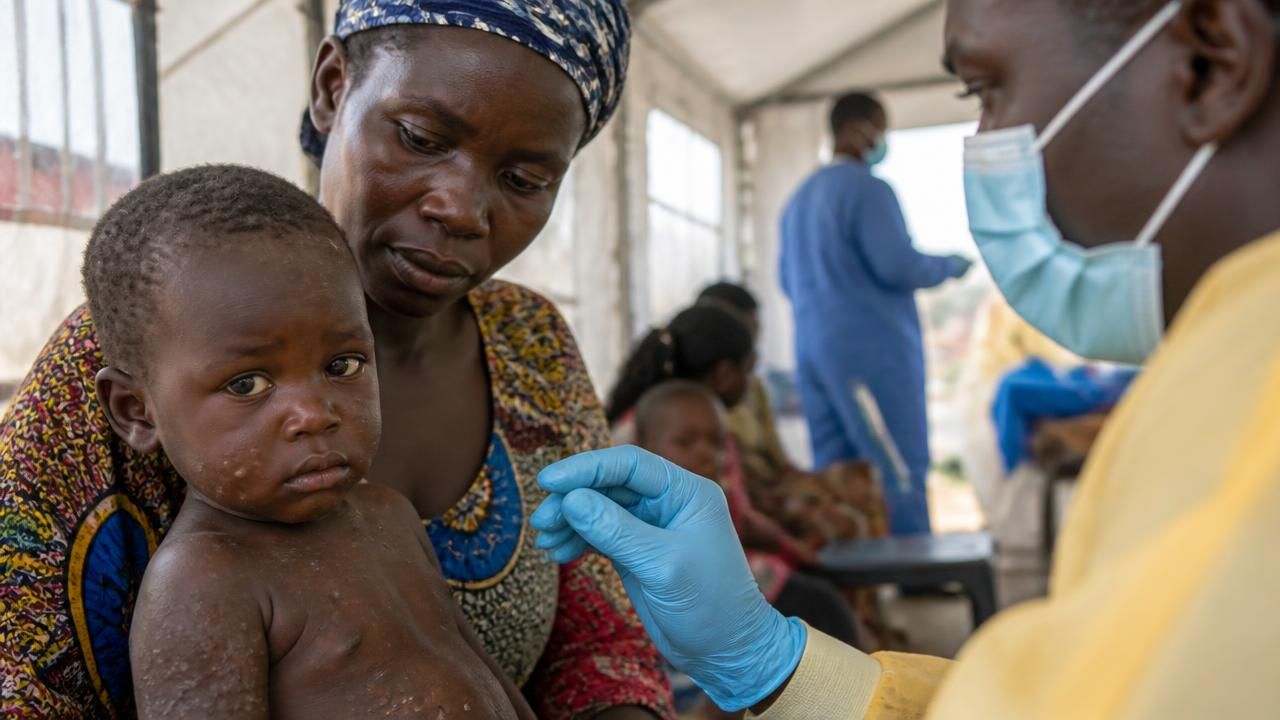
The mpox virus, once confined to a handful of African countries, is again making headlines as outbreaks spread to new territories and evolve into deadlier forms. The first-ever cases in Guinea-Bissau, an explosion of infections in Madagascar, and a new Clade I strain detected in Arizona underscore a resurgent global threat. Nearly 190,000 lab-confirmed cases have been reported across 145 countries since 2022, according to the Guardian, and the latest wave is hitting children particularly hard.
A widening geographic footprint
Guinea-Bissau, a small West African nation, reported its first mpox outbreak, with UNICEF revealing that children account for about half of suspected cases. In Madagascar, an explosive outbreak has already caused 3,000 cases, according to Yahoo News. Kenya and the Central African Republic have also declared outbreaks, signaling the virus's relentless expansion across the continent and beyond.
Meanwhile, the United States confirmed its first case of the deadlier Clade I mpox strain in Arizona, linked to recent travel. The Arizona Department of Health stressed that the risk to the public remains low, but the case highlights how global mobility can rapidly transport the virus across borders. In England, a new mpox strain has been identified, prompting vigilance from public health officials, as reported by BBC News.
Children in the crosshairs
The current outbreak is notable for its disproportionate impact on children. In Guinea-Bissau, half of the suspected cases are children, a worrying trend echoed in Burundi, where one-third of cases are school-age children, according to UNICEF. This demographic shift differs from the 2022 global outbreak, which primarily affected men who have sex with men. The reasons for this are complex, but experts point to household transmission, crowded living conditions, and limited access to hygiene and healthcare in affected regions.
“Children are not just the face of this outbreak; they are its primary victims. We must act urgently to protect them,” said a UNICEF spokesperson, highlighting the need for targeted interventions.
The science of a shifting virus
Research published in Nature Communications on the Los Angeles epidemic found that low-level mpox incidence is being maintained by viral introductions and a return to baseline sexual behaviors. A systematic review in BMJ Global Health, covering 1970–2025, traces the evolving transmissibility of the virus and the effectiveness of interventions. Scientists have also made a breakthrough in identifying the animal reservoir: squirrels are now suspected as the mysterious hosts, according to Scientific American and Discover Magazine. This discovery could help predict and prevent future spillovers.
The mpox virus exists in two main clades: Clade I, which is more severe, and Clade II, which caused the 2022 global outbreak. The new Clade I strain detected in the U.S. and England raises concerns because of its higher mortality rate, particularly among children and immunocompromised individuals.
Africa on the front lines
African nations are bearing the heaviest burden. The Democratic Republic of Congo (DRC) is facing an exploding epidemic, with transmission spreading to the capital, Kinshasa, according to Science and the New York Times. In South Kivu, mpox patients have even escaped a treatment center, complicating containment efforts. The Africa Centres for Disease Control and Prevention has declared a continentwide health emergency and plans to begin vaccinations within days, as reported by France 24.
However, a glaring inequity remains: rich nations hold millions of mpox vaccine doses but have not shared them promptly with Africa. The Guardian reports that African countries are still waiting for promised vaccines, while Reuters notes that wealthy countries have ample stockpiles. This failure has drawn sharp criticism from global health experts.
“The global response to mpox has been reactive and unequal. We are repeating the mistakes of COVID-19,” said Dr. Ngozi Erondu, a global health policy expert.
Political and institutional setbacks
The Trump administration's dismantling of USAID has raised the risk of a global mpox emergency, experts warn. USAID played a critical role in supporting surveillance and response in Africa. Cutting these programs leaves vulnerable countries blind and unprepared. The Economist and Politico have both argued that the current crisis was avoidable, with Politico noting that “mpox is killing again. It didn’t have to be this way.”
What must be done
Containing this outbreak requires a multi-pronged strategy:
- Rapid vaccination campaigns in affected African countries, with equitable distribution of doses.
- Strengthened surveillance and laboratory testing, especially in newly affected regions.
- Community education and outreach to reduce stigma and promote safe practices.
- Investment in research on transmission dynamics, including animal hosts and evolving viral strains.
- Restoring and protecting global health funding, particularly for organizations like USAID and WHO.
Historical precedent shows that African countries have successfully beaten disease outbreaks before, as noted by Independent Uganda. Sierra Leone, for example, managed to contain mpox through robust contact tracing and community engagement. Those lessons must be applied now, on a larger scale and with international solidarity.
The resurgence of mpox is a stark reminder that infectious diseases do not respect borders. In an interconnected world, the only effective strategy is one that unites science, politics, and public health in a coordinated global response. Without it, the virus will continue to spread, mutate, and claim more lives, especially among the youngest and most vulnerable.