The Department of Homeland Security has acknowledged that its widely publicized claim of finding 250,000 noncitizens on voter rolls in four states was based on preliminary and unverified data — a major retreat that raises questions about the Trump administration's election integrity push.
According to communications between DHS and state election officials, the figures touted by the administration were never finalized and could not be substantiated. NPR first reported the agency's acknowledgment, noting that the data was described as "preliminary" in official correspondence. The New York Times echoed that finding, reporting that the agency "can't prove it" today.
What DHS Said vs. What It Now Says
In its original announcement, the Trump administration presented the 250,000 number as evidence of widespread noncitizen voting, a claim that would have been historically significant. But in subsequent letters and emails to states, DHS officials urged caution, saying the numbers were not the result of final verification and were provided for "informational purposes only."
"The data was preliminary and not final," an DHS official wrote to state election officials, according to NPR. "We are providing it for informational purposes only."
Backlash and Criticism
Critics say the episode shows that the administration is willing to use unverified data to attack election officials and advance a partisan narrative. CNN reported that the unverified figures have been used to escalate pressure on local election administrators, who have faced a wave of harassment and threats in recent years.
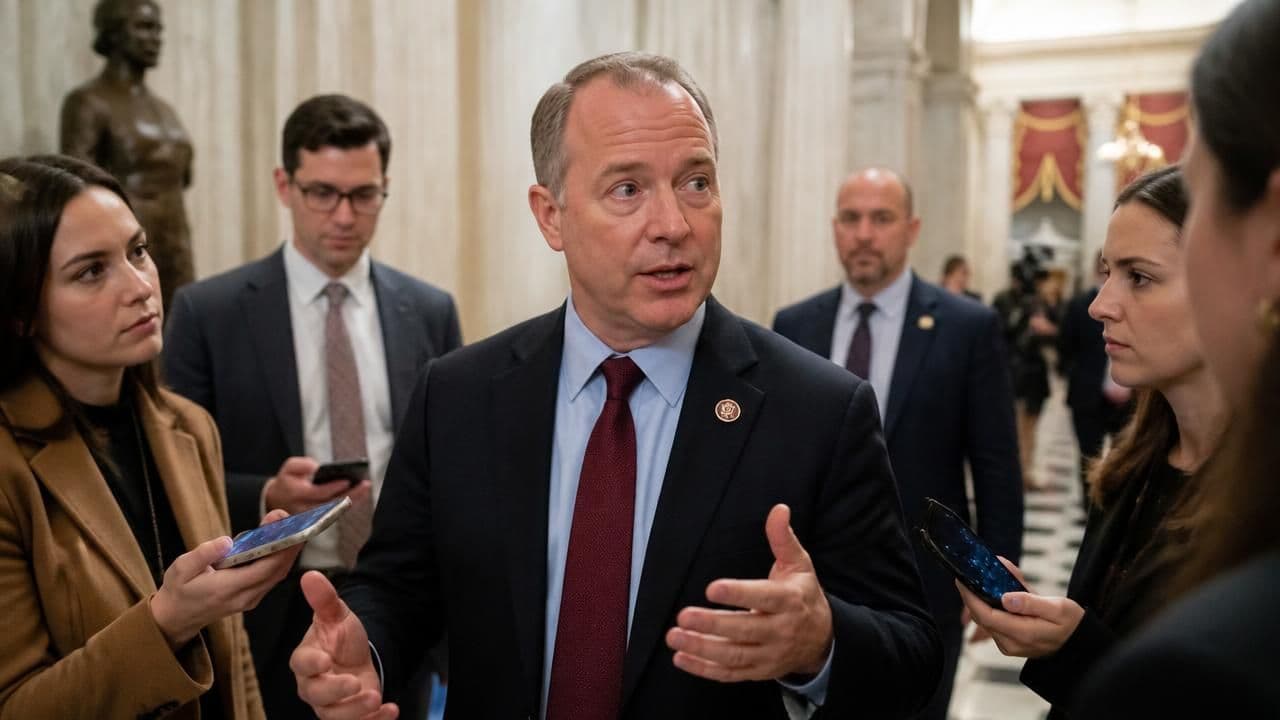
The controversy also extends into Congress. Senator Markwayne Mullin, an Oklahoma Republican, has been using the inflated numbers to further what CNN describes as "Trump's voter fraud crusade." In hearings, Mullin repeatedly cited the 250,000 figure as proof that noncitizen voting is a real crisis, without acknowledging the agency's own caveats.
What the Evidence Actually Shows
The idea that noncitizen voting is widespread is contradicted by decades of research. A 2017 Brennan Center study found that out of 23.5 million votes examined, only about 30 were potentially cast by noncitizens — a rate of roughly 0.0001%. Noncitizen voting in federal elections is already illegal, and states routinely scrub voter rolls to remove ineligible registrants.
Legal experts note that the DHS admission could weaken the administration's arguments in pending litigation. Several lawsuits have used the 250,000 figure to justify aggressive voter roll maintenance, and that evidence is now in doubt.
Impact on Election Officials
For state election officials, the damage may already be done. Time and resources were spent responding to the false claim, and public trust has been eroded. As CNN pointed out, the use of unverified data undermines the legitimacy of election administration — even if the numbers are later walked back.
A Pattern of Unverified Claims
This is not the first time the administration has floated unsubstantiated voter fraud numbers. From the 2020 election onward, Trump and his allies have repeatedly alleged widespread fraud, often citing raw data and suspect analyses. The DHS backtracking is a textbook example of how quickly such narratives collapse under scrutiny.
At the same time, the administration has not formally retracted the 250,000 figure in a public statement. It remains unclear whether DHS will correct the record or continue to let the claim stand. For now, the agency is left to explain the gap between its headline-grabbing announcement and its private admission of doubt.
What's Next
The four affected states are now left to decide whether to pursue the leads provided by DHS, with the knowledge that the underlying data may be faulty. Watchdog groups are calling for an independent review of how the numbers were produced and released.
As the New York Times put it, the agency "made a big claim about noncitizen voting" and now finds itself unable to prove it. For the Trump administration, it is a public relations blow. For critics, it is a welcome dose of reality in a debate often driven by falsehoods.
- DHS claimed 250,000 noncitizens on voter rolls in four states.
- The agency now says the data was preliminary and unverified.
- Sen. Markwayne Mullin and others have used the claim to support voter fraud narratives.
- Experts say noncitizen voting is extremely rare and already illegal.
The story of the inflated number is still developing. Whether it will change the broader discourse around election integrity remains to be seen — but for now, the administration appears to be retreating from its most aggressive claim.