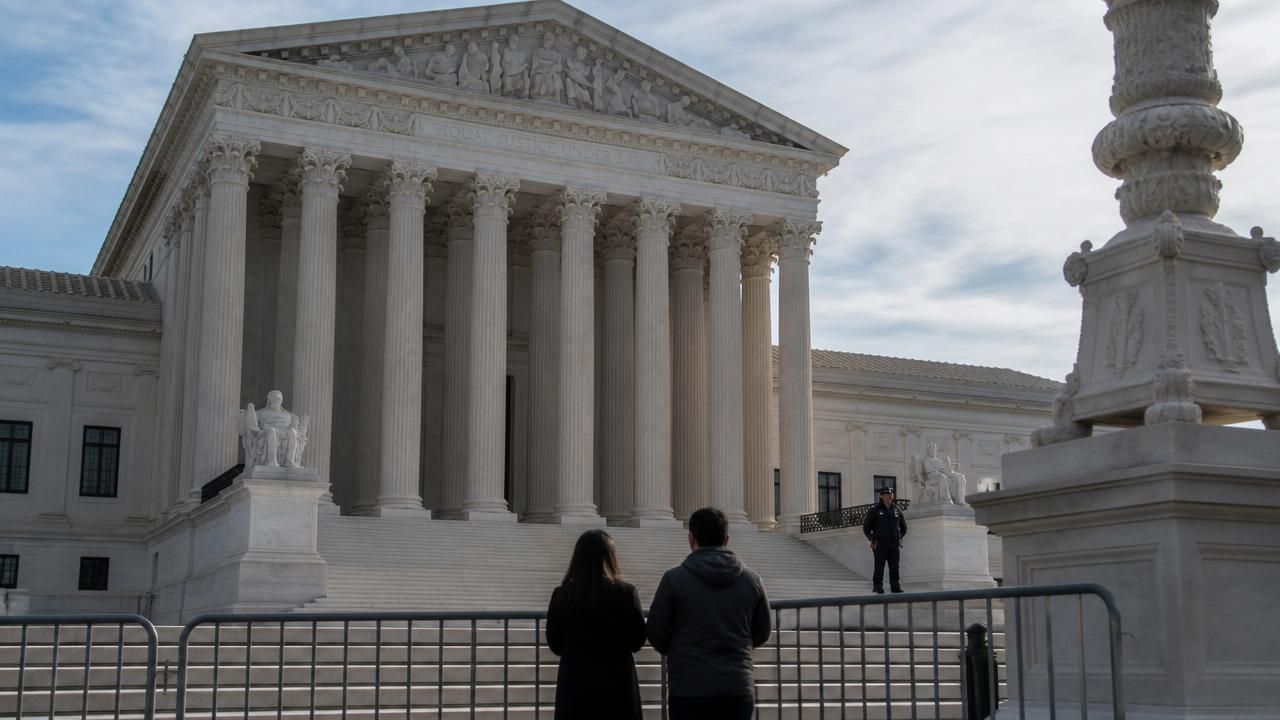
The Supreme Court of the United States has long been the most deliberative branch—issuing carefully reasoned opinions after months of briefing and oral argument. But in recent years, a parallel system has grown in prominence: the “shadow docket,” a collection of emergency appeals, stay applications, and summary decisions that are often resolved in days, without full briefing or explanation. Now, newly obtained internal memos and a wave of controversial rulings have thrust this shadowy process into the spotlight, igniting a fierce debate over the Court’s legitimacy and its future.
What Is the Shadow Docket?
The term, popularized by University of Texas law professor Stephen Vladeck in his 2023 book The Shadow Docket, refers to the Court’s handling of emergency petitions and other matters outside its regular merits docket. These decisions are typically unsigned, contain minimal reasoning, and are issued without oral argument. Historically, the shadow docket was used sparingly—mostly for routine administrative stays. But under Chief Justice John Roberts, its use has exploded. According to a Reuters analysis, the Court sided with the Trump administration and religious litigants in a striking number of these emergency orders, often without explanation.
The New York Times recently obtained secret memos from the justices that reveal how the modern shadow docket was deliberately constructed. Over five critical days, the Court bypassed its own time-tested procedures to clear the way for rapid-fire rulings on issues ranging from abortion to immigration to environmental regulation. The memos show that the shift was not accidental but engineered, with justices trading drafts and coordinating to issue consequential decisions under the cover of emergency.
Controversial Rulings and a Divided Court
Examples of shadow-docket activism abound. In 2021, the Court allowed Texas’s controversial abortion ban to take effect, effectively evading a pre-enforcement challenge. In 2024, it used the shadow docket to halt EPA enforcement of the “Good Neighbor” air pollution rule, and more recently, it has intervened in cases involving mifepristone access, transgender rights, and the legal status of Venezuelan migrants. Critics argue these emergency orders are increasingly being used to decide substantive legal questions—without the rigor of the ordinary process.
“The shadow docket has become a dangerous instrument for making major policy decisions in the dark,” said Vladeck. “It’s a decentralized, opaque, and unreasoned system that undermines the Court’s legitimacy.”
Justice Ketanji Brown Jackson has been particularly vocal. In a recent dissent, she warned that the Court was “manipulating the rules” to benefit President Trump and his allies. “The public is being asked to accept decisions that look less like law and more like power,” she wrote. Retired Justice Stephen Breyer has also expressed unease, telling an audience at the University of Chicago that the shadow docket risks turning the Court into “a politician in robes.”
The Five Days That Remade the Court
The NYT investigation into the secret memos provides a rare inside look. The memos span a five-day period in which the Court issued several landmark emergency rulings, including decisions on Trump’s immunity and the administration’s funding freezes. They reveal deep divisions: Justice Samuel Alito pushed for even bolder action, while Chief Justice Roberts urged caution to preserve the Court’s institutional credibility. The memos also show that the justices are acutely aware of the political firestorm their shadow docket is causing—yet appear unwilling to change course.
Testifying before Congress, several justices defended the practice. Justice Brett Kavanaugh argued that the emergency docket is a necessary tool for resolving urgent disputes, especially when lower courts issue nationwide injunctions. “We are not creating law in the shadows,” he said. “We are responding to chaos.” But Democrats on the Senate Judiciary Committee countered that the Court has become a “super legislature” that hands wins to preferred litigants while ignoring procedural norms.
Reform Efforts and the Future
The growing backlash has fueled a new push for reform. Senate Democrats have revived proposals to expand the Court from nine to thirteen seats and impose 18-year term limits to reduce the politicization of appointments. A bill introduced by Senator Ron Wyden would specifically require the Court to issue reasoned opinions for all emergency denials and stays. Advocacy groups like Allies for Justice are launching public campaigns, calling the shadow docket a “power grab” that threatens democratic governance.
“The Court’s legitimacy is at risk,” warned a recent report from the Davis Vanguard. “When the public cannot understand why the Court rules as it does, trust erodes—and with it, the rule of law.”
Some legal scholars argue that reform is premature. They point out that the current term has seen a slight reduction in shadow-docket activity, and that the Court has promised greater transparency. But critics note that the damage may already be done. The shadow docket has been used to shape policy on climate (halting EPA rules), immigration (upholding termination of TPS status), and health care (allowing funding cuts to NIH)—all with little more than a sentence of explanation.
A Turning Point?
The fight over the shadow docket is, at its core, a fight over what kind of Court America wants. Should the Court be a deliberate, reasoned institution that issues careful opinions—or an instrument of executive preference that can act with lightning speed in the dead of night? The leaked memos show that the justices themselves are divided on this question.
As the new term begins, with a slew of high-stakes cases already queued for emergency action, the shadow docket is poised to play an outsized role once again. Whether that role is legitimate or corrosive depends on who you ask—but both sides agree that the Court is at a crossroads, and the decisions made in the shadows will shape American law for decades to come.