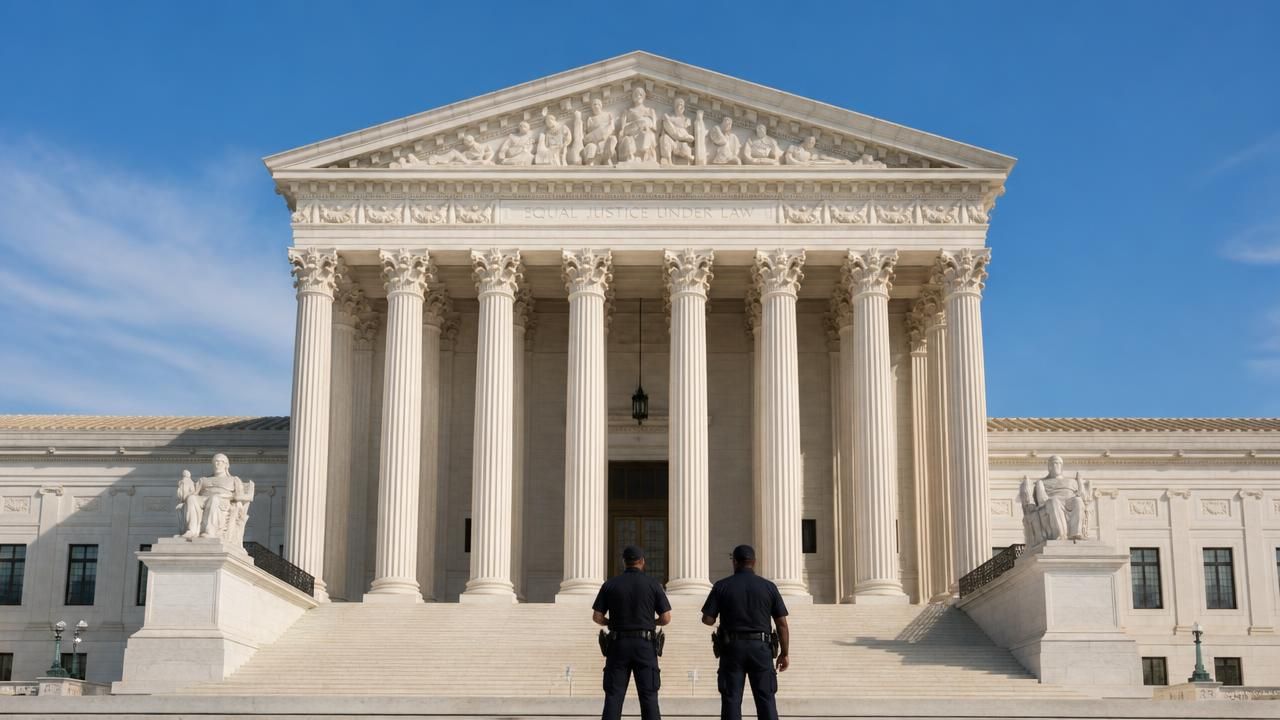
The Supreme Court issued a series of high-stakes emergency orders on Monday, August 24, 2026, that will shape the November midterm elections in profound ways. In a single day, the justices partially allowed President Trump's executive order limiting mail-in voting to take effect, temporarily preserved access to the abortion pill by mail, and paused a lower court decision that would have thrown out Texas's new congressional maps. The flurry of rulings from the Court's so-called "shadow docket" drew starkly different headlines from major news outlets, each emphasizing a distinct facet of the Court's intervention.
- Trump's mail-voting order: partially revived, but U.S. Postal Service implementation remains blocked.
- Abortion pill by mail: access maintained temporarily via an administrative stay.
- Texas maps: allowed to remain in effect for the 2026 elections.
Trump's Mail-Voting Order: A Partial Green Light
Trump's executive order, which seeks to curb mail-in balloting by restricting drop-box usage and imposing stricter identification requirements for mail ballots, has faced legal challenges in multiple states. Last week, a federal appeals court blocked key provisions of the order, but the Supreme Court intervened on Monday, pausing that injunction. As NPR reported, the Court "paused a lower court's ruling that blocked key parts of Trump's order to limit voting by mail for the midterms." That means the contested provisions can now be enforced while litigation continues.
However, the administration's victory is incomplete. The same Supreme Court order left in place a separate nationwide injunction preventing the U.S. Postal Service from implementing parts of the directive. "U.S. Postal Service work on the order remains blocked nationwide," NPR noted. This creates a legal patchwork: state and local officials can enforce restrictions like ID requirements and drop-box limits, but the USPS cannot be compelled to alter its mail-handling procedures to align with the order.
Critics, including voting rights groups and Democratic state attorneys general, argue that the order is a transparent attempt to suppress turnout among younger and minority voters, who disproportionately use mail voting. The Guardian, in an earlier report, highlighted that an appeals court had rejected Trump's bid to curb mail-in voting in 23 states, illustrating the breadth of legal resistance. Now, with the Supreme Court's intervention, those restrictions are back in play for the midterms.
Abortion Pill by Mail: A Temporary Reprieve
In a separate case, the Court froze a lower court ruling that would have sharply restricted access to mifepristone, the first drug in a medication abortion. The lower court—issued by a federal judge in Texas—had ordered that the drug could no longer be dispensed by mail, a practice the FDA has permitted since 2021. That decision was set to take effect this week, but the Supreme Court issued an administrative stay, preserving mail-order access for now.
The New York Times framed the action as temporarily restoring access, while Politico described it as extending an order that maintains the status quo. The stay is brief—likely a matter of days—while the Court considers whether to hear the case fully. Still, the practical impact is significant: patients and telehealth providers can continue to receive and send mifepristone through the mail without interruption.
The case is part of the ongoing legal battle over abortion after the fall of Roe v. Wade. Anti-abortion groups had challenged the FDA's approval of mifepristone, arguing that the agency overstepped its authority by allowing mail delivery. Supporters of abortion access called the Supreme Court's stay a "lifeline," while opponents expressed disappointment and vowed to continue the fight. As the BBC reported, the Supreme Court had been asked to restore access—and this emergency ruling does, at least for the moment.
Texas Congressional Maps Stand (For Now)
The third major order concerned Texas, where a federal court had struck down the state's newly enacted congressional districts, ruling that they intentionally diluted the voting strength of Black and Latino residents in violation of the Voting Rights Act. The lower court had ordered the state to redraw the maps in time for the midterms. But the Supreme Court, citing the proximity of the election and the disruption that changing districts now would cause, put that decision on hold.
CNN and Reuters both reported the pause, with Reuters noting that the Court "temporarily pauses lower court order that tossed Texas voting maps." The practical effect is that Texas will hold its 2026 midterm elections using the challenged districts. The underlying lawsuit continues, and if the lower court's ruling is eventually upheld, new maps could be required for future elections—but not for November.
Election law experts say this is a familiar pattern: the Supreme Court is reluctant to alter election rules close to voting day, a principle often called the Purcell principle. But critics note that this approach can enshrine discriminatory maps for one more election cycle, inflicting concrete harm on voters. Texas officials celebrated the decision, arguing that the maps were lawful and that a last-minute change would have caused chaos.
The Shadow Docket Under the Microscope
The three rulings—arriving together in a single day—illustrate the growing importance of the Supreme Court's emergency docket. These orders are typically issued without full briefing or oral argument, and often without explanation.
The shadow docket continues to be the Supreme Court's most consequential and least accountable mechanism for shaping American law.
The divergent coverage from major outlets underscores the breadth of the decisions: MSN dubbed the day an "earthquake ruling" handing Trump a key win, while NPR and WYSO focused on the mail-voting order, The Guardian emphasized the appellate setback, and the Times and Politico trained their lens on abortion access. Political and advocacy groups seized on each outcome, using it to galvanize their bases ahead of the elections.
What is clear is that the midterms will take place against a backdrop of rapid-fire judicial intervention. Rules for how millions of Americans cast their ballots, what healthcare options are available to them, and who represents them in Congress have all been shaped—at least temporarily—by the highest court in the land, often in the dead of night.