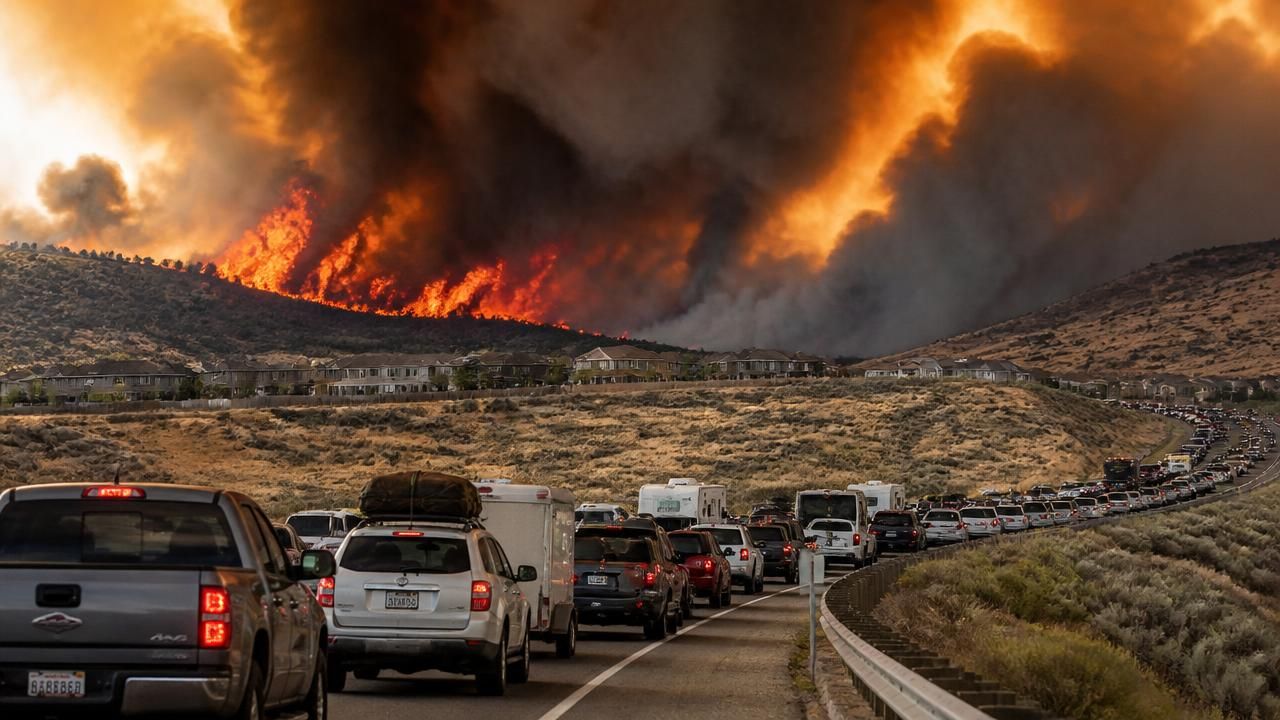
A fast-moving wildfire dubbed the Hawk Fire is forcing tens of thousands of residents to flee their homes in and around Reno, Nevada, as the blaze has already scorched more than 15,000 acres with zero containment. Emergency officials said the fire, which erupted amid a severe drought gripping the western United States, was human-caused.
The evacuation orders, affecting nearly 90,000 people either told to leave or prepare to leave, have overwhelmed local shelters and created gridlocked traffic on major highways as families sought safety. This is among the largest wildfire evacuations in Nevada's history, according to state emergency management officials.
A Blaze Out of Control
According to reports from NPR and Reuters, the fire started late Tuesday and quickly exploded in size due to strong winds and dry vegetation. By Wednesday morning, it had burned over 15,000 acres and remained at 0% containment, with crews struggling to establish perimeters as flames advanced toward suburban neighborhoods.
"This is a rapidly evolving situation. The fire is moving faster than we can build lines," said a spokesperson for the Nevada Division of Forestry. "Our top priority is life safety."
Fire officials confirmed the blaze was human-caused but have not yet released further details. The cause is under investigation, and arson has not been ruled out.
Evacuations and Community Response
The scale of the evacuation is staggering. CNN’s coverage emphasized that "tens of thousands" were ordered to leave, while local authorities expanded the mandatory evacuation zone overnight. The city of Reno opened several emergency shelters, including at the Reno-Sparks Convention Center, where evacuees were offered food, water, and medical care.
- More than 30,000 people under mandatory evacuation orders
- An additional 60,000 under pre-evacuation warnings, ready to leave at a moment's notice
- Several schools and universities canceled classes as smoke blanketed the region
Residents described chaotic scenes as they grabbed pets and important documents. One evacuee told local news, "We saw the smoke and within an hour the police were knocking on doors. We grabbed what we could and left."
A Region in Drought
The Hawk Fire is only the latest in a series of wildfires across the western U.S. and Canada, as a severe drought has turned forests into tinderboxes. CBS News noted that fires are raging from California to Alberta, with thousands evacuated in multiple states and provinces. Scientists point to climate change as a key driver of longer, more intense fire seasons.
Meteorologists warn that hot, gusty conditions will continue for the next few days, hampering firefighting efforts. The National Weather Service has issued a Red Flag Warning for the region, predicting wind gusts up to 40 mph and humidity levels as low as 8%.
Firefighting Challenges
More than 500 firefighters are battling the blaze, supported by air tankers and helicopters dropping retardant and water. However, the rugged terrain and shifting winds make containment difficult. The fire is burning through a mix of sagebrush, chaparral, and Ponderosa pine, which historically burns in high-intensity events under these conditions.
Nevada Governor Joe Lombardo has declared a state of emergency, freeing up state funds and resources. He also activated the National Guard to assist with evacuations and security.
How Different Outlets Framed the Story
Each news source provided a distinct perspective on the disaster. NPR highlighted the human-caused nature of the fire, underlining prevention failures. Reuters focused on the evacuation order, calling it one of the largest in the region. CBS News used the phrase "fast-growing" to emphasize the speed of the fire's spread, and also linked it to broader regional wildfires in the West and Canada. Meanwhile, MSN published a map showing the fire's rapid spread, providing a visual representation of the threat.
These varying angles reflect the complexity of wildfire reporting: from causes, to impacts, to context.
Historical and Future Implications
The Hawk Fire is another stark reminder of the growing wildfire crisis in the American West. Over the past decade, wildfires have burned larger areas and become more destructive, costing billions of dollars in damage. According to the National Interagency Fire Center, there have already been 1,200 more fires this year than the 10-year average.
"We are in a new era of fire," said Dr. Emily Fox, a climatologist at the University of Nevada, Reno. "Drought, heat, and overgrown forests are creating the perfect storm. We must adapt, both in how we manage land and how we prepare communities."
The immediate focus remains on protecting lives and containing the blaze. Firefighters are hopeful that a predicted shift in wind direction later this week could aid their efforts, but the situation remains highly volatile.
As the skies over Reno turn gray with smoke, residents are left waiting and watching, their homes and futures hanging in the balance. The Hawk Fire has become a roaring testament to the power of nature and the urgency of climate action.