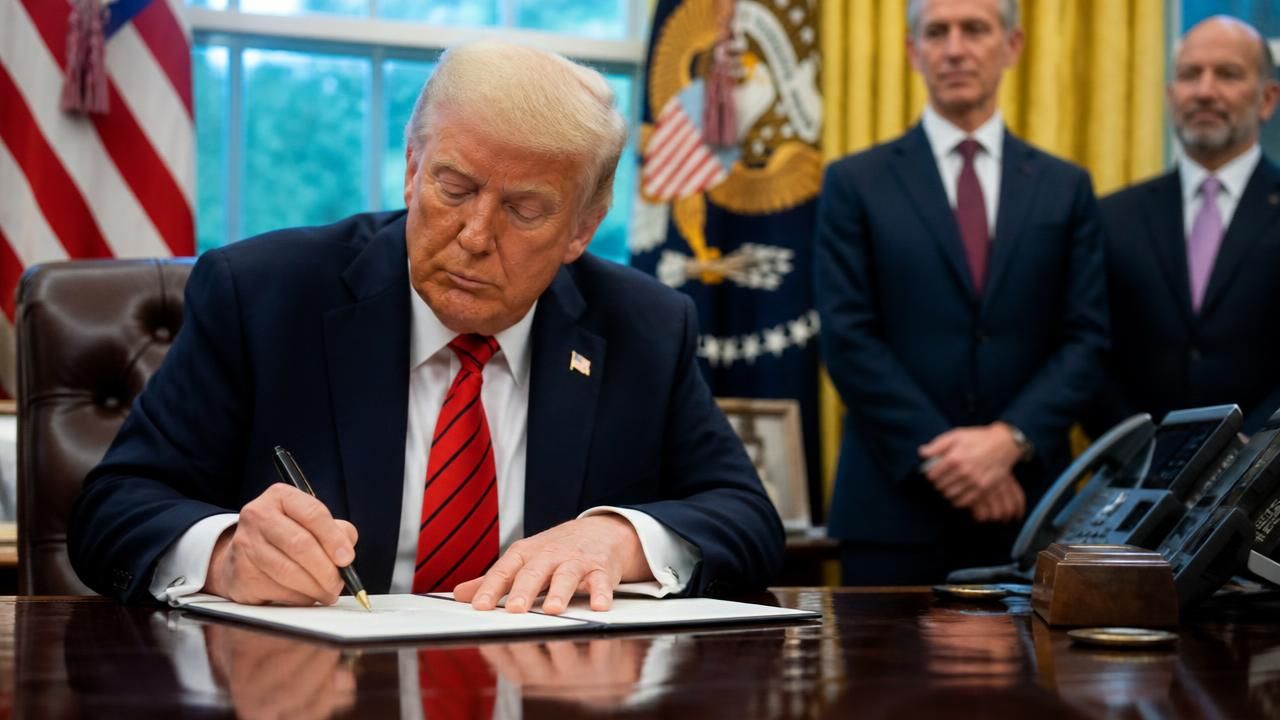
President Donald Trump has signed a new national space transportation policy that sets an ambitious goal of enabling more than 1,000 rocket launches and reentries per year from U.S. soil by 2030. The memorandum, titled “Enhancing American Greatness in Space,” replaces a 2013 policy signed by former President Barack Obama and directs the Department of the Interior to identify federal land for a new spaceport, while also calling for streamlined regulations for commercial launch and reentry operations.
A Dramatic Shift in the Launch Landscape
The new policy, signed Thursday, comes at a time when the U.S. space industry has transformed dramatically. According to Ars Technica, there were 176 orbital launch attempts from U.S. soil last year—nearly ten times the number in 2013, when the previous policy was issued. SpaceX led the charge with 165 orbital launches of its Falcon 9 rocket, plus five suborbital test flights of the much larger Starship vehicle.
The policy explicitly states: “By 2030, our space transportation ranges must grow to support more than 1,000 launches and reentries every year. The policies set forth in this memorandum will secure America's continued superiority in space.” This marks a clear acknowledgment that the current infrastructure and regulatory framework are insufficient for the expected surge in commercial space activity.
Key Directives: Spaceport Development and Deregulation
The executive order instructs the Department of the Interior to find federal land suitable for a new spaceport, a move first reported by EGamers.io and later confirmed by other outlets. This is a significant step, as most existing U.S. spaceports are located on federal property managed by agencies like NASA, the Air Force, or the Federal Aviation Administration (FAA). A new spaceport on Interior-managed land could help distribute launch traffic and reduce congestion at current ranges.
More controversially, Space.com reported that the administration wants to bypass certain environmental laws for commercial launches and spacecraft reentries. The article, titled “The US government wants to bypass environmental laws for commercial launches and spacecraft reentries,” suggests that the policy seeks to expedite the approval process by limiting the scope of environmental reviews under the National Environmental Policy Act (NEPA) for routine launch and reentry operations. This has drawn criticism from environmental groups, who argue that increased launch frequency will have cumulative impacts on the atmosphere and local ecosystems.
Legal and Contractual Perspectives
Legal analysts have framed the order as an effort to create a more competitive space launch market. A post on Inside Government Contracts (via LexBlog) titled “To Efficiency and Beyond?: President Trump Issues Executive Order to Enable a Competitive Space Launch Market” notes that the order aims to reduce bureaucratic inefficiencies that have slowed down launch licensing. The K&L Gates law firm similarly highlighted the order’s focus on “expanding the domestic commercial space industry,” emphasizing that it directs the Secretary of Transportation to streamline the licensing process and remove barriers to private spaceport operations.
These legal perspectives underscore a broader policy shift: the federal government is moving from being a primary launch provider to a facilitator of commercial activity. Both the 2013 and 2025 policies share an emphasis on supporting commercial space, but the scale and urgency are vastly different. The rapid rise of reusable rockets, led by SpaceX, has collapsed launch costs and opened the door to constellations of thousands of satellites, creating demand for far more frequent launches.
Industry Reaction and the Road Ahead
The commercial space industry has largely welcomed the policy, seeing it as a necessary modernization of outdated regulations. However, some experts caution that the 1,000-launch target is extremely ambitious. For context, the entire world conducted roughly 250 orbital launches in 2024, with the U.S. accounting for nearly two-thirds. To reach 1,000 launches per year, the U.S. would need to quadruple its current launch rate within five years.
Spaceport infrastructure is a key bottleneck. Existing facilities like Cape Canaveral Space Force Station and Kennedy Space Center are heavily booked, and expanding them is costly and environmentally sensitive. A new spaceport on western federal land could support polar orbits and other trajectories that are difficult to achieve from Florida, but it would also require billions in investment and years of construction.
Environmental and Safety Concerns
The push to bypass environmental laws is the most contentious element. The policy argues that current reviews are duplicative and slow, but opponents contend that the rapid growth of launches makes environmental oversight more important, not less. Studies have shown that rocket exhaust depletes the ozone layer and that reentries can scatter debris across the ocean. Critics also worry that limiting public review could harm communities near launch sites.
The order does not entirely eliminate environmental reviews; it directs the FAA to establish a categorical exclusion for certain routine activities, similar to existing exclusions for aircraft operations. But the timeline is aggressive, and legal challenges are likely.
Global Implications
The U.S. is not alone in racing to expand launch capacity. China is building new spaceports and aims to launch reusable rockets by 2027. Europe has been slower, but its recent regulatory reforms are designed to foster a competitive launch market. If the U.S. succeeds in reaching 1,000 launches a year, it would cement American dominance in space for decades, affecting everything from satellite internet to military reconnaissance.
Yet the policy also raises questions about space traffic management. With more launches and reentries, the risk of collisions increases, and the FAA’s Office of Commercial Space Transportation will need new tools for tracking and coordinating flights.
What’s Next
The executive order directs multiple agencies to report back within 180 days with implementation plans. The Department of the Interior must identify potential spaceport sites, while the Department of Transportation is to propose regulatory changes. The FAA is expected to begin rulemaking on environmental exclusions within the next year.
In the meantime, the space industry is watching closely. As one anonymous industry executive told Space.com, “This is the shot in the arm we needed. But the details will make or break it.” The promise of 1,000 launches a year is a bold vision; achieving it will require not just policy shifts, but unprecedented coordination among government agencies, private companies, and local communities.
The new policy marks a clear break from the past, positioning the United States to lead the next phase of space exploration and commercialization. Whether it can balance speed with safety and environmental responsibility will determine whether this vision becomes reality or remains a distant aspiration.