In a fast-moving saga that underscores Washington's hardening stance on Chinese-made drone technology, HoverAir has halted US orders for the Versa—a modular pocket camera that snaps together with propeller wings to become a fully autonomous flying drone—just three days after its crowdfunding debut on Indiegogo.
The company says it will still ship the camera component to US backers, but not the so-called 'Flight Kit' that transforms it into a drone, citing 'remaining logistics updates.' Sources and observers, however, suspect the real reason lies with the Federal Communications Commission's (FCC) recently expanded drone equipment ban, which has already pushed several Chinese drone makers out of the US market.
A camera that defies categories
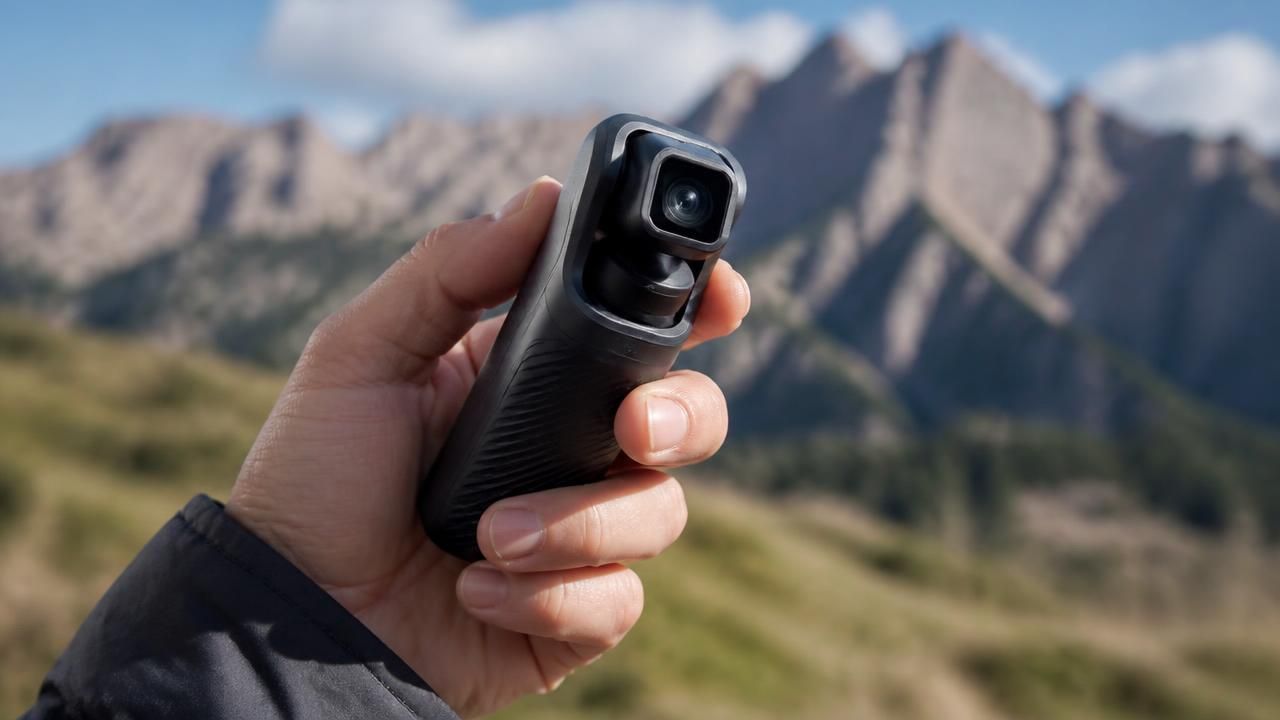
The HoverAir Versa is the latest attempt to combine the stability of a handheld gimbal with the convenience of a self-flying camera. According to Tom's Hardware, the device uses magnetic connectors to snap together, enabling 'instant palm launch and AI tracking.' Geeky Gadgets describes it as 'a combination of a 3-axis gimbal and a flying drone,' while IBTimes is hyping it as the 'world's first flying pocket camera on Indiegogo right now.'
On its own, the Versa works like a miniature steadycam, similar to DJI's Osmo Pocket or HoverAir's own X1 series. Attach the Flight Kit, though, and it becomes a palm-sized quadcopter capable of following subjects, shooting stable video, and returning to the user's hand.
Specs and features
- 3-axis gimbal stabilization for smooth footage
- Magnetic modular design: camera and flight kit snap together
- Palm launch and AI subject tracking
- Portable form factor that fits in a pocket
The FCC's long shadow
The Versa's sudden halt in the US is the latest casualty of a broader regulatory crackdown. As The Verge reports, the FCC's database no longer has an entry for the device. The agency has been moving to ban radio-frequency equipment from a list of Chinese companies deemed national security threats—including drone manufacturers. The rules, initially targeting telecoms, have expanded into adjacent categories like drones.
'The logistics euphemism is doing a lot of heavy lifting,' said one industry analyst who asked not to be named. 'If the Flight Kit contains a radio transmitter and is manufactured by a covered entity, it simply cannot get FCC authorization.'
MSN framed the modular design as an attempt to work around the ban—keeping the camera itself drone-free, while the flight kit is supposed to be added on. But as The Verge's commentary 'Sorry kid, drones are for war now' suggests, regulators are increasingly treating all drone components with suspicion, regardless of how cleverly they are packaged.
What backers should expect
According to HoverAir's messaging, US backers will still receive the camera half of the Versa. The Flight Kit, however, will not ship to the US 'until further notice.' That raises obvious questions: Is the camera useful on its own? Yes, as a gimbal stabilizer. Is the product the backers funded what they will get? Not entirely.
This is not the first time a crowdfunding project has collided with geopolitics. Tech startups frequently find themselves caught between international sanctions and equipment authorization regimes. For HoverAir, the Versa was supposed to be a statement of design ingenuity—a device that morphs from tool to toy to aerial camera. Instead, it has become a case study in how national security policy can instantly rewrite product roadmaps.
'We are committed to delivering the Versa experience to our global community,' HoverAir said in its update to backers, 'and are working diligently to resolve remaining logistics updates for the Flight Kit in the US.'
Divided coverage, common theme
Coverage of the Versa from different outlets highlights the split personality of this story. Tom's Hardware and Geeky Gadgets focus on the technical ambition—the clever modular engineering, the AI tracking, the pocketable design. UA News flatly reports the suspension. MSN, meanwhile, zeroes in on the geopolitical angle, calling out China's HoverAir by name and explicitly linking the modular components to the FCC ban.
The Verge, true to form, offers the most editorial take, mourning the death of the consumer drone era in the age of great-power competition. 'The Versa is the latest sign that the golden age of flying gadgets may be over,' the publication wrote. 'What was once a $500 toy is now a potential security threat.'
What happens next?
For now, US backers are left with a half-product and a promise. HoverAir says it is exploring alternative delivery methods, but with the FCC's drone ban anchored in statute, there may be no regulatory path forward for the Flight Kit—unless HoverAir seeks a waiver, redesigns the radio components, or moves manufacturing outside China. None of those are quick or cheap.
The broader lesson is that the lines between consumer electronics, camera gear, and defense technology are blurring. As drones become more capable, they also become more regulated. The Versa's versatility—its ability to be both a camera and a drone—may now be its biggest liability, because it lands squarely in the crosshairs of regulators.
For gadget fans, it's a bitter pill. The Versa may still fly in other markets, but in the US, it looks like it will remain grounded—a perfect symbol of an era where tech innovation and national security increasingly collide.