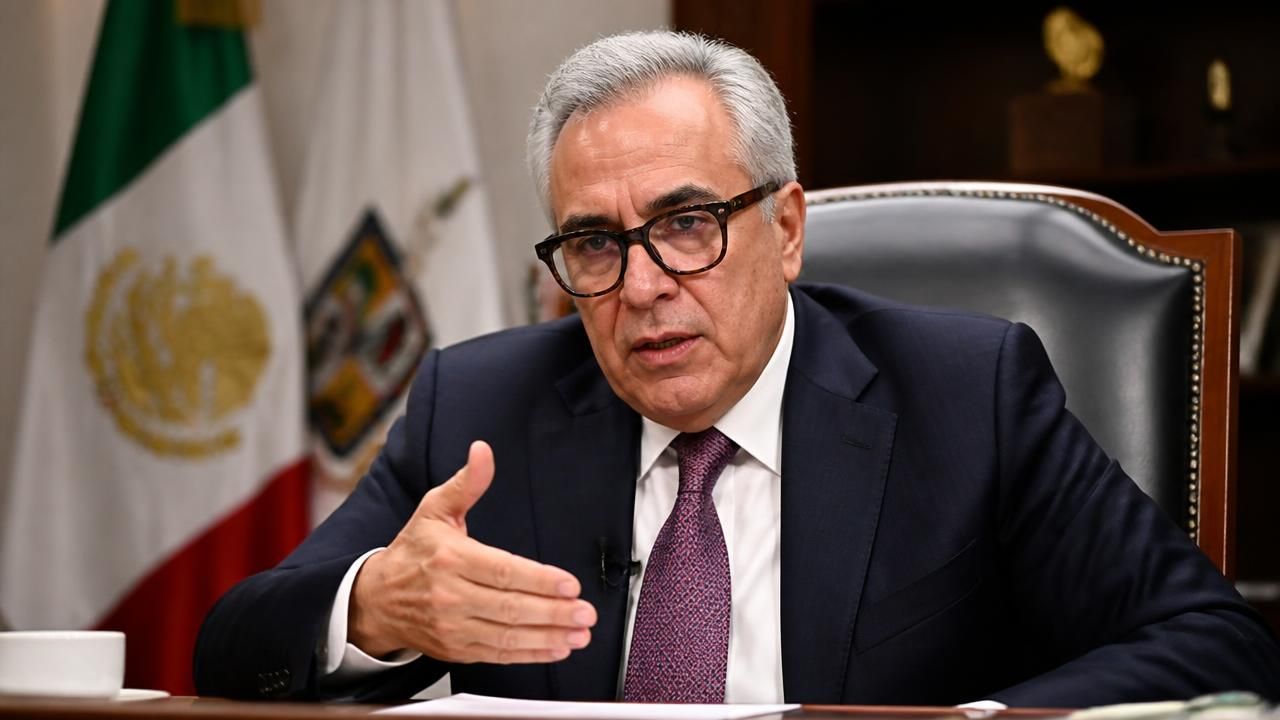
The governor of Mexico's Sinaloa state, Rubén Rocha Moya, has returned to office after a leave of absence triggered by U.S. federal charges accusing him of conspiring with the Sinaloa Cartel to traffic drugs. His decision, announced over the weekend, escalates tensions between Mexico and the United States and places President Claudia Sheinbaum in a delicate political bind as she navigates both domestic backlash and diplomatic pressure.
Rocha Moya, who had stepped aside in February after the U.S. Department of Justice unsealed an indictment against him, vowed to complete his term through next year. Bloomberg first reported his return, noting that it could "inflame tensions with Washington." The governor's office released a statement saying he would resume duties immediately, calling the charges "politically motivated" and asserting his innocence.
A Historic Indictment
The U.S. charges against Rocha Moya are part of a broader crackdown that also targeted a sitting senator and a mayor in what the Los Angeles Times called "historic drug charges." The indictment alleges that Rocha Moya, along with Senator Iván Cázarez and Mayor José Ángel Pérez, accepted bribes from the Sinaloa Cartel in exchange for protection and official favors, including facilitating drug trafficking through the state. This marks the first time the U.S. has criminally charged a sitting Mexican governor with narcotics-related crimes.
ABC News described the charges as a "new front in the drug war," highlighting that the U.S. is now directly targeting high-level politicians rather than just cartel operatives. The investigation, led by the DEA and the U.S. Attorney's Office for the Eastern District of New York, alleges that the officials received millions of dollars in payments from cartel leaders, including Joaquín "El Chapo" Guzmán's sons.
U.S. authorities are also reportedly investigating two additional Mexican governors for suspected connections to cartels, according to an LA Times report. This signals a widening of the U.S. legal offensive against Mexican officials, a move that has sparked outrage in Mexico City.
Sheinbaum's Balancing Act
President Claudia Sheinbaum has publicly accused the United States of meddling in Mexico's internal affairs. At her morning press conference, she stated, "Mexico's sovereignty is non-negotiable. We will not accept the United States acting as our judge and jury." Her comments reflect a growing frustration in the Mexican government over what it sees as unilateral U.S. enforcement actions that bypass bilateral cooperation agreements.
However, behind closed doors, Sheinbaum faces a split within her own Morena party. Reuters reported that some party members, particularly those aligned with the old guard, want to defend Rocha Moya and rally against U.S. overreach. Others, including younger progressives and anti-corruption advocates, argue that the party should distance itself from anyone implicated in cartel ties, fearing that defending Rocha Moya could tarnish the party's reformist image.
"Sheinbaum is walking a tightrope," said Dr. Elena Navarro, a political analyst at the Colegio de México. "She needs to project strength against U.S. interference for her political base, but she also cannot afford to appear complicit with drug trafficking in the eyes of her reform-minded supporters and the international community."
Rocha Moya's Defiance
Rocha Moya, a member of Morena and a close ally of former President Andrés Manuel López Obrador, has consistently denied any wrongdoing. He has characterized the U.S. indictment as a violation of Mexican sovereignty, pointing out that he has not been charged in Mexico. In his first statement after returning, he said, "I am innocent. This is a foreign attack on the will of the Sinaloan people, who elected me democratically."
His return is likely to complicate bilateral relations. The White House has not commented directly, but a State Department official, speaking on condition of anonymity, said the charges "stand on their own merits" and that the U.S. expects all elected officials to respect the law.
The timing is sensitive: the U.S. and Mexico are currently renegotiating security cooperation protocols and fentanyl trafficking has become a major point of contention. The indictment and Rocha Moya's return could derail these talks.
Local Reactions and Political Fallout
In Sinaloa, the governor's return has been met with mixed reactions. Supporters gathered outside the state palace, waving Mexican flags and cheering his arrival. They view the U.S. charges as an attempt to undermine the state's sovereignty. Critics, however, point to the devastating violence that has plagued Sinaloa in recent years, including the 2023 capture and extradition of Ovidio Guzmán, and argue that such allegations should not be ignored.
Anti-corruption groups in Mexico have called on Sheinbaum to establish an independent domestic investigation into the allegations. "We cannot simply dismiss the U.S. charges," said María de la Luz, director of the civil society organization Justicia Mexicana. "If there is evidence, it must be examined by Mexican authorities. The rule of law requires accountability, not just nationalist rhetoric."
The party split within Morena is now public, with several legislators calling for Rocha Moya's expulsion, while others have introduced a resolution condemning U.S. interference. This internal discord comes at a precarious time for Sheinbaum, who has proposed major constitutional reforms and is navigating a complex economic relationship with her northern neighbor.
Broader Implications
The situation underscores the delicate balance between sovereignty and security cooperation. The U.S. has increased its use of extraterritorial prosecutions to combat drug trafficking, but these actions often clash with Mexico's legal and political framework. Legal experts note that while the U.S. has long pursued foreign nationals, targeting sitting high-ranking officials is rare and could set a precedent.
"This is unprecedented," said James Hastings, a former DEA intelligence analyst. "The U.S. is signaling that no one is beyond reach, even a governor. But the diplomatic blowback could be severe, and it risks undermining cooperation on issues like fentanyl and migration."
For now, Rocha Moya's return adds another layer of complexity to the U.S.-Mexico agenda. As both governments navigate the fallout, the people of Sinaloa remain caught between loyalty to their elected leader and the serious allegations against him. The coming months will test whether the relationship can withstand such a high-profile fracture.
This article synthesizes reporting from Bloomberg, Reuters, the Los Angeles Times, ABC News, Detroit News, and other sources.