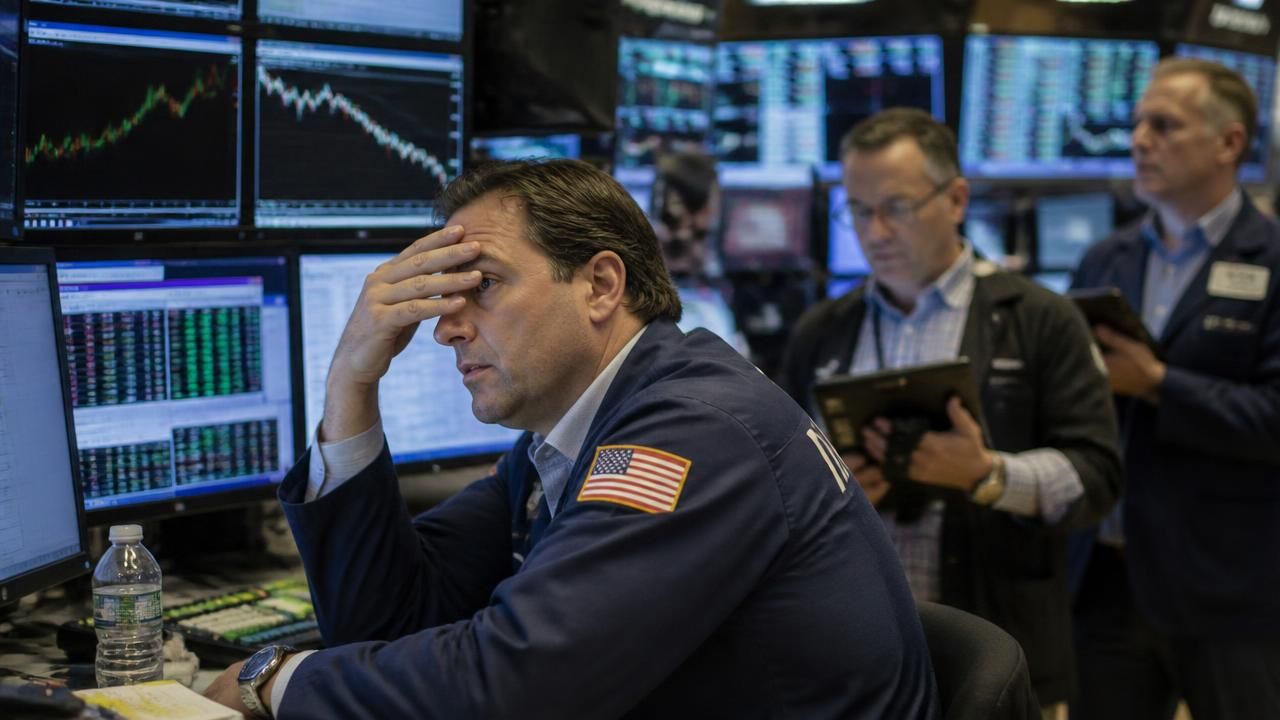
The U.S. Treasury's surprise announcement this week that it plans to buy back outstanding government debt sent shockwaves through the bond market, triggering a sharp drop in long-term yields on Wednesday before an equally swift rebound on Thursday. The volatility, which dominated conversations on financial news programs like Bloomberg's "Bloomberg Money," underscores the delicate balance the Treasury must strike as it manages the nation's $27 trillion debt pile.
The Announcement
On Wednesday, traders were caught off guard when the Treasury unveiled plans to repurchase a portion of its outstanding debt. The move, rarely utilized by the U.S. government, is designed to improve liquidity in older bond issues and potentially reduce future borrowing costs. Buybacks allow the Treasury to retire more expensive debt and replace it with lower-coupon securities, a strategy that can smooth the government's debt maturity profile.
Market Reaction
Long-dated bond yields, which move inversely to prices, tumbled in response. The 10-year Treasury note, a benchmark for mortgage rates and corporate borrowing, saw its yield fall by as much as 10 basis points at one point Wednesday. But the initial euphoria faded Thursday, with yields bouncing back to near their prior levels as traders digested the details and questioned the execution and scale of the buyback program.
"The market has been conditioned to expect the Treasury to issue, not repurchase. This shift in approach introduces a new variable that traders are still trying to fully incorporate," said Nikki Waller, a Bloomberg anchor who covered the story on "Bloomberg Money."
Why the Treasury Is Buying Back Debt
The rationale behind the buyback plan is multifaceted. First, it allows the Treasury to strengthen liquidity in off-the-run securities—older bonds that can become difficult to trade in large quantities. By repurchasing these issues, the Treasury can make it easier for market participants to transact, potentially narrowing bid-ask spreads and improving overall market functioning.
Second, buying back higher-yielding debt and replacing it with new, lower-yielding paper could reduce the government's interest expenses over time. With the Federal Reserve having signaled a potential easing cycle, borrowing costs for the government are expected to decline, making a swap attractive.
Historical Context
The U.S. Treasury has dabbled in buybacks before. In the early 2000s, the government executed a series of buybacks to lengthen the average maturity of its debt. However, the practice has largely fallen out of favor, replaced by routine issuance of Treasury securities across a range of maturities. The reaction to this week's announcement suggests that a return to buybacks could be met with volatility as investors recalibrate their expectations.
What It Means for Savers and Investors
For everyday savers, the immediate impact may be limited, but the underlying trend matters. Yields on savings accounts and certificates of deposit are typically tied to short-term interest rates, which are influenced by the Federal Reserve rather than Treasury buybacks. However, a persistent decline in long-term yields could foreshadow lower mortgage rates and cheaper borrowing costs for consumers.
Investors holding bond funds, particularly those concentrated in long-duration Treasuries, experienced a roller-coaster week. The Wednesday plunge in yields caused a sharp rally in bond prices, only to be reversed on Thursday. For individual investors, this highlights the risk of attempting to time the bond market, even when major policy shifts are underway.
Broader Market Implications
The bond market's swings also have ripple effects on equities. Lower yields reduce the discount rate applied to future earnings, which can boost stock valuations. However, the reversal on Thursday created an uncertain backdrop. As David Gura, another Bloomberg journalist, noted on the program: "The yield curve is the market's crystal ball, and today it's showing conflicting images."
Moreover, the Treasury's decision comes at a time when the U.S. government faces a fiscal deficit exceeding $1.7 trillion annually. Debt management decisions, such as buybacks, are becoming increasingly important as the government seeks to fund its operations without destabilizing financial markets.
Expert Perspectives
Market strategists were divided on the implications. Some viewed the buyback plan as a positive step toward smarter debt management, while others worried about unintended consequences.
"If executed properly, buybacks can be a win-win for the Treasury and taxpayers. But the initial market reaction shows that communication is key. The Treasury surprised the market, and that's never a good thing in a market that thrives on predictability," said a former Treasury official in an interview.
The Road Ahead
As traders parse the Treasury's next steps, the focus will be on the details: the size of the buyback operations, the maturity durations targeted, and the timing. The Treasury has pledged to share more specifics in the coming weeks. Until then, volatility is likely to persist, and both savers and investors would be wise to brace for further swings.
For now, the episode serves as a reminder that the bond market, often seen as the stabilizing anchor of global finance, is itself susceptible to seismic shifts when the government changes its playbook. As the "Bloomberg Money" panel concluded, the only certainty is uncertainty.