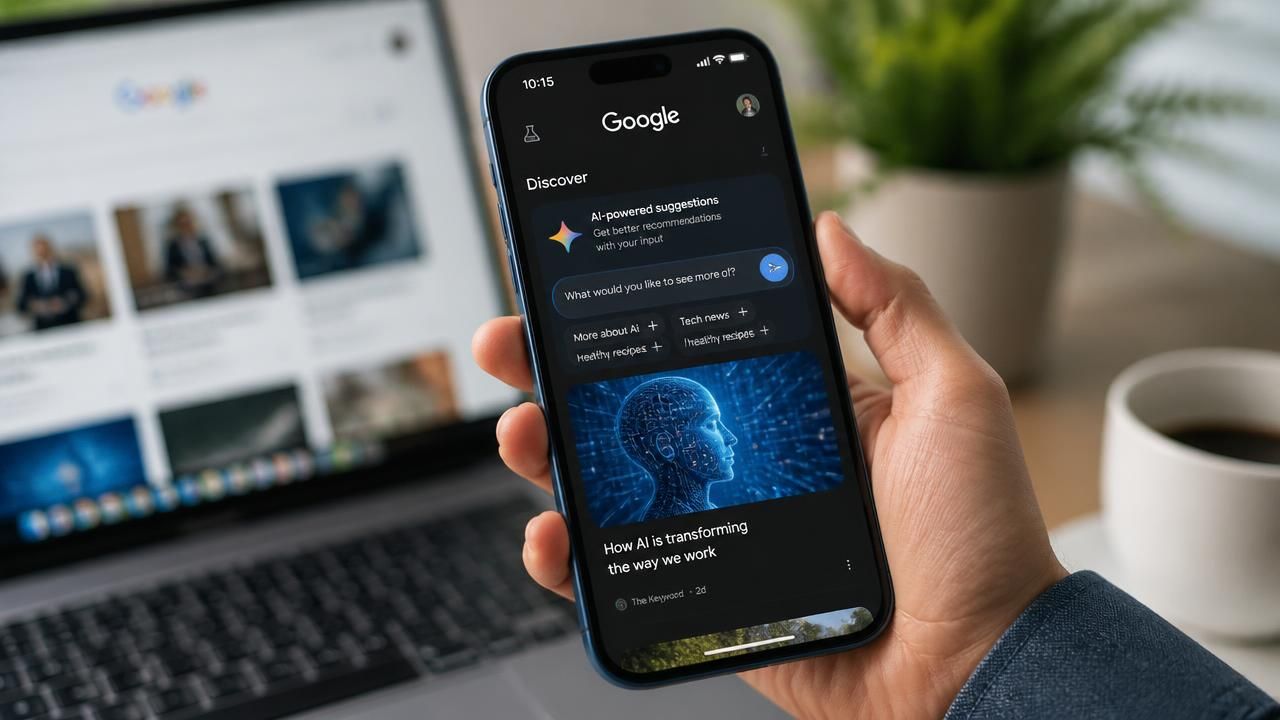
The artificial intelligence wave is washing over every corner of the digital world. In a flurry of announcements this week, tech giants including Google, Meta, OpenAI, and Slack revealed new AI-powered features designed to make content consumption, communication, and creativity more seamless. From a chatbot that personalizes your news feed to AI-driven game creation and even AI-managed messaging, the message is clear: AI is no longer a behind-the-scenes tool—it is becoming the interface itself.
These developments arrive as consumers and businesses increasingly expect AI to anticipate their needs, and as companies race to embed generative AI into everyday workflows. Here’s a closer look at what’s new, how it works, and what it means for users.
Google Discover gets an AI chatbot-tuned feed
Google is taking personalization to the next level with a new feature for its Discover feed, the algorithmic stream of articles and videos that appears in the Google app and on Android home screens. According to The Verge, the feature, rolling out in the coming days, allows users to customize their feed by describing what they want to see in natural language. Tapping the three-dot menu on any Discover card reveals the option, which opens a chatbot-style interface. Users can type things like “show me more tech news about AI” or “fewer celebrity gossip stories,” and the AI will adjust the feed accordingly.
Google’s AI will “remember” these preferences for future visits, meaning the customization is persistent rather than a one-time filter. The chatbot confirms your choices and lays out the types of content it will prioritize, but you can also add more information if it doesn’t get it quite right. This marks a significant shift from passive algorithmic curation to active, conversational control.
Nieman Lab reports that Discover isn’t the only place Google is experimenting with AI-generated snippets. The company is testing AI-generated summaries and descriptions within the feed itself, potentially offering users a quick overview of why a story is relevant to them. This aligns with Google’s broader push to integrate generative AI into Search, Discover, and Assistant, blurring the line between search results and curated content.
Meta doubles down on AI across platforms
Meta, meanwhile, is expanding its AI footprint with a series of updates that span devices, privacy, and even entertainment. The company announced that Meta AI, its chatbot assistant powered by the Llama family of models, is getting a dedicated desktop app for Mac. This move brings the assistant out of the browser and into a native experience, allowing users to ask questions, generate images, and get productivity help without switching tabs.
Meta AI warns about public conversations
With that expansion comes a caveat. Mashable highlighted that Meta AI warns users that their chatbot conversations “may be public” and provides guidance on how to keep them private. The warning, which appears during the onboarding flow, has raised eyebrows among privacy advocates. Meta explains that some interactions may be used to improve the AI, and users can opt out or delete their chat history. The company advises users to avoid sharing sensitive personal information in conversations with the assistant—advice that becomes increasingly important as AI assistants become more embedded in daily life.
Pocket AI brings game-making to the US
Meta is also bringing its Pocket app to the US market. Pocket, as covered by wersm.com, is an AI-powered game-making tool that lets users create simple playable games through natural language prompts. It’s part of Meta’s broader push into generative AI for entertainment, allowing people with no coding experience to describe a game (“a spaceship dodging asteroids”) and have the AI generate a playable result. The app had previously been tested in other markets and is now making its way to American users, signaling Meta’s confidence in AI-driven creation.
ChatGPT extends into Apple iMessage
OpenAI’s ChatGPT is becoming even more accessible. A new integration allows ChatGPT to handle Apple iMessages directly, meaning users can converse with the AI from within their default messaging app. As wersm.com reports, this offers a seamless way to delegate responses, brainstorm, or get quick answers without leaving Messages. The integration likely uses a keyboard extension or share sheet to send prompts to ChatGPT, with the response appearing as an iMessage conversation. It’s a significant move for OpenAI, positioning ChatGPT as a true communication assistant rather than just a stand-alone app.
Slack introduces collaborative vibe-coding channels
Slack, the enterprise messaging platform owned by Salesforce, is also getting an AI upgrade. The company introduced “collaborative vibe-coding channels,” a new feature designed for teams that use AI to generate code. The vibe-coding concept—popularized by developers who describe high-level intent and let AI write the code—now gets a dedicated space in Slack. These channels allow team members to share AI-generated code snippets, iterate on them in real time, and discuss changes without leaving the conversation. It’s a recognition that AI-assisted development is becoming a team sport, and Slack wants to be the playing field.
Rappler upgrades mobile news with AI summaries
Not all of the AI news comes from Silicon Valley giants. The Philippine news outlet Rappler announced an upgrade to its mobile news experience, incorporating AI-powered summaries and a swipe feature. According to a post on Rappler’s Facebook page, users can now “read and discover more stories without jumping browsers or opening a new tab.” The AI generates concise summaries of articles, giving readers a quick grasp of the key points before deciding whether to dive deeper. The swipe feature allows for lightning-fast navigation between stories, making news consumption more efficient. It’s an example of how smaller publishers are leveraging AI to retain readers and compete in a crowded attention economy.
Why this matters
Collectively, these updates signal a major shift in how we interact with technology. AI is no longer a separate destination—it’s being woven into the very fabric of the apps we use daily. Google is turning the news feed into a conversation, Meta is placing its AI everywhere from desktops to game studios, OpenAI is inserting itself into our text threads, and even niche players like Rappler are using AI to streamline news consumption.
There’s a trade-off, however. Personalization promises convenience but requires data. Meta’s privacy warning is a reminder that AI systems often learn from user interactions, and that “public” conversations may become training data. Meanwhile, the proliferation of AI-generated summaries and snippets raises questions about accuracy and editorial context. As users, we are gaining powerful tools but also new responsibilities to understand how they work and what they might expose.
In the coming months, expect even deeper integration. Google’s Discover chatbot could set a new standard for feed customization, Meta’s Mac app might be the first of many native AI desktops, and ChatGPT’s iMessage integration could be a precursor to an AI assistant that truly lives inside your communication layer. The future is arriving quickly—and it speaks your language.