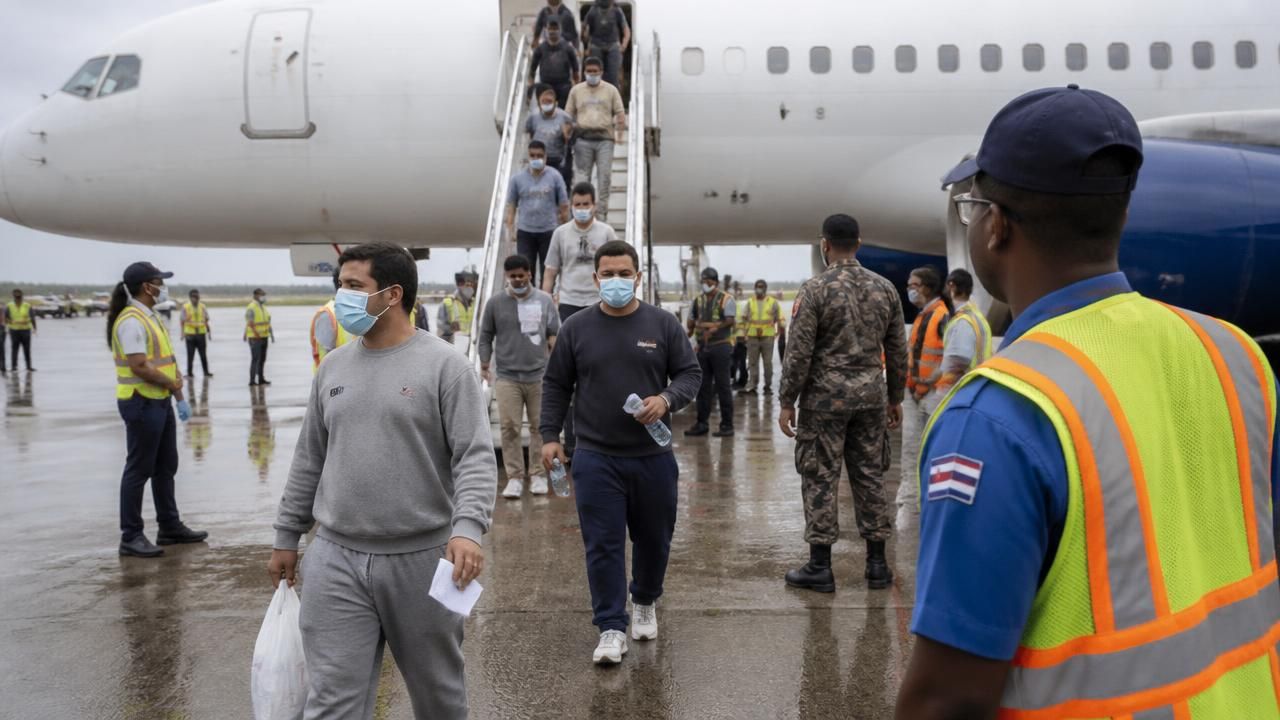
MONROVIA, Liberia — Twenty men and women stepped off a US-chartered flight at Roberts International Airport on Thursday, marking the first wave of what officials say will be 1,200 people deported to Liberia under a controversial arrangement between the Trump administration and the West African nation. The arrivals, who were transferred from US immigration custody, are not Liberian citizens but third-country nationals — including Venezuelans and Cubans — being sent to a country they may have never set foot in before.
A New Frontier in US Deportation Policy
The Liberia deal is among the largest third-country deportation agreements driven by the Trump administration’s immigration crackdown, according to The Guardian. In essence, it allows the United States to expel migrants to a third country that has agreed to accept them, even if that country has no previous connection to the deportees. The first 20 arrivals on Thursday were flown to Roberts International Airport outside Monrovia, the Liberian capital.
“They threw us out like baggage,” said one Russian family deported to Costa Rica in a separate but related case, underscoring the human toll of these expanding arrangements. That family, interviewed by The Guardian, remains in limbo in Central America after being expelled from the US.
Who Are the Deportees?
While the US government has not released a complete list of the first 20 individuals, an official confirmed to The Star that Venezuelans and Cubans are among them. Many are people who crossed into the United States seeking asylum or economic opportunity, only to find themselves caught in a growing web of deportation agreements between Washington and countries far from their homelands.
- Venezuelans fleeing economic collapse and political repression
- Cubans leaving the island nation amid its worst economic crisis in decades
- Others from various nations who transited through Latin America
Why Liberia?
Liberia’s participation may appear surprising, but the country shares a unique historical bond with the United States: it was founded in the 19th century by freed American slaves. Today, however, it is one of the poorest countries in the world, with limited resources to absorb a sudden influx of foreigners. The agreement, which reportedly includes provisions for financial assistance and technical support, is part of a broader diplomatic push by the Trump administration to find willing partners for its deportation agenda.
“The government of Liberia has agreed to accept up to 1,200 third-country nationals expelled from the United States,” said an official statement quoted by Agenzianova. “This is a demonstration of our commitment to international cooperation.”
Critics see it differently. “This is the United States outsourcing its immigration enforcement to vulnerable countries,” said Sarah Mehta, a senior policy analyst at the American Immigration Council. “These individuals are being sent to places where they have no ties, no support network, and often no ability to legally remain.”
Broader Deportation Trends
The Liberia flight is part of a wider pattern. Costa Rica has already received its first flight of deportees from faraway countries, according to The New York Times. A Russian family deported there described being put on a plane without warning and left in a country where they didn’t speak the language. The Times also reports that, despite the administration’s aggressive rhetoric, overall deportation numbers have not surged compared to previous years. What has changed is the reach: the administration is increasingly using third-country agreements to send people to nations outside their origin.
Data Points
- Under the Liberia agreement, up to 1,200 people will be sent within a year.
- So far, only 20 have arrived; more flights are expected.
- Deportations overall remain roughly flat, but the number of third-country transfers has risen sharply.
Human Rights Concerns
Human rights groups have condemned the practice, arguing that it violates international law, which holds that deportations should be to the individual’s own country unless they freely consent to another destination. The United Nations Refugee Agency (UNHCR) has expressed concern over the lack of due process for many of these migrants.
“These agreements are being used to circumvent legal protections. Migrants are being sent to countries where they may face persecution or destitution without any meaningful opportunity to challenge their removal,” said Isabelle Cohen, a spokesperson for Amnesty International.
What Happens Next?
With the legal framework in place, US officials say the pace of flights to Liberia will increase over the coming months. The Department of Homeland Security has not commented on the specific costs involved, but similar arrangements with other countries have been expensive to administer. Meanwhile, the deportees who arrived this week are being processed by Liberian authorities, who have said they will work with international organizations to provide temporary assistance.
For the men and women of the first flight, the future is uncertain. Many have nowhere to go. As the plane touched down in Monrovia, one deportee reportedly told a local journalist, “I don’t know anyone here. I don’t know what will happen to me.”
The Liberia agreement demonstrates how far the Trump administration is willing to go to fulfill its promise of mass deportations — even if it means rewriting the rules of international migration.